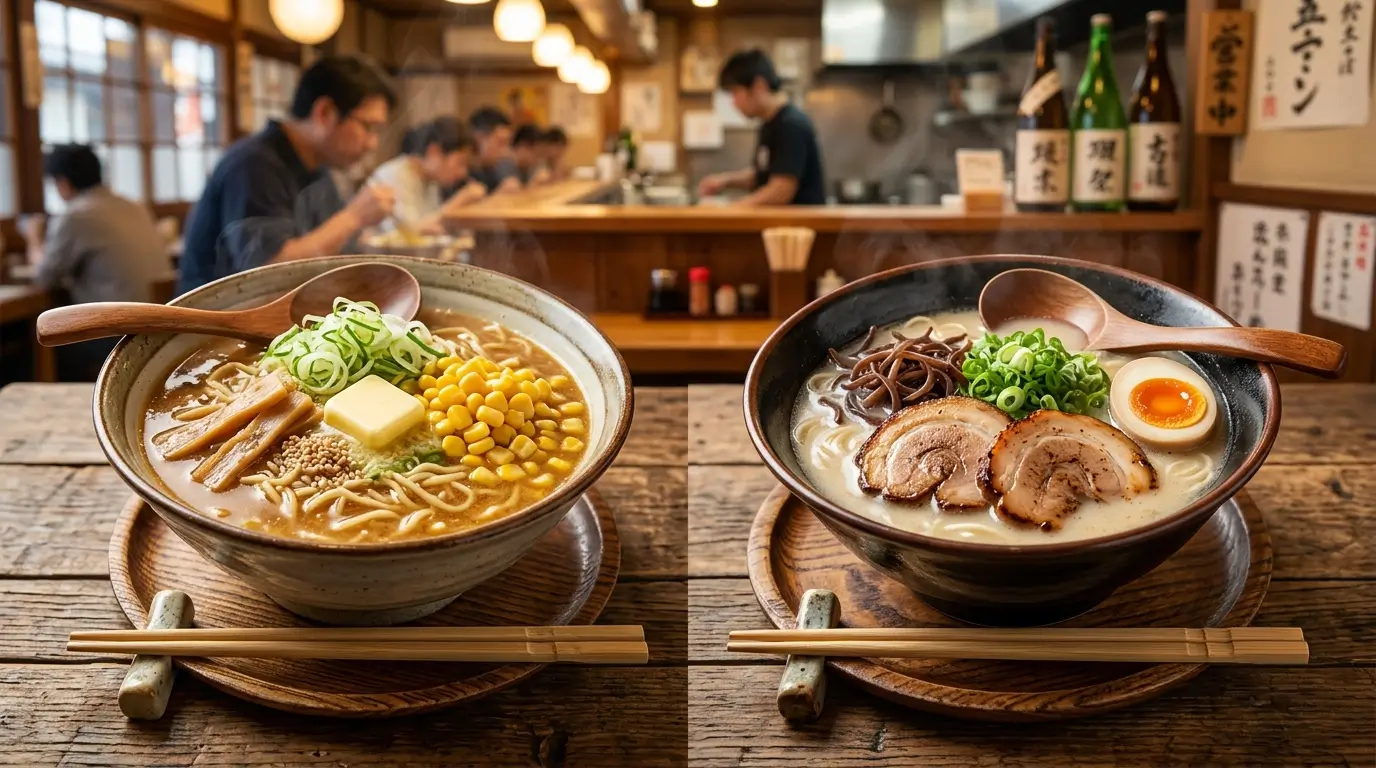
Imagine walking into a busy ramen shop in Japan. The aroma of rich broth fills the air, and the menu offers many choices. Two of the most popular options are miso ramen and tonkotsu ramen. Many people who are new to Japanese cuisine often wonder about the difference between miso and tonkotsu because both are flavorful, comforting, and widely loved.
Understanding the difference between miso and tonkotsu helps diners choose the bowl that best matches their taste preferences. While both are common ramen styles, they differ in ingredients, flavor, texture, appearance, and preparation methods.
The difference between miso and tonkotsu is especially important for food enthusiasts, chefs, and culinary learners. Exploring the difference between miso and tonkotsu also offers insight into Japanese food culture and regional cooking traditions.
Before diving deeper, let’s first learn how these two famous ramen styles are pronounced.
Pronunciation of Miso and Tonkotsu
| Word | US Pronunciation | UK Pronunciation |
| Miso | MEE-soh | MEE-soh |
| Tonkotsu | TONE-kot-soo | TON-kot-soo |
Key Difference Between the Both
The primary difference is that miso refers to a fermented soybean paste used as a seasoning base, while tonkotsu refers to a broth made by boiling pork bones for many hours until it becomes rich and creamy.
Miso is an ingredient that creates flavor, whereas tonkotsu is a cooking method and broth style that forms the foundation of a ramen dish.
Why Is Their Difference Necessary to Know for Learners and Experts?
Knowing the difference between miso and tonkotsu is important because these styles represent distinct culinary traditions. Students of gastronomy, professional chefs, restaurant owners, and food writers benefit from understanding these differences.
For society, food knowledge helps preserve cultural heritage and encourages appreciation of international cuisines. Understanding ramen styles also assists consumers in making dietary choices based on flavor preferences, nutritional needs, and cultural interests.
As we move forward, let’s examine the major differences between these two iconic Japanese ramen styles.
Difference Between Miso and Tonkotsu
1. Main Ingredient
Miso
Miso uses fermented soybean paste as its primary flavoring ingredient.
Examples:
- White miso ramen
- Red miso ramen
Tonkotsu
Tonkotsu uses pork bones boiled for long periods to create broth.
Examples:
- Hakata tonkotsu ramen
- Kyushu tonkotsu ramen
2. Flavor Profile
Miso
Offers a savory, slightly sweet, earthy, and fermented taste.
Examples:
- Sweet miso broth
- Spicy miso broth
Tonkotsu
Provides a rich, meaty, creamy, and umami-heavy flavor.
Examples:
- Traditional tonkotsu broth
- Garlic tonkotsu broth
3. Texture
Miso
Usually has a smoother and lighter texture.
Examples:
- Clear miso soup
- Light miso ramen
Tonkotsu
Features a thick and creamy consistency.
Examples:
- Milky broth
- Extra-rich tonkotsu ramen
4. Color
Miso
Ranges from golden brown to reddish brown.
Examples:
- White miso ramen
- Red miso ramen
Tonkotsu
Usually appears creamy white.
Examples:
- Hakata-style broth
- Kyushu-style broth
5. Cooking Process
Miso
Requires mixing fermented paste into prepared broth.
Examples:
- Miso chicken ramen
- Vegetable miso ramen
Tonkotsu
Requires simmering pork bones for many hours.
Examples:
- 12-hour broth
- 24-hour broth
6. Origin
Miso
Closely associated with northern Japan, especially Hokkaido.
Examples:
- Sapporo miso ramen
- Hokkaido spicy miso ramen
Tonkotsu
Originated in Japan’s Kyushu region.
Examples:
- Hakata ramen
- Kurume ramen
7. Nutritional Content
Miso
Contains fermented ingredients and beneficial microorganisms.
Examples:
- Soybean-based miso
- Barley miso
Tonkotsu
Contains collagen and bone-derived nutrients.
Examples:
- Bone marrow broth
- Pork collagen broth
8. Aroma
Miso
Produces a mild fermented aroma.
Examples:
- Sweet miso scent
- Roasted soybean aroma
Tonkotsu
Produces a stronger pork aroma.
Examples:
- Bone broth scent
- Pork marrow aroma
9. Dietary Suitability
Miso
Can be vegetarian depending on preparation.
Examples:
- Vegan miso ramen
- Vegetarian miso soup
Tonkotsu
Always contains pork products.
Examples:
- Pork bone ramen
- Traditional tonkotsu ramen
10. Popular Toppings
Miso
Often paired with vegetables and corn.
Examples:
- Corn topping
- Butter topping
Tonkotsu
Frequently served with pork slices and green onions.
Examples:
- Chashu pork
- Wood ear mushrooms
Nature and Behaviour of Both
Miso
Miso behaves as a seasoning ingredient. It blends with soups, marinades, and sauces to add depth and complexity. Its flavor varies depending on fermentation length and ingredients.
Tonkotsu
Tonkotsu behaves as a broth base. It creates richness and body in ramen through prolonged cooking. Its creamy texture results from dissolved fats and collagen.
Why Are People Confused About Their Use?
People often confuse miso and tonkotsu because both appear on ramen menus and are associated with Japanese noodle dishes. Many assume they are simply different names for ramen rather than entirely different broth foundations. Additionally, restaurants may combine miso seasoning with tonkotsu broth, creating further confusion.
Difference and Similarity Table
| Feature | Miso | Tonkotsu | Similarity |
| Type | Seasoning paste | Bone broth | Both used in ramen |
| Main Ingredient | Fermented soybeans | Pork bones | Add flavor |
| Texture | Light to medium | Thick and creamy | Soup bases |
| Color | Brownish | Milky white | Served hot |
| Origin | Hokkaido | Kyushu | Japanese cuisine |
| Aroma | Fermented | Pork-rich | Distinctive scents |
| Vegetarian Option | Possible | No | Popular worldwide |
| Cooking Time | Short | Very long | Require preparation |
| Flavor | Earthy and savory | Rich and meaty | Umami-rich |
| Usage | Seasoning | Broth foundation | Common in ramen |
Which Is Better in What Situation?
When Miso Is Better
Miso ramen is better when someone wants a balanced, slightly lighter, and more complex fermented flavor. It is also suitable for individuals seeking vegetarian-friendly options. During cold weather, spicy miso ramen provides warmth and comfort without feeling excessively heavy.
When Tonkotsu Is Better
Tonkotsu ramen is ideal for people who enjoy rich, creamy, and hearty meals. It is especially satisfying after a long day because of its intense flavor and luxurious texture. Meat lovers often prefer tonkotsu because of its deep pork-based character and filling nature.
How the Keywords Are Used in Metaphors and Similes
Miso
Metaphor:
“She was the miso of the team, adding depth to every project.”
Simile:
“His advice was like miso in soup, making everything better.”
Tonkotsu
Metaphor:
“His determination was tonkotsu—rich, strong, and impossible to ignore.”
Simile:
“Her support was like tonkotsu broth, warm and comforting.”
Connotative Meaning
Miso
Positive: Wisdom, balance, tradition.
Example: “Her experience added miso-like depth to the discussion.”
Negative: Rarely used negatively but may imply complexity.
Example: “The plan became too miso-like with excessive details.”
Neutral: A fermented food ingredient.
Example: “Miso is common in Japanese cooking.”
Tonkotsu
Positive: Strength, richness, comfort.
Example: “His leadership had a tonkotsu quality—strong and dependable.”
Negative: Can imply heaviness.
Example: “The presentation felt tonkotsu-heavy with information.”
Neutral: A pork-bone broth.
Example: “Tonkotsu is popular among ramen enthusiasts.”
Idioms or Proverbs Related to the Words
There are no widely recognized English idioms specifically using “miso” or “tonkotsu.”
However, related examples include:
“Too many cooks spoil the broth.”
Example:
“The restaurant failed because too many cooks spoiled the broth.”
“Good things come to those who wait.”
Example:
“A rich tonkotsu broth proves that good things come to those who wait.”
Works in Literature Featuring the Keywords
Miso
- The Book of Miso — William Shurtleff and Akiko Aoyagi (Food Literature, 1976)
- Miso Tasty — Bonnie Chung (Cookbook, 2016)
Tonkotsu
- The Ramen King and I — Andy Raskin (Food Memoir, 2008)
- Various ramen-focused culinary books discussing tonkotsu traditions.
Movies Related to the Keywords
Miso
- Miso Hungry (2012, USA)
Tonkotsu/Ramen Themes
- Tampopo (1985, Japan)
- Ramen Girl (2008, USA/Japan)
Frequently Asked Questions
1. Is miso the same as tonkotsu?
No. Miso is a fermented soybean paste, while tonkotsu is a pork-bone broth.
2. Which is healthier?
Miso may offer benefits from fermentation, while tonkotsu provides collagen and protein-rich broth.
3. Can vegetarians eat miso ramen?
Yes, if the broth does not contain meat-based ingredients.
4. Why is tonkotsu broth white?
The long boiling process emulsifies fats and collagen, creating a creamy white appearance.
5. Which has a stronger flavor?
Tonkotsu generally has a richer and stronger flavor, while miso has a more balanced fermented taste.
How Both Are Useful for Surroundings
Miso encourages sustainable use of plant-based ingredients and supports traditional fermentation practices. Tonkotsu promotes efficient use of animal resources by utilizing bones that might otherwise be discarded. Both contribute to culinary diversity and cultural exchange worldwide.
Final Words for Both
Miso represents tradition, fermentation, and balance. Tonkotsu represents richness, patience, and craftsmanship. Together, they showcase the remarkable variety found within Japanese cuisine.
Conclusion
Understanding the difference between miso and tonkotsu helps food lovers appreciate Japanese ramen on a deeper level. Although both are commonly found in ramen dishes, they serve different roles.
Miso is a fermented soybean seasoning that creates earthy and savory flavors, while tonkotsu is a rich pork-bone broth known for its creamy texture and powerful taste. Each offers unique characteristics, nutritional qualities, and culinary experiences.
Whether you prefer the balanced complexity of miso or the hearty richness of tonkotsu, knowing their differences allows you to make informed dining choices and gain greater appreciation for Japanese food culture. Both remain essential parts of the global ramen tradition and continue to delight millions of people around the world.

Alexandra “Alex” Monroe is a senior linguistics contributor at WordCompares.com, where she specializes in comparative word analysis, semantics, and language clarity. With over 15 years of academic and editorial experience, Alex helps readers understand subtle differences between commonly confused words and phrases. Her research-driven yet practical writing style strengthens the educational authority of WordCompares.com.