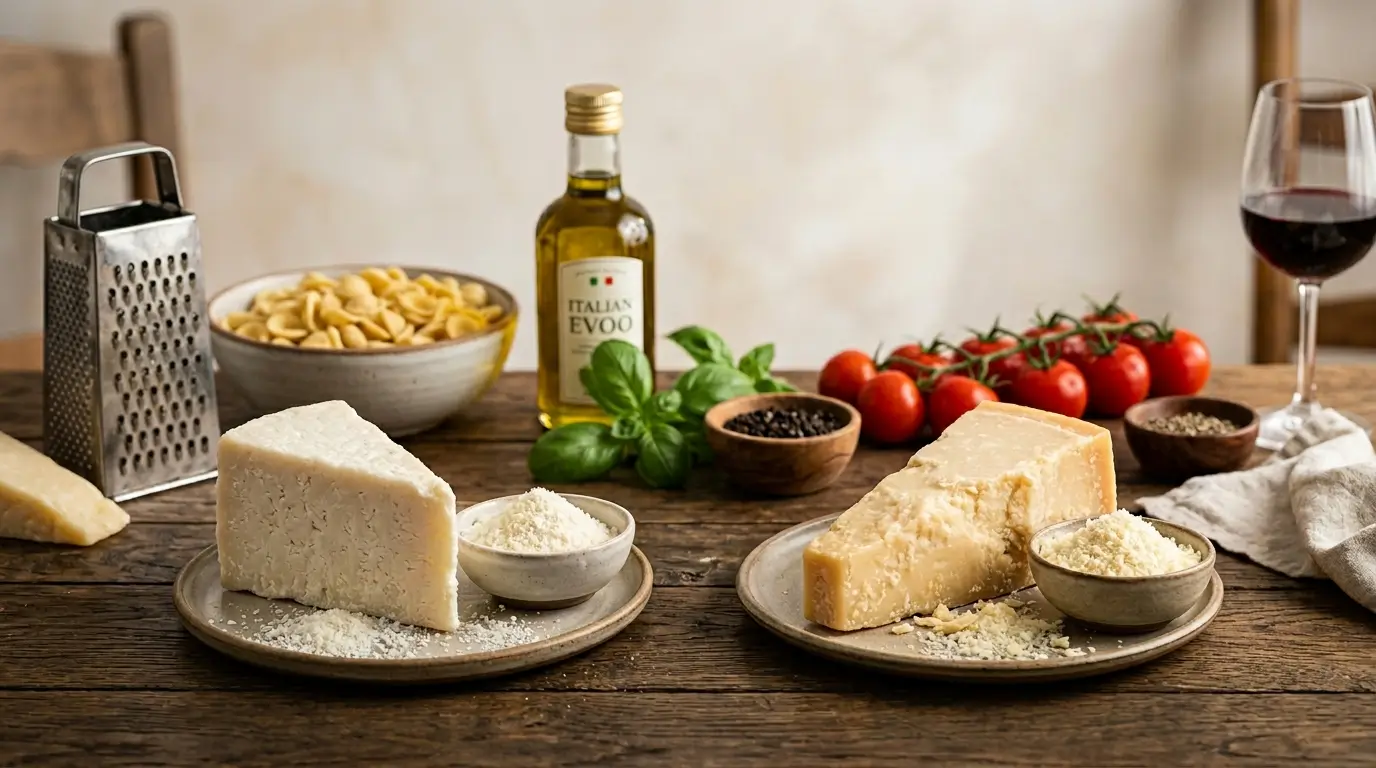
Imagine walking into an Italian restaurant and ordering a delicious pasta dish. The waiter asks If you would like Romano or Parmesan cheese sprinkled on top. Many people hesitate because both cheeses look similar and are often used in the same recipes. However, they have distinct characteristics that can change the flavor of a meal significantly.
Understanding the difference between Romano and Parmesan is important for home cooks, food enthusiasts, culinary students, and professional chefs. The difference between Romano and Parmesan goes beyond appearance; it includes taste, texture, production methods, aging, and culinary uses.
Learning the difference between Romano and Parmesan helps people choose the right cheese for specific dishes. In this guide, we will explore every important aspect of the difference between Romano and Parmesan in a simple and easy-to-understand way.
Key Difference Between Romano and Parmesan
The primary difference is that Romano cheese is typically made from sheep’s milk and has a sharper, saltier flavor, while Parmesan is usually made from cow’s milk and offers a milder, nuttier taste.
Why Is Their Difference Necessary to Know for Learners and Experts?
Knowing the difference between Romano and Parmesan is valuable because these cheeses play important roles in cooking, nutrition, and food culture. Culinary students need to understand their unique properties to prepare authentic dishes. Professional chefs rely on the correct cheese to achieve specific flavors and textures.
For everyday consumers, understanding these cheeses helps in making informed purchasing decisions and creating better-tasting meals. Since both cheeses are widely used around the world, recognizing their distinctions contributes to culinary knowledge and appreciation of traditional food craftsmanship.
Pronunciation
Romano
| Accent | Pronunciation |
| US | roh-MAH-noh |
| UK | roh-MAH-noh |
Parmesan
| Accent | Pronunciation |
| US | pahr-muh-ZAHN |
| UK | par-muh-ZAN |
From Similar Appearance to Unique Identity
Although Romano and Parmesan often appear together in grocery stores and recipes, their differences become clear once you understand their origins, ingredients, and flavors. Let’s explore these distinctions in detail.
Difference Between Romano and Parmesan
1. Milk Source
Romano
Traditional Romano cheese is made from sheep’s milk.
Examples:
- Pecorino Romano uses sheep’s milk.
- Traditional Roman recipes often require sheep’s milk cheese.
Parmesan
Parmesan is made from cow’s milk.
Examples:
- Parmigiano-Reggiano uses cow’s milk.
- Most commercial Parmesan products use cow’s milk.
2. Flavor
Romano
Romano has a strong, sharp, and salty taste.
Examples:
- Adds intense flavor to pasta.
- Enhances soups with a bold taste.
Parmesan
Parmesan has a nutty, rich, and mild flavor.
Examples:
- Perfect for risotto.
- Commonly used in salads.
3. Texture
Romano
Slightly harder and more brittle.
Examples:
- Crumbles easily.
- Grates into coarse particles.
Parmesan
Firm but smoother.
Examples:
- Produces fine shavings.
- Melts more evenly in dishes.
4. Aging Process
Romano
Usually aged for 5–12 months.
Examples:
- Younger Romano is less sharp.
- Older Romano develops stronger flavors.
Parmesan
Typically aged for 12–36 months.
Examples:
- 24-month Parmesan is highly prized.
- Extra-aged Parmesan develops nutty complexity.
5. Salt Content
Romano
Contains more salt.
Examples:
- Strong seasoning ingredient.
- Used sparingly in recipes.
Parmesan
Contains less salt.
Examples:
- Easier to use generously.
- Suitable for mild dishes.
6. Origin
Romano
Originates from Rome and surrounding regions.
Examples:
- Pecorino Romano from Lazio.
- Traditional Roman cuisine.
Parmesan
Originates from Northern Italy.
Examples:
- Parma region.
- Reggio Emilia region.
7. Cost
Romano
Often slightly less expensive.
Examples:
- Available in many supermarkets.
- Common in grated cheese blends.
Parmesan
Often more expensive due to long aging.
Examples:
- Authentic Parmigiano-Reggiano commands premium prices.
- Specialty cheese shops sell aged varieties.
8. Culinary Uses
Romano
Best for strong-flavored dishes.
Examples:
- Carbonara.
- Cacio e Pepe.
Parmesan
Best for versatile cooking.
Examples:
- Lasagna.
- Caesar salad.
9. Aroma
Romano
Sharp and pungent aroma.
Examples:
- Noticeable smell when grated.
- Strong scent in storage.
Parmesan
Pleasant and nutty aroma.
Examples:
- Mild fragrance.
- Popular in cheese boards.
10. Nutritional Profile
Romano
Higher sodium content.
Examples:
- Strong flavor from minerals.
- Often used in smaller quantities.
Parmesan
Rich in protein and calcium.
Examples:
- Popular among athletes.
- Frequently recommended for balanced diets.
Nature and Behavior of Romano and Parmesan
Romano
Romano behaves as a bold and assertive cheese. Its strong flavor means a small amount can significantly impact a dish. It is ideal when a recipe requires intensity and sharpness.
Parmesan
Parmesan behaves as a versatile and balanced cheese. It complements many foods without overpowering them. Its nutty flavor makes it suitable for both cooking and serving as a table cheese.
Why Are People Confused About Their Use?
People often confuse Romano and Parmesan because both are hard Italian cheeses that are commonly grated over pasta dishes. They share similar colors, textures, and packaging in stores. Many recipes even list them as alternatives. However, their milk source, flavor strength, and traditional culinary roles differ considerably.
Difference and Similarity Table
| Feature | Romano | Parmesan | Similarity |
| Milk Source | Sheep’s milk | Cow’s milk | Both are dairy cheeses |
| Taste | Sharp and salty | Mild and nutty | Both flavorful |
| Texture | Hard and brittle | Hard and smooth | Both grate well |
| Aging | 5–12 months | 12–36 months | Both aged cheeses |
| Origin | Rome area | Northern Italy | Both Italian |
| Aroma | Strong | Nutty | Both aromatic |
| Cost | Usually lower | Usually higher | Both premium cheeses |
| Usage | Bold dishes | Versatile dishes | Both used on pasta |
| Salt Level | Higher | Lower | Both contain salt |
| Popularity | Regional favorite | Global favorite | Widely consumed |
Which Is Better in What Situation?
Romano
Romano is better when a dish requires a powerful and salty flavor. It works exceptionally well in traditional Roman recipes, pasta dishes, soups, and sauces where the cheese must stand out. Because of its intensity, even a small amount can transform a recipe. People who enjoy bold flavors often prefer Romano.
Parmesan
Parmesan is better when a balanced and versatile flavor is desired. It complements salads, pasta, risotto, vegetables, and cheese boards. Its nutty taste enhances dishes without dominating them. Parmesan is often the preferred choice for everyday cooking because it blends well with many ingredients and appeals to a wider range of tastes.
How the Keywords Are Used in Metaphors and Similes
Romano
- “His personality was as sharp as Romano cheese.”
- “Her comments added Romano-like intensity to the discussion.”
Parmesan
- “His wisdom was sprinkled like Parmesan over every conversation.”
- “The speech added Parmesan-like richness to the event.”
Connotative Meanings
Romano
Positive: Bold, authentic, distinctive
Example: “She brought Romano-like energy to the project.”
Negative: Overly sharp, intense
Example: “His criticism felt as sharp as Romano.”
Neutral: Traditional Italian identity
Example: “The restaurant has a Romano character.”
Parmesan
Positive: Refined, rich, sophisticated
Example: “Her writing has a Parmesan-like elegance.”
Negative: Expensive or exclusive
Example: “The event felt a bit too Parmesan for ordinary guests.”
Neutral: Classic culinary quality
Example: “The menu carries a Parmesan reputation.”
Idioms or Proverbs Related to the Words
There are no widely recognized English idioms specifically involving Romano or Parmesan. However, culinary expressions are sometimes used creatively.
Examples
- “Don’t grate all your Parmesan at once.”
- Meaning: Don’t use all your resources immediately.
- “A little Romano goes a long way.”
- Meaning: Small efforts can have a big impact.
Works in Literature
Romano
- Pecorino Romano and Traditional Italian Food Culture – Food Studies – Various Authors – 2018
- The Foods of Italy – Food History – Waverley Root – 1971
Parmesan
- The Cheese and the Worms – History – Carlo Ginzburg – 1976
- Italian Food – Culinary Nonfiction – Elizabeth David – 1954
Movies Related to the Keywords
Romano
- No major internationally known films specifically named Romano.
Parmesan
- No major internationally known films specifically named Parmesan.
However, both cheeses appear frequently in documentaries about Italian cuisine.
Frequently Asked Questions
1. Is Romano stronger than Parmesan?
Yes. Romano has a sharper and saltier flavor than Parmesan.
2. Can Romano replace Parmesan?
Yes, but the dish may taste stronger and saltier.
3. Is Parmesan healthier than Romano?
Both are nutritious, but Parmesan generally contains less sodium.
4. Which cheese melts better?
Parmesan generally melts more smoothly than Romano.
5. Which cheese is more authentic for Roman dishes?
Romano, especially Pecorino Romano, is traditionally used in Roman cuisine.
How Both Are Useful for Surroundings
Romano and Parmesan contribute to culinary diversity, support dairy farming communities, and preserve centuries-old food traditions. Their production sustains local economies and promotes cultural heritage. Both cheeses enrich meals and encourage appreciation of traditional craftsmanship.
Final Words for Both
Romano and Parmesan are exceptional cheeses with unique strengths. Romano offers boldness and intensity, while Parmesan provides balance and versatility. Understanding their differences helps people make better culinary choices and enjoy authentic flavors.
Conclusion
The difference between Romano and Parmesan extends far beyond their appearance. Romano is known for its sharp, salty flavor and sheep’s milk origin, while Parmesan is appreciated for its nutty taste and cow’s milk base. Both cheeses hold important places in Italian cuisine and global cooking traditions.
If you are a home cook, culinary student, or professional chef, understanding these distinctions can improve your recipes and deepen your appreciation for food culture. Choosing between Romano and Parmesan ultimately depends on the dish, desired flavor profile, and personal preference. Each cheese offers unique qualities that make it valuable in its own way.

Dr. Marcus Reed is a lead editorial author at WordCompares.com and a specialist in communication studies and written clarity. With more than 12 years of university-level teaching experience, he focuses on explaining word distinctions in a clear and structured manner. His work ensures that WordCompares.com maintains accuracy, depth, and reader trust.