A few years ago, a tired 52-year-old truck driver named Sam sat in a sleep clinic, holding a prescription slip with a word he had never seen before: CPAP. His doctor explained that his loud snoring and the moments he stopped breathing at night were signs of obstructive sleep apnea, and a CPAP machine would push a steady stream of air into his throat to keep it open.
Two years later, Sam’s lungs grew weaker and breathing out against that steady air became a struggle. His doctor switched him to a BiPAP machine, which gave him one pressure to breathe in and a gentler, lower pressure to breathe out. Sam’s story is common, and it explains why so many patients ask about the difference between CPAP and BiPAP the moment they are handed a prescription.
Understanding the difference between CPAP and BiPAP is not just medical trivia; it decides how comfortably a person sleeps and breathes every single night. This article breaks down the difference between CPAP and BiPAP in plain language, so the next time someone mentions CPAP and BiPAP, you will know exactly what sets them apart.
Key Difference Between the Both
In one sentence, the core difference between CPAP and BiPAP is this: CPAP delivers a single, constant air pressure throughout the entire breathing cycle, while BiPAP delivers two separate pressures a higher one when you breathe in and a lower one when you breathe out. That single design choice changes who each machine is built for, how it feels to use, and how much it typically costs.
Why This Difference Matters for Learners and Experts
For students of respiratory therapy, sleep medicine doctors, and everyday patients alike, knowing the difference between CPAP and BiPAP has real social and medical weight. Millions of people worldwide live with sleep apnea, COPD, or neuromuscular breathing disorders, and prescribing the wrong machine can mean poor treatment, wasted money, or a patient who simply stops using the device out of discomfort. For clinicians and biomedical engineering students, this knowledge shapes better diagnosis and better-designed equipment. For families and caregivers, it means understanding why a loved one’s machine looks or sounds different from a neighbour’s. In short, this small mechanical difference carries a big public health impact.
Pronunciation
- CPAP — US: /ˈsiː-pæp/ (“SEE-pap”) | UK: /ˈsiː-pæp/ (“SEE-pap”) — pronounced the same in both regions, often spoken as one word rather than four separate letters.
- BiPAP — US: /ˈbaɪ-pæp/ (“BY-pap”) | UK: /ˈbaɪ-pæp/ (“BY-pap”) — again nearly identical across accents, though British speakers may say it slightly more clipped.
Now that you can say them correctly, let’s dive into exactly how CPAP and BiPAP differ from one another, point by point.
Difference Between CPAP and BiPAP
1. Pressure Delivery
CPAP delivers one fixed pressure all night, whether you are inhaling or exhaling. BiPAP delivers two pressures: a higher inspiratory pressure (IPAP) and a lower expiratory pressure (EPAP).
- Example 1: A CPAP user set at 10 cm H2O breathes against that same 10 cm H2O the entire night.
- Example 2: A BiPAP user might inhale against 14 cm H2O but exhale against only 8 cm H2O, making breathing out noticeably easier.
2. Primary Medical Use
CPAP is the first-line treatment for straightforward obstructive sleep apnea. BiPAP is generally reserved for more complex cases.
- Example 1: A healthy but overweight adult with simple snoring-related apnea is usually started on CPAP.
- Example 2: A patient with COPD who also retains carbon dioxide is more likely to be prescribed BiPAP.
3. Comfort While Exhaling
Because CPAP keeps pressure constant, some users feel like they are “breathing against a wall” when exhaling. BiPAP eases this by dropping pressure during exhalation.
- Example 1: Sam, from our earlier story, found exhaling against CPAP tiring as his lung strength declined.
- Example 2: After switching to BiPAP, he described exhaling as “letting a door swing open” instead of pushing it.
4. Machine Complexity and Cost
CPAP machines have simpler internal mechanisms and are generally cheaper. BiPAP machines contain more advanced circuitry to switch between two pressures and usually cost more.
- Example 1: A basic CPAP unit may cost a few hundred dollars.
- Example 2: A comparable BiPAP unit can cost two to three times as much due to its dual-pressure technology.
5. Settings and Adjustability
CPAP typically has one pressure setting (or an auto-adjusting range within a single mode). BiPAP requires two separate settings to be programmed by a sleep specialist.
- Example 1: A CPAP titration study finds the one pressure that stops a patient’s apnea events.
- Example 2: A BiPAP titration study finds both the IPAP needed to open the airway and the lower EPAP needed for comfortable exhalation.
6. Who Typically Prescribes Each
General sleep physicians commonly prescribe CPAP as a starting point. Pulmonologists often step in to prescribe BiPAP for patients with lung disease or weak respiratory muscles.
- Example 1: A family doctor refers a snoring patient to a sleep lab, which recommends CPAP.
- Example 2: A pulmonologist treating a patient with ALS recommends BiPAP to support weakened breathing muscles.
7. Backup Breathing Support
Standard CPAP offers no backup breaths; it only maintains airway pressure. Many BiPAP machines include a backup rate that delivers a breath if the patient does not breathe on their own within a set time.
- Example 1: A CPAP machine will not “breathe for” a patient who stops breathing entirely.
- Example 2: A BiPAP machine with backup rate can trigger a breath for a patient with central sleep apnea who pauses too long.
8. Treatment of Central vs Obstructive Apnea
CPAP is designed mainly for obstructive apnea, caused by physical airway blockage. BiPAP (especially with backup rate) can also assist central sleep apnea, caused by the brain’s failure to signal breathing.
- Example 1: A patient whose tongue collapses backward during sleep responds well to CPAP.
- Example 2: A patient whose brain briefly “forgets” to trigger a breath benefits more from BiPAP’s backup support.
9. User Experience and Learning Curve
CPAP is often described as easier for first-time users to adapt to because of its simplicity. BiPAP can feel more complex initially since the pressure changes with each breath.
- Example 1: A first-time CPAP user adjusts within a week or two.
- Example 2: A first-time BiPAP user may need extra coaching to get used to the shifting pressure sensation.
10. Portability and Machine Size
CPAP machines are usually smaller and more travel-friendly. BiPAP machines tend to be bulkier due to their extra components.
- Example 1: A frequent business traveller often prefers a compact CPAP for hotel stays.
- Example 2: A homebound patient using BiPAP for chronic respiratory failure keeps the larger unit permanently bedside.
Nature and Behaviour of Each
CPAP behaves like a steady, unwavering companion it does one job, and it does it the same way every second of the night. Its “personality,” if we can call it that, is simple, predictable, and low-maintenance.
BiPAP behaves more like an attentive assistant that adjusts itself to what your lungs are doing at that exact moment pushing more when you inhale, easing off when you exhale, and in some models, stepping in with a rescue breath if you fall silent for too long. CPAP is the reliable single-note instrument; BiPAP is the responsive duet partner.
Why People Are Confused About Their Use
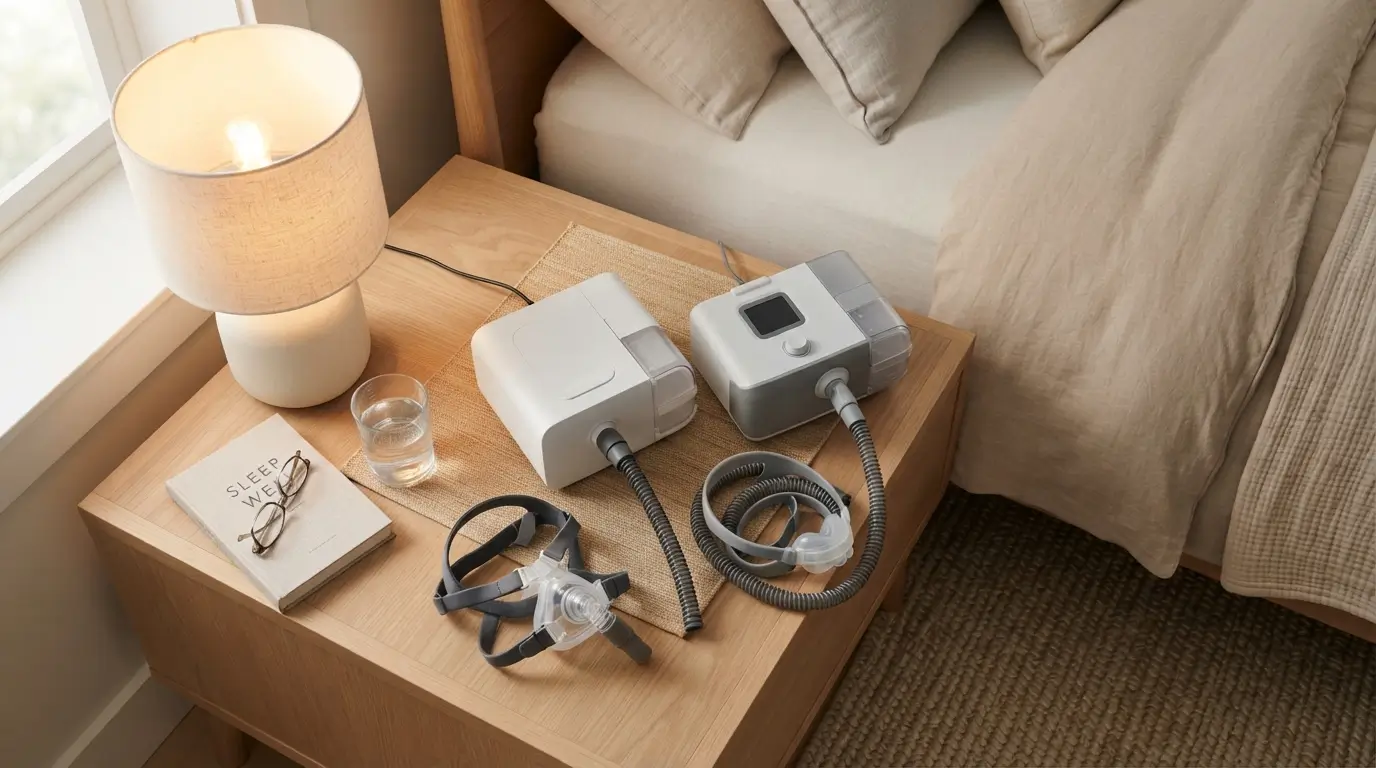
The confusion between CPAP and BiPAP mostly comes from the fact that both machines look almost identical from the outside same mask, same tubing, same humidifier chamber and both are prescribed for “sleep apnea” as a broad label.
Patients rarely see the internal pressure settings, so the visible experience feels the same until they actually use the device. Marketing materials and casual conversation also use “CPAP” as a catch-all term for any breathing machine, the way people say “Kleenex” for any tissue, which blurs the line further for non-medical audiences.
Comparison Table: CPAP vs BiPAP
| Feature | CPAP | BiPAP |
| Pressure type | Single, constant pressure | Two pressures (IPAP and EPAP) |
| Best suited for | Simple obstructive sleep apnea | COPD, central apnea, neuromuscular conditions |
| Comfort on exhale | Can feel harder | Generally easier |
| Cost | Lower | Higher |
| Backup breathing rate | Not standard | Often available |
| Learning curve | Easier | Slightly steeper |
| Portability | More compact | Bulkier |
| Similarity | Treats sleep apnea, uses mask and tubing, requires prescription and titration, improves oxygen levels and sleep quality | Treats sleep apnea, uses mask and tubing, requires prescription and titration, improves oxygen levels and sleep quality |
Which Is Better in What Situation?
CPAP is the better choice for people with straightforward obstructive sleep apnea and no other major lung or muscle condition. It is simpler, cheaper, and highly effective at keeping the airway open, making it the standard first option most sleep doctors reach for.
BiPAP becomes the better choice when a patient struggles to exhale against constant pressure, has COPD, has central sleep apnea, or has a neuromuscular disease that weakens the breathing muscles. In these situations, the dual-pressure support of BiPAP provides comfort and safety that CPAP simply cannot match.
CPAP and BiPAP in Metaphors and Similes
Because both are modern medical terms, they rarely appear in classic figurative language, but people have started using them informally in everyday speech:
- “His schedule runs like a CPAP machine — steady, unchanging, no surprises.”
- “She adjusts to every situation like a BiPAP, giving more when needed and easing off when it’s not.”
Connotative Meaning
CPAP carries a largely neutral to positive connotation — it is associated with restored sleep, health improvement, and relief from snoring-related exhaustion. Example: “Since starting CPAP, he finally wakes up refreshed.”
BiPAP carries a neutral connotation, sometimes leaning slightly serious or clinical, since it is often linked with more advanced illness. Example: “When her lung disease worsened, doctors moved her to BiPAP support.”
Neither term carries a naturally negative connotation, though both can sound intimidating to a first-time patient simply because they are unfamiliar medical devices.
Idioms or Proverbs
Traditional idioms and proverbs do not exist for CPAP or BiPAP, since these are recent medical-technology terms rather than words rooted in folk language. However, informal expressions have started forming around them in patient communities:
- “Married to my CPAP” — meaning someone who never travels or sleeps without their machine.
- “BiPAP breathing room” — meaning giving someone flexibility, borrowed from BiPAP’s two-pressure design.
CPAP and BiPAP in Literature
Being modern clinical terms, CPAP and BiPAP have almost no presence in classic or fictional literature. Their appearances are mostly limited to medical textbooks, patient memoirs, and health journalism rather than novels or poetry:
- Gasp: The Rise and Fall of the American Breath — health/nonfiction essays touching on sleep apnea treatment devices, various contemporary health writers, 2010s
- Sleep medicine textbooks and respiratory therapy manuals (academic nonfiction), multiple authors, ongoing publications since the 1990s
Movies Related to CPAP and BiPAP
There are no major feature films built specifically around CPAP or BiPAP machines, as they are treatment devices rather than dramatic subjects. Sleep apnea itself has appeared briefly in documentaries and health-focused television segments, but no widely recognized movie is named after or centered on these devices.
Frequently Asked Questions
1. Is BiPAP stronger than CPAP?
Not exactly stronger BiPAP is more adjustable. It can deliver a higher inhale pressure than a comparable CPAP setting while making exhaling easier, but “strength” depends on the individual settings.
2. Can a person switch from CPAP to BiPAP?
Yes, many patients switch to BiPAP if CPAP feels too difficult to exhale against or if their condition changes, such as developing COPD or worsening apnea.
3. Is BiPAP only for very sick patients?
Not only — while BiPAP is common for complex cases like COPD or neuromuscular disease, some patients simply prefer its more comfortable exhale even with straightforward apnea.
4. Does insurance cover both machines equally?
Coverage varies by country and provider, but BiPAP often requires additional medical justification since it typically costs more than CPAP.
5. Which machine is quieter?
Both are generally quiet, but CPAP’s simpler single-pressure motor is sometimes slightly quieter than BiPAP’s dual-pressure mechanism.
How Both Are Useful for Surroundings
Beyond the individual patient, both CPAP and BiPAP quietly benefit the people around them. Partners of snorers often sleep better once a machine is introduced, households feel calmer with fewer nighttime health scares, and workplaces gain more alert, well-rested employees. On a larger scale, wider access to CPAP and BiPAP therapy reduces hospital visits linked to untreated sleep apnea and related heart or lung complications, easing pressure on healthcare systems overall.
Final Words
CPAP remains the trusted, simple starting point for millions dealing with obstructive sleep apnea, while BiPAP stands as the more adaptable option for those whose bodies need extra support breathing out or breathing at all. Neither machine is universally “better” each is a tool matched to a specific kind of need, and the right choice always comes down to an individual’s diagnosis and comfort.
Conclusion
The difference between CPAP and BiPAP comes down to one core idea: CPAP offers one steady pressure, while BiPAP offers two pressures that adjust to how you breathe. From Sam’s story at the start of this article to the technical, medical, and even cultural angles we’ve explored, it’s clear that this difference between CPAP and BiPAP shapes real comfort and real health outcomes for patients everywhere.
Whether you are a student learning respiratory therapy, a caregiver supporting a family member, or someone newly diagnosed with sleep apnea, understanding CPAP and BiPAP empowers you to ask the right questions and make informed choices about breathing support. In the end, both machines share the same goal of helping people breathe easier and sleep better, one night at a time.

Dr. Marcus Reed is a lead editorial author at WordCompares.com and a specialist in communication studies and written clarity. With more than 12 years of university-level teaching experience, he focuses on explaining word distinctions in a clear and structured manner. His work ensures that WordCompares.com maintains accuracy, depth, and reader trust.