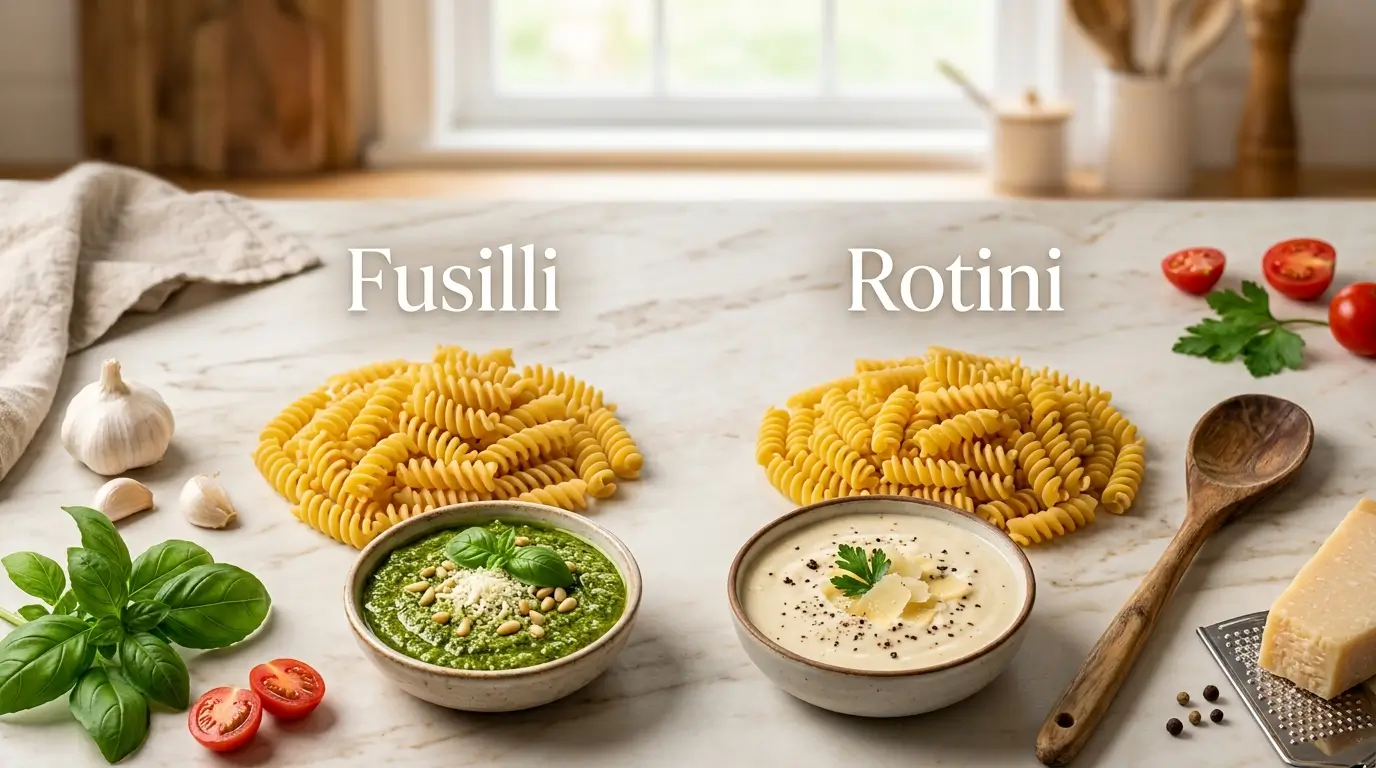
Imagine walking through the pasta aisle of a grocery store, planning to cook a delicious pasta salad or a creamy dinner for your family. You notice two spiral-shaped pasta varieties fusilli and rotini. At first glance, they look almost identical, making it difficult to decide which one to buy.
This is where understanding the difference between fusilli and rotini becomes useful. Although both are twisted pasta shapes, they differ in appearance, texture, origin, and the types of sauces they hold best. Learning the difference between fusilli and rotini helps home cooks, culinary students, and professional chefs choose the perfect pasta for every recipe.
In this guide, you’ll discover the difference between fusilli and rotini in simple language so you can confidently select the right pasta for your next meal.
Key Difference Between Fusilli and Rotini
The main difference between fusilli and rotini is their shape and origin.
- Fusilli is traditionally made with a wider, corkscrew-like spiral that was originally created by twisting strips of fresh pasta around a spindle.
- Rotini has tighter, more uniform spirals with deeper grooves, making it especially effective at trapping sauces, dressings, and small ingredients.
Although many manufacturers use the names interchangeably, traditional Italian cuisine recognizes them as separate pasta shapes.
Why Is Their Difference Important for Learners and Experts?
Knowing the difference between fusilli and rotini benefits everyone from beginners learning to cook to experienced chefs developing recipes. Choosing the correct pasta shape improves the overall taste, texture, and presentation of a dish. Culinary students study pasta shapes because each one is designed for specific sauces and cooking techniques. Restaurants rely on these differences to create authentic Italian dishes, while food manufacturers use standardized pasta shapes for consistency.
Even home cooks can improve their meals by understanding which pasta holds creamy sauces, chunky vegetables, or meat-based toppings more effectively. This knowledge preserves culinary traditions while helping people prepare more enjoyable and visually appealing meals.
Pronunciation
| Pasta | US Pronunciation | UK Pronunciation |
| Fusilli | fyoo-SIL-ee (/fjuːˈsɪli/) | fyoo-SIL-ee (/fjuːˈsɪli/) |
| Rotini | roh-TEE-nee (/roʊˈtiːni/) | roh-TEE-nee (/rəʊˈtiːni/) |
Before choosing one over the other, let’s examine the difference between fusilli and rotini in detail. Each distinction explains why these two spiral pastas perform differently in various recipes.
Difference Between Fusilli and Rotini
1. Shape
Fusilli
Fusilli has a wider corkscrew shape with fewer twists. Traditional fusilli appears slightly thicker and has an elegant spiral that looks handcrafted.
Examples
- Traditional fusilli pairs beautifully with pesto sauce.
- Fusilli gives baked pasta dishes an attractive appearance.
Rotini
Rotini has tighter spirals with more twists packed closely together. These deep grooves capture more sauce and small ingredients.
Examples
- Rotini works perfectly in creamy Alfredo pasta.
- Rotini is a favorite choice for pasta salads because it holds dressing well.
2. Origin
Fusilli
Fusilli originated in southern Italy. Historically, it was made by wrapping fresh pasta around a thin rod or spindle before drying.
Examples
- Many authentic Italian recipes specify fusilli.
- Handmade fusilli remains popular in southern Italian regions.
Rotini
Rotini is commonly associated with modern commercial pasta production and is especially popular in North America.
Examples
- Most supermarket pasta salads use rotini.
- Packaged pasta brands often sell rotini for everyday cooking.
3. Spiral Design
Fusilli
Its spirals are broader and more open, creating a lighter appearance.
Examples
- Olive oil spreads evenly across fusilli.
- Fresh herbs cling gently to the wider twists.
Rotini
Its spirals are tighter and deeper, increasing the surface area.
Examples
- Thick cheese sauce fills every groove.
- Small vegetable pieces stay inside the spirals.
4. Sauce-Holding Ability
Fusilli
Fusilli holds medium-thick sauces effectively but is best with lighter preparations.
Examples
- It pairs well with basil pesto.
- Tomato and olive oil sauces coat fusilli evenly.
Rotini
Rotini excels at trapping rich, creamy, and chunky sauces.
Examples
- Macaroni-style cheese sauces stick exceptionally well.
- Meat sauces remain inside the spiral grooves.
5. Best Culinary Uses
Fusilli
Fusilli is ideal for elegant Italian dishes where the pasta shape contributes to both taste and presentation.
Examples
- Fusilli with roasted vegetables creates a colorful dinner.
- Seafood pasta recipes often feature fusilli.
Rotini
Rotini is preferred for hearty family meals and cold pasta salads because of its excellent texture and sauce retention.
Examples
- Rotini is commonly used in picnic pasta salads.
- Chicken Alfredo recipes frequently include rotini.
6. Texture
Fusilli
Fusilli generally has a smoother texture with gentle ridges. Its wider spirals give it a lighter mouthfeel and make it suitable for delicate sauces.
Examples
- Fusilli tastes excellent with a light lemon butter sauce.
- Fresh herbs coat the smooth surface evenly.
Rotini
Rotini has deeper grooves and a firmer texture. The tighter twists provide more surface area, allowing it to grip sauces more effectively.
Examples
- Rotini holds creamy mushroom sauce without becoming slippery.
- Thick tomato sauce stays inside the spiral grooves.
7. Appearance
Fusilli
Fusilli looks elegant and slightly handcrafted. Its broad corkscrew shape makes it visually appealing in gourmet dishes.
Examples
- A restaurant may serve fusilli with grilled vegetables for an attractive presentation.
- Fusilli adds elegance to colorful pasta recipes.
Rotini
Rotini has a compact and uniform appearance. It is designed for consistency, making it ideal for commercial food production.
Examples
- Rotini gives pasta salads a neat and balanced look.
- Buffet-style dishes often use rotini because every piece looks similar.
8. Cooking Performance
Fusilli
Fusilli cooks evenly and maintains its shape when prepared correctly. It is less likely to become overloaded with heavy sauces.
Examples
- Fusilli stays firm in baked casseroles.
- It performs well in olive oil–based pasta dishes.
Rotini
Rotini remains firm after boiling and absorbs sauces efficiently, making it ideal for rich recipes.
Examples
- Rotini remains flavorful after mixing with cheese sauce.
- It keeps its shape in cold pasta salads.
9. Traditional vs. Modern Use
Fusilli
Fusilli is deeply connected to traditional Italian cooking and regional recipes.
Examples
- Italian families often prepare homemade fusilli for celebrations.
- Traditional cookbooks feature fusilli in authentic recipes.
Rotini
Rotini is more common in modern kitchens and convenience cooking around the world.
Examples
- Many boxed pasta meals contain rotini.
- School cafeterias frequently serve rotini with tomato sauce.
10. Popularity
Fusilli
Fusilli is especially popular among people who enjoy authentic Italian cuisine and artisan pasta.
Examples
- Gourmet restaurants often serve fusilli.
- Food enthusiasts choose fusilli for traditional recipes.
Rotini
Rotini is widely available in supermarkets and is one of the most popular pasta shapes in everyday cooking.
Examples
- Most grocery stores stock several varieties of rotini.
- Families often choose rotini for quick weeknight dinners.
Nature and Behaviour of Both
Fusilli
Fusilli is elegant, versatile, and traditionally Italian. Its wider spirals work best with light to medium sauces. It offers a balanced texture and is appreciated for its authentic appearance. Fusilli complements fresh vegetables, herbs, seafood, and pesto-based dishes without overwhelming their flavors.
Rotini
Rotini is practical, sturdy, and highly versatile. Its tight spirals trap sauces, cheese, meat, and vegetables exceptionally well. It performs well in baked dishes, creamy recipes, and cold pasta salads. Rotini is designed to maximize flavor in every bite.
Why Are People Confused About Their Use?
People often confuse fusilli and rotini because they are both spiral-shaped pasta and are frequently labeled interchangeably by manufacturers. In many supermarkets, the names are used loosely, even though traditional Italian cuisine distinguishes them. Both pastas are made from similar ingredients, have comparable cooking times, and can often substitute for one another in recipes. Since their differences are subtle, many home cooks never notice the distinction unless they study pasta shapes closely.
Difference and Similarity Between Fusilli and Rotini
| Feature | Fusilli | Rotini | Similarity |
| Shape | Wider corkscrew | Tight spiral | Both are spiral-shaped pasta |
| Origin | Traditional Italy | Modern commercial popularity | Both originated from Italian pasta traditions |
| Surface | Wider grooves | Deeper grooves | Both hold sauce well |
| Best Sauce | Light and medium sauces | Thick and creamy sauces | Both pair with tomato sauce |
| Texture | Slightly smoother | More ridged | Both remain firm when cooked properly |
| Appearance | Elegant | Uniform | Both are visually attractive |
| Pasta Salad | Good | Excellent | Both can be used |
| Baking | Very good | Excellent | Both work in casseroles |
| Popularity | Gourmet cooking | Everyday cooking | Both are widely available |
| Ingredients | Usually durum wheat | Usually durum wheat | Both use similar ingredients |
Which Is Better in What Situation?
Fusilli
Fusilli is the better choice when preparing traditional Italian recipes or dishes that feature light sauces such as pesto, olive oil, garlic butter, or fresh herbs. Its wider spirals provide an elegant presentation and allow delicate ingredients to shine without being hidden by the pasta’s shape. It is also an excellent option for seafood pasta and vegetable-based recipes where balance and appearance are important.
Rotini
Rotini is the better choice for creamy pasta dishes, baked casseroles, pasta salads, and hearty meals. Its deep spirals capture thick sauces, melted cheese, chopped vegetables, and meat pieces more effectively than fusilli. Families, restaurants, and meal-prep enthusiasts often prefer rotini because every bite contains more sauce and ingredients, resulting in a richer eating experience.
How the Keywords Are Used in Metaphors and Similes
Although fusilli and rotini are not common figurative expressions, creative writers sometimes use them symbolically.
Fusilli
Metaphor
- “Her thoughts were fusilli, twisting gracefully through every possibility.”
Simile
- “The hiking trail curled like fusilli across the hillside.”
Rotini
Metaphor
- “The crowded streets became rotini, tightly twisting in every direction.”
Simile
- “His handwriting curled like rotini on the old notebook pages.”
Connotative Meaning
| Word | Connotation | Example |
| Fusilli | Positive and neutral | “The chef selected fusilli for its elegant appearance.” |
| Rotini | Positive and neutral | “Rotini made the family dinner rich and satisfying.” |
Neither word usually carries a negative connotation because both simply describe pasta shapes.
Idioms or Proverbs Related to the Words
There are no standard English idioms or proverbs containing the words fusilli or rotini. However, pasta-related expressions are common.
“That’s the way the cookie crumbles.”
Example: We wanted fusilli, but only rotini was available. That’s the way the cookie crumbles.
“Spill the beans.”
Example: Spill the beans—what secret ingredient makes your rotini pasta salad so delicious?
“Too many cooks spoil the broth.”
Example: Everyone wanted to choose the pasta shape, but too many cooks spoil the broth.
Works in Literature Featuring the Keywords
Direct literary works specifically titled Fusilli or Rotini are extremely rare. However, these pasta types appear in cookbooks and culinary literature.
- The Geometry of Pasta – Cookbook/Food Reference – Caz Hildebrand & Jacob Kenedy – 2010
- The Silver Spoon – Italian Cookbook – Editoriale Domus – 1950
- Essentials of Classic Italian Cooking – Cookbook – Marcella Hazan – 1992
- Mastering Pasta – Cookbook – Marc Vetri – 2015
Movies Featuring the Keywords
There are no well-known movies titled “Fusilli” or “Rotini.” However, these pasta varieties appear in many cooking and food documentaries.
- Big Night – 1996 – United States
- Eat Pray Love – 2010 – United States
- Chef – 2014 – United States
- Stanley Tucci: Searching for Italy (TV documentary series) – 2021 – United States
Frequently Asked Questions
1. What is the main difference between fusilli and rotini?
Fusilli has broader corkscrew spirals, while rotini has tighter spirals with deeper grooves.
2. Can fusilli replace rotini?
Yes. In most recipes, they can be substituted for one another, although the texture and sauce retention may differ slightly.
3. Which pasta holds sauce better?
Rotini generally holds thick sauces better because of its tighter spiral design.
4. Is fusilli more traditional than rotini?
Yes. Fusilli has stronger historical roots in traditional Italian cuisine.
5. Which pasta is best for pasta salad?
Rotini is usually preferred because its deep grooves trap dressing and small ingredients more effectively.
How Both Are Useful for Our Surroundings
Fusilli and rotini contribute to food culture, family dining, and the hospitality industry. Their unique shapes encourage creative cooking while reducing food waste by holding sauces efficiently.
Restaurants, food manufacturers, and home kitchens benefit from offering different pasta varieties to suit different recipes. These pasta shapes also help preserve Italian culinary traditions while inspiring innovation in global cuisine.
Final Words for Both
Fusilli and rotini may appear similar, but each offers distinct advantages. Fusilli reflects traditional Italian craftsmanship and works beautifully with lighter dishes, while rotini excels in hearty meals because of its superior sauce-holding ability. Understanding their differences allows cooks to prepare meals with better texture, flavor, and presentation.
Conclusion
The difference between fusilli and rotini goes beyond appearance. While both are spiral-shaped pasta made from similar ingredients, they differ in shape, history, texture, and culinary purpose. Fusilli is known for its broader corkscrew form and traditional Italian heritage, making it ideal for lighter sauces and elegant recipes.
Rotini, with its tighter spirals and deeper grooves, captures creamy and chunky sauces exceptionally well, making it perfect for pasta salads and hearty family meals. Understanding these distinctions helps home cooks, culinary students, and professional chefs choose the right pasta for every occasion. Whether you prefer authenticity or practicality, both fusilli and rotini deserve a place in a well-stocked kitchen.

Jordan L. Carter is a contributing language analyst at WordCompares.com, focusing on modern English usage, evolving vocabulary trends, and digital communication language. With over a decade of writing experience, Jordan provides insightful word comparisons that make complex language differences simple for everyday readers.