Imagine a busy airport security checkpoint. Every traveler passing through is carefully screened to identify potential threats. In a similar way, our immune system constantly scans the body for harmful invaders.
In this process, two important terms often appear: antibody and antigen. Understanding the difference between antibody and antigen is essential for students, healthcare professionals, and anyone interested in human health.
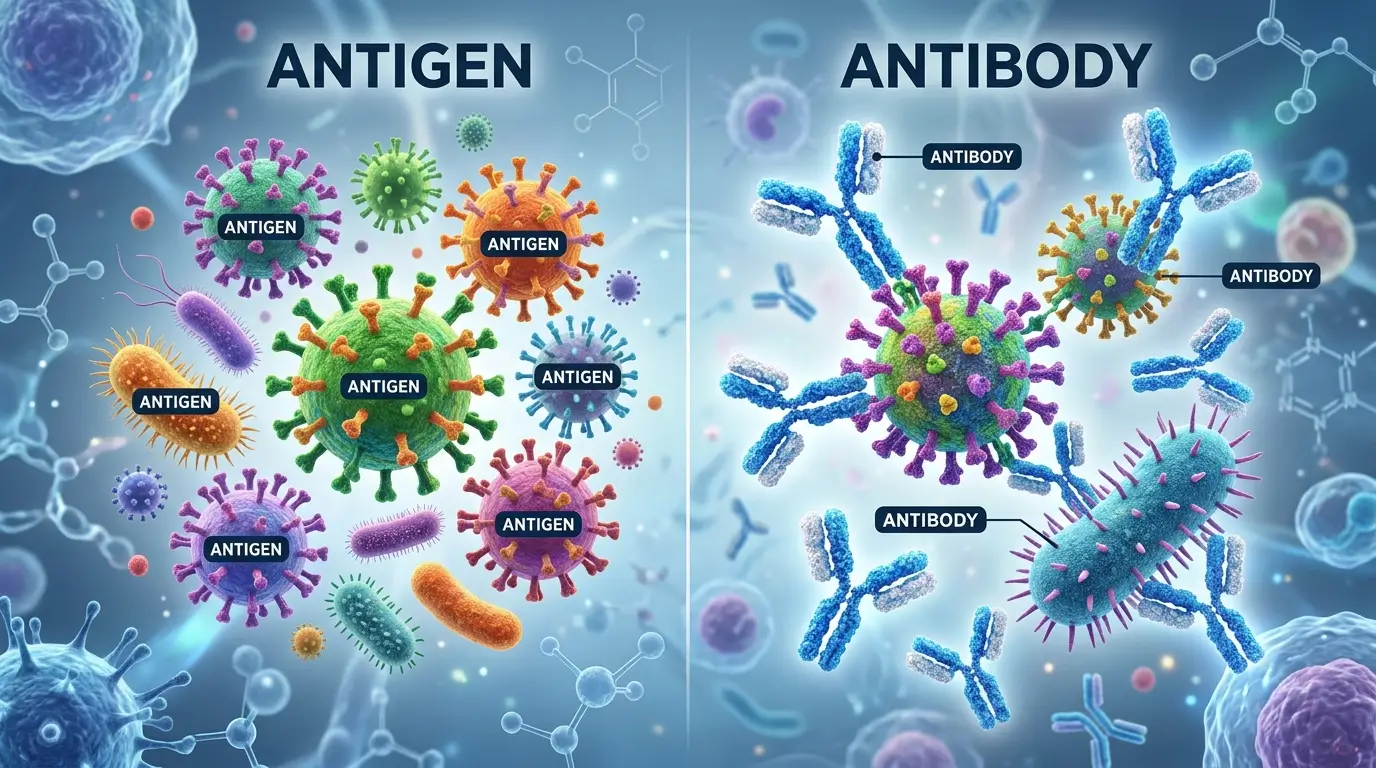
An antigen is a substance that triggers an immune response, while an antibody is a protective protein produced by the immune system to fight that substance. The difference between antibody and antigen forms the foundation of immunology and disease prevention.
Whether discussing vaccines, infections, or immunity, the difference between antibody and antigen helps explain how the body defends itself. Learning the difference between antibody and antigen can make complex medical concepts much easier to understand.
Pronunciation
| Word | US Pronunciation | UK Pronunciation |
| Antibody | an-ti-BAH-dee | an-ti-BOD-ee |
| Antigen | AN-ti-jen | AN-ti-jen |
Linking Hook
Now that we understand their basic meanings, let’s explore the detailed difference between antibody and antigen and discover how these two biological components work together to protect human health.
Key Difference Between Antibody and Antigen
The primary difference is simple:
- Antigen is a foreign substance that enters the body and triggers an immune response.
- Antibody is a protein produced by immune cells that recognizes and neutralizes the antigen.
In short, the antigen starts the battle, while the antibody fights it.
Why Is Their Difference Necessary to Know for Learners and Experts?
Understanding the difference between antibody and antigen is important because it helps explain how diseases spread, how vaccines work, and how the immune system protects us.
For students, this knowledge builds a strong foundation in biology and medicine. For healthcare professionals, it helps in diagnosing infections, developing treatments, and interpreting laboratory tests.
In society, understanding antibodies and antigens improves public awareness about vaccination, immunity, infectious diseases, and public health. During outbreaks and pandemics, knowledge of these concepts becomes especially valuable because it helps people understand how protection against disease develops.
Difference Between Antibody and Antigen
1. Definition
Antigen
A substance that triggers an immune response.
Examples:
- Coronavirus spike protein
- Pollen protein
Antibody
A protein produced by the immune system to recognize and neutralize antigens.
Examples:
- COVID-19 antibodies
- Antibodies against measles virus
2. Origin
Antigen
Usually comes from outside the body.
Examples:
- Bacteria
- Viruses
Antibody
Produced inside the body by B lymphocytes.
Examples:
- IgG antibodies
- IgM antibodies
3. Function
Antigen
Stimulates the immune system.
Examples:
- Influenza virus
- Tetanus toxin
Antibody
Protects the body by attacking antigens.
Examples:
- Neutralizing antibodies
- Protective vaccine-induced antibodies
4. Location
Antigen
Found on the surface of pathogens or foreign particles.
Examples:
- Viral envelope proteins
- Bacterial cell wall proteins
Antibody
Found in blood, lymph, and body fluids.
Examples:
- Blood plasma antibodies
- Breast milk antibodies
5. Composition
Antigen
May be proteins, carbohydrates, lipids, or nucleic acids.
Examples:
- Viral proteins
- Bacterial polysaccharides
Antibody
Always a specialized protein called immunoglobulin.
Examples:
- IgA
- IgE
6. Role in Infection
Antigen
Initiates infection recognition.
Examples:
- HIV antigen
- Hepatitis B antigen
Antibody
Helps eliminate infection.
Examples:
- HIV antibodies
- Hepatitis antibodies
7. Presence During Disease
Antigen
Appears first during infection.
Examples:
- Early viral particles
- Newly invading bacteria
Antibody
Appears after immune activation.
Examples:
- Recovery-stage antibodies
- Post-vaccination antibodies
8. Diagnostic Use
Antigen
Used for detecting active infections.
Examples:
- COVID antigen test
- Malaria antigen test
Antibody
Used for detecting previous exposure.
Examples:
- HIV antibody test
- Dengue antibody test
9. Specificity
Antigen
Can contain multiple recognition sites.
Examples:
- Virus surface proteins
- Bacterial toxins
Antibody
Targets specific antigen sites.
Examples:
- Monoclonal antibodies
- Vaccine-generated antibodies
10. Relationship
Antigen
Acts as the target.
Examples:
- Foreign proteins
- Allergens
Antibody
Acts as the defender.
Examples:
- Protective immune proteins
- Therapeutic antibodies
Nature and Behaviour of Both
Nature and Behaviour of Antigen
Antigens are usually foreign substances that enter the body and trigger an immune response. They may come from bacteria, viruses, fungi, parasites, pollen, or toxins. Their main behavior is to stimulate immune cells and activate defense mechanisms.
Nature and Behaviour of Antibody
Antibodies are specialized proteins produced by B cells. Their behavior involves identifying, binding to, and neutralizing specific antigens. They can mark invaders for destruction or prevent them from infecting cells.
Why Are People Confused About Their Use?
People often confuse antibodies and antigens because the terms sound similar and are closely connected. They are both involved in immune responses and frequently appear together in discussions about vaccines and diseases.
Another reason is that medical tests may detect either antigens or antibodies, leading many people to think they are the same thing. In reality, one is the trigger (antigen), while the other is the response (antibody).
Difference and Similarity Table
| Feature | Antigen | Antibody |
| Definition | Triggers immune response | Fights immune threats |
| Origin | Usually foreign | Produced by immune system |
| Composition | Proteins, carbohydrates, lipids, nucleic acids | Protein only |
| Function | Activates immunity | Neutralizes antigens |
| Location | On pathogens | Blood and body fluids |
| Appears First | Yes | No |
| Diagnostic Use | Detects current infection | Detects past exposure |
| Specificity | Contains binding sites | Binds specific targets |
| Role | Target | Defender |
| Similarity | Both are essential in immune responses | Both are essential in immune responses |
Which Is Better in What Situation?
When Antigen Is More Useful
Antigens are more useful when doctors need to identify an active infection. Antigen testing provides quick information about whether a disease-causing organism is currently present in the body. During outbreaks, antigen tests help detect infections rapidly and support public health measures.
When Antibody Is More Useful
Antibodies are more useful when determining whether a person has developed immunity or has been previously exposed to a disease. Antibody testing helps researchers study population immunity and evaluate vaccine effectiveness. Therapeutic antibodies are also valuable in treating certain diseases.
How the Keywords Are Used in Metaphors and Similes
Antigen
Metaphor:
“The antigen was the intruder that triggered the alarm.”
Simile:
“The antigen entered the body like an uninvited guest.”
Antibody
Metaphor:
“The antibody was the body’s soldier.”
Simile:
“The antibody moved like a trained guard protecting a fortress.”
Connotative Meaning
| Word | Connotation | Example |
| Antigen | Usually Neutral or Negative | “The antigen triggered the body’s defense system.” |
| Antibody | Generally Positive | “Antibodies protected the patient from severe illness.” |
Idioms or Proverbs Related to the Words
There are no widely recognized English idioms directly involving “antibody” or “antigen.” However, related immune-defense expressions are commonly used.
“An ounce of prevention is worth a pound of cure.”
Example:
Vaccination helps the body produce antibodies because an ounce of prevention is worth a pound of cure.
“Forewarned is forearmed.”
Example:
Antibodies prepare the immune system in advance; forewarned is forearmed.
“The best defense is a good offense.”
Example:
The immune system uses antibodies because the best defense is a good offense.
Works in Literature Featuring the Keywords
Antibody
- The Antibody — Medical Thriller, K. W. Jeter, 2002
- Antibodies: A Laboratory Manual — Scientific Literature, Ed Harlow & David Lane, 1988
Antigen
- Antigens and Antibodies — Scientific Reference, various authors, multiple editions
- Cellular and Molecular Immunology — Medical Textbook, Abbas, Lichtman & Pillai, various editions
Movies Related to the Keywords
Antibody
- Antibody (2002, USA)
Antigen
No major mainstream movie has been released with “Antigen” as the primary title, although the concept appears frequently in medical documentaries.
Frequently Asked Questions
1. What is the main difference between antibody and antigen?
An antigen triggers an immune response, while an antibody is produced to fight that antigen.
2. Which comes first, antigen or antibody?
The antigen appears first and stimulates antibody production.
3. Are antibodies harmful?
No. Antibodies generally protect the body from infections.
4. Can vaccines contain antigens?
Yes. Vaccines often contain harmless forms of antigens to train the immune system.
5. Why are antibody tests important?
They help determine whether a person has previously been exposed to a disease or developed immunity.
How Both Are Useful for Surroundings
Antigens and antibodies contribute significantly to public health. Antigens help scientists develop vaccines and diagnostic tests, while antibodies help protect individuals and communities from infectious diseases. Together, they support disease control, medical research, and healthcare advancements that benefit society.
Final Words for Both
Antigens and antibodies are partners in one of the body’s most remarkable defense systems. Although they perform opposite roles, both are essential for maintaining health and fighting disease. Understanding their relationship provides valuable insight into how immunity works.
Conclusion
The difference between antibody and antigen is fundamental to understanding the immune system. An antigen is a foreign substance that triggers an immune response, while an antibody is the body’s protective weapon against that threat. Their interaction allows the immune system to recognize, remember, and eliminate harmful invaders.
Vaccines and diagnostic tests play critical roles in modern healthcare, from disease prevention and treatment. Whether you are a student, researcher, healthcare professional, or simply curious about biology, learning the difference between antibody and antigen provides a clearer understanding of how the body stays protected. Together, antigens and antibodies form the cornerstone of immunity and contribute greatly to public health worldwide.

Jordan L. Carter is a contributing language analyst at WordCompares.com, focusing on modern English usage, evolving vocabulary trends, and digital communication language. With over a decade of writing experience, Jordan provides insightful word comparisons that make complex language differences simple for everyday readers.