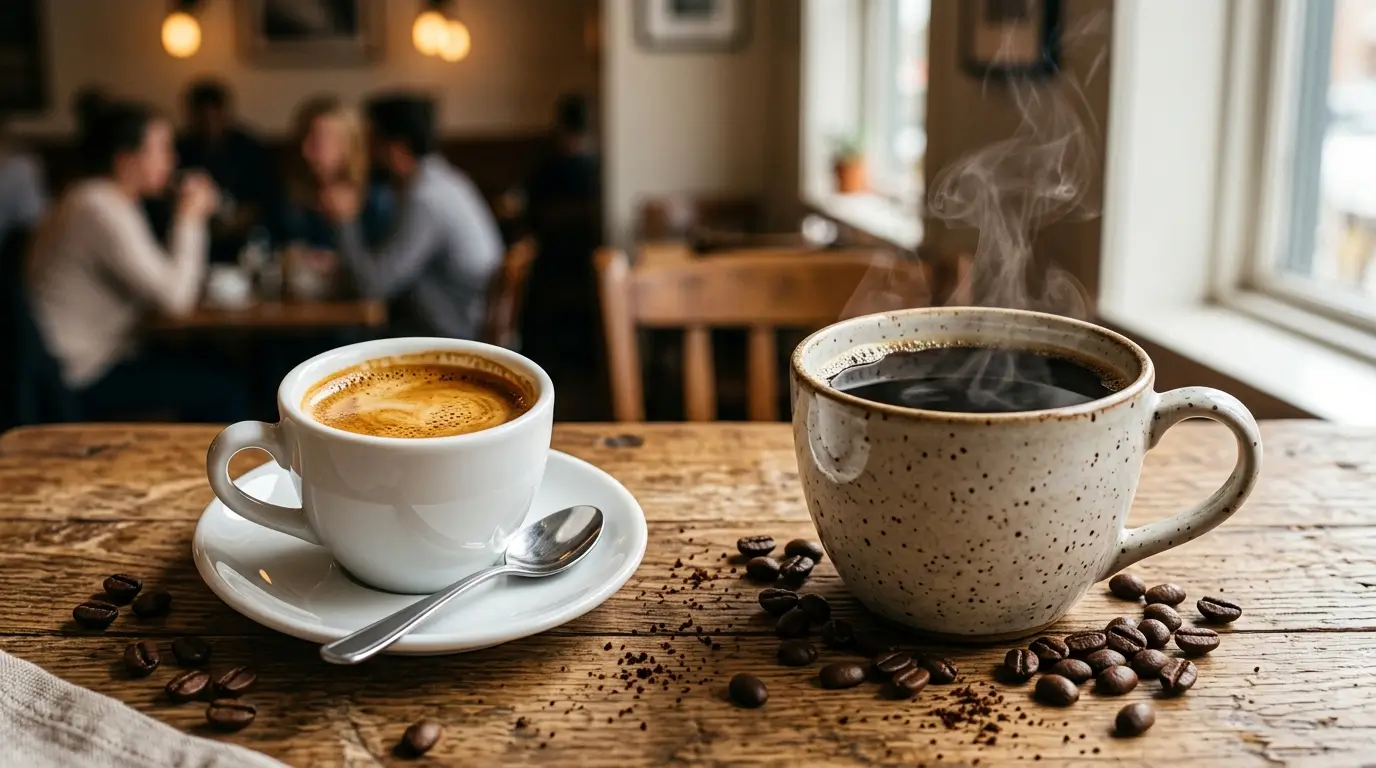
Imagine walking into a busy café on a Monday morning. One customer quickly orders a tiny shot of espresso before rushing to work, while another settles into a chair with a large mug of coffee to enjoy during a meeting. Both drinks come from coffee beans, yet they offer very different experiences. This everyday scene perfectly illustrates the difference between espresso and coffee.
Many people use these terms interchangeably, but understanding the difference between espresso and coffee can help you choose the right drink for your taste, energy needs, and lifestyle.
Whether you are a casual coffee drinker or an aspiring barista, knowing the difference between espresso and coffee enhances your appreciation of coffee culture. In this guide, we will explore the difference between espresso and coffee in simple terms and explain why each beverage has earned a special place in cafés around the world.
Why Understanding the Difference Matters
Although espresso and coffee originate from the same beans, they differ in preparation, flavor, texture, and serving style. These differences influence how people consume them and how coffee professionals create specialty drinks. Understanding their distinctions allows consumers to make informed choices while helping experts maintain quality standards within the coffee industry.
Pronunciation
Espresso
| Accent | Pronunciation |
| US English | eh-SPRES-oh |
| UK English | eh-SPRES-oh |
Coffee
| Accent | Pronunciation |
| US English | KAW-fee |
| UK English | KOF-ee |
Understanding how these drinks are pronounced is easy, but understanding how they differ is where things become truly interesting. Let’s explore the details.
Difference Between Espresso and Coffee
1. Brewing Method
Espresso: Made by forcing hot water through finely ground coffee under high pressure.
Coffee: Usually brewed by dripping hot water through medium-ground coffee using gravity.
Examples of Espresso
- Espresso shot from an espresso machine.
- Espresso used as a base for a latte.
Examples of Coffee
- Drip coffee from a coffee maker.
- Pour-over coffee prepared manually.
2. Grind Size
Espresso: Requires very fine coffee grounds.
Coffee: Uses medium or coarse grounds depending on the brewing method.
Examples of Espresso
- Finely ground Italian espresso blend.
- Commercial espresso machine grind.
Examples of Coffee
- Medium grind for drip coffee.
- Coarse grind for French press coffee.
3. Brewing Time
Espresso: Usually takes 20–30 seconds.
Coffee: Often takes 4–10 minutes.
Examples of Espresso
- Single espresso shot.
- Double espresso shot.
Examples of Coffee
- Automatic drip coffee.
- Manual pour-over coffee.
4. Flavor Intensity
Espresso: Strong, concentrated, and bold.
Coffee: Generally lighter and more diluted.
Examples of Espresso
- Rich chocolate-flavored espresso.
- Dark roasted espresso blend.
Examples of Coffee
- Mild breakfast blend.
- Light roast filter coffee.
5. Serving Size
Espresso: Served in small shots.
Coffee: Served in larger cups or mugs.
Examples of Espresso
- Single shot (about 30 ml).
- Double shot (about 60 ml).
Examples of Coffee
- 8-ounce mug.
- 12-ounce takeaway cup.
6. Texture
Espresso: Thick and creamy with a layer called crema.
Coffee: Thinner and smoother.
Examples of Espresso
- Espresso with golden crema.
- Ristretto espresso shot.
Examples of Coffee
- Black drip coffee.
- Filtered breakfast coffee.
7. Caffeine Concentration
Espresso: Higher caffeine concentration per ounce.
Coffee: Lower concentration per ounce but often more caffeine per serving because of larger volume.
Examples of Espresso
- Single espresso shot.
- Double espresso shot.
Examples of Coffee
- Large black coffee.
- Brewed office coffee.
8. Equipment Required
Espresso: Requires specialized espresso machines.
Coffee: Can be made using simple brewing equipment.
Examples of Espresso
- Commercial espresso machine.
- Home espresso machine.
Examples of Coffee
- French press.
- Pour-over dripper.
9. Use in Specialty Drinks
Espresso: Forms the base of many café beverages.
Coffee: Often consumed on its own.
Examples of Espresso
- Cappuccino.
- Latte.
Examples of Coffee
- Black coffee.
- Iced coffee.
10. Cost of Preparation
Espresso: Usually requires more expensive equipment and maintenance.
Coffee: Often cheaper and easier to prepare.
Examples of Espresso
- Café espresso machine setup.
- High-end home espresso system.
Examples of Coffee
- Basic drip brewer.
- French press setup.
Nature and Behavior of Espresso
Espresso is concentrated, rich, and intense. It delivers bold flavors quickly and serves as the foundation for many specialty drinks. Espresso appeals to those who appreciate strong coffee experiences and efficient caffeine delivery.
Nature and Behavior of Coffee
Coffee is versatile, approachable, and relaxing. It is designed for longer drinking sessions and offers a wide range of flavors depending on the roast and brewing method. Many people enjoy coffee as part of their daily routine.
Why Are People Confused About Their Use?
People often become confused because both drinks are made from the same coffee beans. Additionally, espresso is technically a type of coffee rather than a completely separate product. Since coffee shops frequently use espresso in popular beverages, consumers may assume espresso and regular coffee are identical when they are actually prepared differently.
Difference and Similarity Table
| Feature | Espresso | Coffee | Similarity |
| Source | Coffee beans | Coffee beans | Both come from coffee beans |
| Brewing | Pressure extraction | Gravity extraction | Both use hot water |
| Grind | Fine | Medium/coarse | Both require ground beans |
| Flavor | Strong | Milder | Both provide coffee flavor |
| Serving Size | Small | Large | Both can be served hot |
| Texture | Thick | Thin | Both are beverages |
| Brewing Time | Short | Longer | Both require brewing |
| Equipment | Espresso machine | Various brewers | Both need equipment |
| Usage | Specialty drinks | Standalone drink | Both are widely consumed |
| Popularity | High | High | Both are global favorites |
Which Is Better in What Situation?
When Espresso Is Better
Espresso is ideal when you need a quick, concentrated coffee experience. It works well before work, during short breaks, or when making specialty drinks such as lattes and cappuccinos. People who enjoy strong flavors often prefer espresso because it delivers richness in a small serving.
When Coffee Is Better
Coffee is better for leisurely drinking, long meetings, studying, or social gatherings. Its larger serving size allows people to enjoy it over an extended period. Coffee is also easier and less expensive to prepare at home, making it a practical everyday beverage.
How the Words Are Used in Metaphors and Similes
Espresso
Metaphors
- “Her speech was an espresso shot of motivation.”
- “The announcement was pure espresso for the team.”
Similes
- “He moved like an espresso-fueled athlete.”
- “She responded as quickly as an espresso machine.”
Coffee
Metaphors
- “Friendship is the coffee of life.”
- “His encouragement was morning coffee for the soul.”
Similes
- “She felt as comforting as a warm cup of coffee.”
- “The conversation flowed like freshly brewed coffee.”
Connotative Meanings
Espresso
Positive
- Energy
- Sophistication
- Efficiency
Example: “The entrepreneur brought espresso-like energy to the meeting.”
Negative
- Intensity
- Stress
- Rush
Example: “His espresso-paced lifestyle left little room for rest.”
Neutral
- A concentrated coffee beverage.
Coffee
Positive
- Comfort
- Warmth
- Community
Example: “Their coffee-like friendship lasted for decades.”
Negative
- Dependence
- Habit
Example: “He couldn’t start the day without coffee.”
Neutral
- A brewed beverage made from coffee beans.
Idioms and Expressions Related to Coffee
Wake Up and Smell the Coffee
Meaning: Recognize reality.
Example: “You need to wake up and smell the coffee—the market has changed.”
Coffee Break
Meaning: A short period of rest.
Example: “Let’s discuss the project after a coffee break.”
Not My Cup of Coffee
Meaning: Something one does not enjoy.
Example: “Extreme sports are not my cup of coffee.”
Literary Works Related to Coffee
- Coffee and Coffeehouses – Markman Ellis (History, 2004)
- Uncommon Grounds – Mark Pendergrast (Nonfiction, 1999)
- Coffee: A Global History – Jonathan Morris (History, 2018)
- The Coffee Trader – David Liss (Historical Fiction, 2003)
Movies Related to Coffee
- Coffee and Cigarettes (2003, USA)
- Black Coffee (2014, USA)
- A Film About Coffee (2014, USA)
- Coffee Town (2013, USA)
Frequently Asked Questions
1. Is espresso stronger than coffee?
Yes, espresso is more concentrated and has a stronger flavor.
2. Does espresso contain more caffeine?
Per ounce, yes. Per serving, regular coffee may contain more total caffeine.
3. Can regular coffee be used to make espresso?
Not effectively, because espresso requires a fine grind and pressure-based brewing.
4. Why is espresso served in small cups?
Its concentrated flavor is designed to be enjoyed in small amounts.
5. Is espresso healthier than coffee?
Neither is inherently healthier. The choice depends on serving size and added ingredients.
How Both Are Useful for Their Surroundings
Espresso supports café culture and the specialty beverage industry. It encourages innovation in coffee preparation and serves as the base for many popular drinks.
Coffee contributes to social interaction, workplace productivity, and community gatherings. It is one of the world’s most widely consumed beverages and supports millions of farmers and businesses globally.
Final Words for Espresso and Coffee
Espresso represents concentration, intensity, and craftsmanship. Coffee represents comfort, versatility, and tradition. Together, they showcase the remarkable diversity of the coffee world.
Conclusion
The difference between espresso and coffee lies primarily in how they are brewed, served, and experienced. Espresso is a concentrated beverage produced through pressure extraction, while coffee is typically brewed using gravity-based methods.
These distinctions create differences in flavor, texture, serving size, and caffeine concentration. Understanding the difference between espresso and coffee helps consumers choose the beverage that best fits their preferences and lifestyle.
Whether you prefer the bold punch of espresso or the comforting experience of a full cup of coffee, both drinks offer unique benefits and have earned their place in global culture. Appreciating their differences can deepen your understanding of coffee and enhance every cup you enjoy.

Dr. Marcus Reed is a lead editorial author at WordCompares.com and a specialist in communication studies and written clarity. With more than 12 years of university-level teaching experience, he focuses on explaining word distinctions in a clear and structured manner. His work ensures that WordCompares.com maintains accuracy, depth, and reader trust.