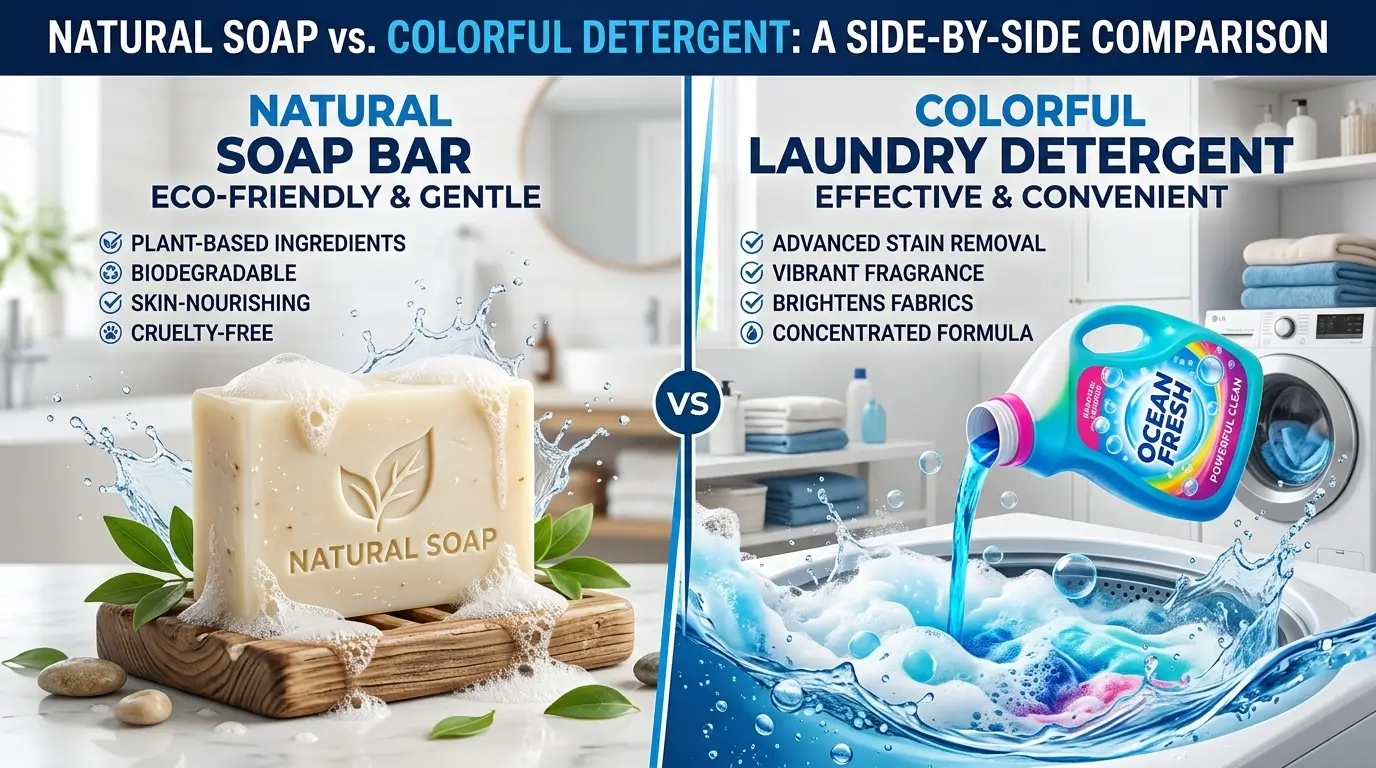
Imagine a family doing laundry on a rainy weekend. One person prefers traditional soap because it feels natural and gentle, while another chooses detergent because it removes stains more effectively. This everyday situation highlights the difference between soap and detergent, a topic that affects households, industries, and environmental discussions worldwide.
The difference between soap and detergent lies mainly in their composition, cleaning action, and effectiveness in different water conditions. While both are cleaning agents, they are made differently and serve distinct purposes. Understanding the difference between soap and detergent helps consumers make informed choices for personal hygiene, laundry, and cleaning tasks. Whether you are a student, homeowner, or professional cleaner, knowing the difference between soap and detergent can improve cleaning efficiency and reduce unnecessary expenses.
Key Difference Between Soap and Detergent
The primary difference is that soap is made from natural fats or oils through saponification, whereas detergent is a synthetic cleaning agent produced from chemical compounds. Soap works best in soft water, while detergents perform efficiently in both hard and soft water.
Why Is Their Difference Necessary to Know for Learners and Experts?
Understanding the difference between soap and detergent is important because both products play essential roles in modern society.
For learners, this knowledge improves scientific understanding of chemistry, hygiene, and environmental studies. Students can better understand how cleaning agents interact with dirt, grease, and water.
For experts in cleaning industries, healthcare, manufacturing, and environmental management, knowing these differences helps select the most effective cleaning products. Proper product selection improves sanitation, reduces costs, and minimizes environmental impact.
Pronunciation
| Word | US Pronunciation | UK Pronunciation |
| Soap | /soʊp/ | /səʊp/ |
| Detergent | /dɪˈtɜːrdʒənt/ | /dɪˈtɜːdʒənt/ |
Linking Hook
Now that we understand what soap and detergent are and why their distinction matters, let’s explore the detailed differences that set these two cleaning agents apart.
Difference Between Soap and Detergent
1. Composition
Soap
Soap is made from natural fats and oils combined with alkali.
Examples:
- Olive oil soap
- Coconut oil soap
Detergent
Detergent is made from synthetic surfactants and chemical additives.
Examples:
- Laundry detergent powder
- Dishwashing liquid detergent
2. Manufacturing Process
Soap
Produced through saponification, a reaction between fats and alkali.
Examples:
- Handmade artisan soap
- Castile soap
Detergent
Produced through industrial chemical processes.
Examples:
- Liquid laundry detergent
- Industrial cleaning detergent
3. Performance in Hard Water
Soap
Forms scum and becomes less effective in hard water.
Examples:
- Soap residue on bathroom tiles
- Reduced lather in mineral rich water
Detergent
Works effectively in hard water without forming scum.
Examples:
- Laundry cleaning in hard water regions
- Automatic dishwasher detergents
4. Cleaning Strength
Soap
Effective for light dirt and body cleansing.
Examples:
- Bath soap
- Hand soap
Detergent
Better at removing heavy grease and stains.
Examples:
- Oil stain remover
- Kitchen cleaning detergent
5. Environmental Impact
Soap
Generally biodegradable and eco friendly.
Examples:
- Organic soaps
- Plant based soaps
Detergent
Some detergents may contribute to water pollution.
Examples:
- Phosphate containing detergents
- Industrial detergents
6. Skin Friendliness
Soap
Usually gentler on skin.
Examples:
- Baby soap
- Moisturizing soap
Detergent
Can irritate sensitive skin if highly concentrated.
Examples:
- Strong laundry detergent
- Industrial cleaners
7. Cost of Production
Soap
Often cheaper due to simpler ingredients.
Examples:
- Homemade soap
- Traditional laundry soap
Detergent
May involve more complex manufacturing costs.
Examples:
- Premium detergent brands
- Specialized stain removers
8. Foam Formation
Soap
Produces foam but may decrease in hard water.
Examples:
- Bath soap lather
- Natural soap bubbles
Detergent
Creates stable foam in various water conditions.
Examples:
- Dishwashing liquid
- Laundry detergent foam
9. Uses
Soap
Mainly used for bathing and personal hygiene.
Examples:
- Body soap
- Facial cleansing bar
Detergent
Commonly used for laundry and household cleaning.
Examples:
- Washing machine detergent
- Floor cleaning detergent
10. Chemical Structure
Soap
Contains salts of fatty acids.
Examples:
- Sodium stearate soap
- Potassium palmitate soap
Detergent
Contains synthetic surfactants.
Examples:
- Sodium lauryl sulfate detergents
- Linear alkylbenzene sulfonate detergents
Nature and Behaviour of Soap and Detergent
Nature and Behaviour of Soap
Soap is natural, biodegradable, and mild. It reacts with minerals present in hard water and forms scum. Soap is generally preferred for personal care because it is gentle on skin.
Nature and Behaviour of Detergent
Detergent is synthetic, highly efficient, and versatile. It remains effective in hard water and is designed to remove stubborn dirt, grease, and stains.
Why Are People Confused About Their Use?
People often confuse soap and detergent because both are cleaning agents that produce foam and remove dirt. Many cleaning products look similar, and some detergents are marketed as “soap” for convenience. Additionally, both products are commonly used in homes, making the distinction less obvious to consumers.
Difference and Similarity Table
| Feature | Soap | Detergent | Similarity |
| Composition | Natural fats/oils | Synthetic chemicals | Both clean surfaces |
| Water Performance | Better in soft water | Effective in hard water | Both remove dirt |
| Biodegradability | Usually high | Varies | Both can be eco friendly |
| Skin Use | Common | Limited | Both used in cleaning |
| Foam | Less stable in hard water | Stable | Both create lather |
| Manufacturing | Saponification | Chemical synthesis | Both require processing |
| Cost | Often lower | Varies | Available commercially |
| Cleaning Power | Moderate | Strong | Remove grease |
| Household Use | Personal hygiene | Laundry/cleaning | Used daily |
| Environmental Impact | Generally lower | Depends on formula | Both affect environment |
Which Is Better in What Situation?
Soap
Soap is better when personal hygiene, skin sensitivity, and environmental friendliness are the main concerns. It is ideal for bathing, handwashing, and situations where natural ingredients are preferred. People with sensitive skin often choose soap because it contains fewer synthetic chemicals. Soap is also suitable for environmentally conscious consumers because it is usually biodegradable.
Detergent
Detergent is better when strong cleaning performance is needed. It is ideal for washing clothes, removing grease, cleaning dishes, and industrial cleaning tasks. Since detergents work well in hard water, they are often the preferred choice in modern households. Their stain removing ability makes them highly effective for laundry and heavy duty cleaning.
How the Keywords Are Used in Metaphors and Similes
Soap
Metaphor:
- “Her honesty was a soap that cleaned away misunderstandings.”
Simile:
- “His explanation was as clean as soap on fresh hands.”
Detergent
Metaphor:
- “The investigation acted as a detergent, removing layers of corruption.”
Simile:
- “Her determination cut through problems like detergent through grease.”
Connotative Meanings
Soap
Positive:
- Purity
- Cleanliness
- Freshness
Example:
- “His reputation remained as pure as soap.”
Neutral:
- Everyday cleaning product.
Negative:
- Excessive cleanliness or artificial appearance.
Example:
- “The advertisement presented a soap clean version of reality.”
Detergent
Positive:
- Efficiency
- Strength
- Problem solving
Example:
- “She became the detergent that removed workplace inefficiency.”
Neutral:
- Household cleaning agent.
Negative:
- Harshness or excessive chemical use.
Example:
- “His criticism acted like detergent on sensitive emotions.”
Idioms or Proverbs Related to the Words
There are no major English idioms directly based on “soap” or “detergent,” but related expressions include:
Clean as a Whistle
Meaning: Completely clean.
Example:
- “After washing with soap, the kitchen was clean as a whistle.”
Wash One’s Hands of Something
Meaning: Refuse responsibility.
Example:
- “The manager washed his hands of the problem.”
Come Clean
Meaning: Tell the truth.
Example:
- “He finally came clean about the mistake.”
Works in Literature Featuring the Keywords
Soap
- Soap (Novel, 2009) – David Hampshire
- Soap Opera (Satirical Fiction, 1961) – Philip Wylie
Detergent
- The word frequently appears in scientific and technical literature, especially chemistry and environmental studies texts.
Movies Related to the Keywords
Soap
- Soapdish (1991, United States)
- Soap Opera (2014, Brazil)
Detergent
- No widely recognized major films titled “Detergent,” though detergents frequently appear in documentaries and advertisements.
Frequently Asked Questions
1. What is the main difference between soap and detergent?
Soap is made from natural fats and oils, while detergent is made from synthetic chemicals.
2. Which works better in hard water?
Detergent works better because it does not form scum with minerals.
3. Is soap more environmentally friendly?
Generally yes, because most soaps are biodegradable.
4. Can detergent be used on skin?
Some mild detergents are used in cleansers, but traditional soap is usually gentler.
5. Which is better for laundry?
Detergent is usually better because it removes stains more effectively.
How Both Are Useful for Surroundings
Soap helps maintain personal hygiene, reduces the spread of germs, and supports public health. Detergents help keep clothes, dishes, workplaces, and public spaces clean. Together, they contribute significantly to sanitation, disease prevention, and improved quality of life.
Final Words for Both
Soap represents tradition, natural cleansing, and skin care. Detergent represents modern efficiency, convenience, and advanced cleaning technology. Both have unique strengths and continue to play important roles in daily life.
Conclusion
The difference between soap and detergent goes beyond simple cleaning. Soap is a natural product made from fats and oils that works well for personal hygiene and environmentally friendly cleaning. Detergent, on the other hand, is a synthetic cleaner designed to provide powerful performance in various water conditions and cleaning situations.
Understanding the difference between soap and detergent helps consumers choose the right product for specific needs. While soap remains a preferred option for gentle cleansing and sustainability, detergent dominates laundry and heavy duty cleaning tasks. Both are valuable cleaning agents, and selecting the appropriate one depends on the intended purpose, water quality, and personal preferences.

Jordan L. Carter is a contributing language analyst at WordCompares.com, focusing on modern English usage, evolving vocabulary trends, and digital communication language. With over a decade of writing experience, Jordan provides insightful word comparisons that make complex language differences simple for everyday readers.