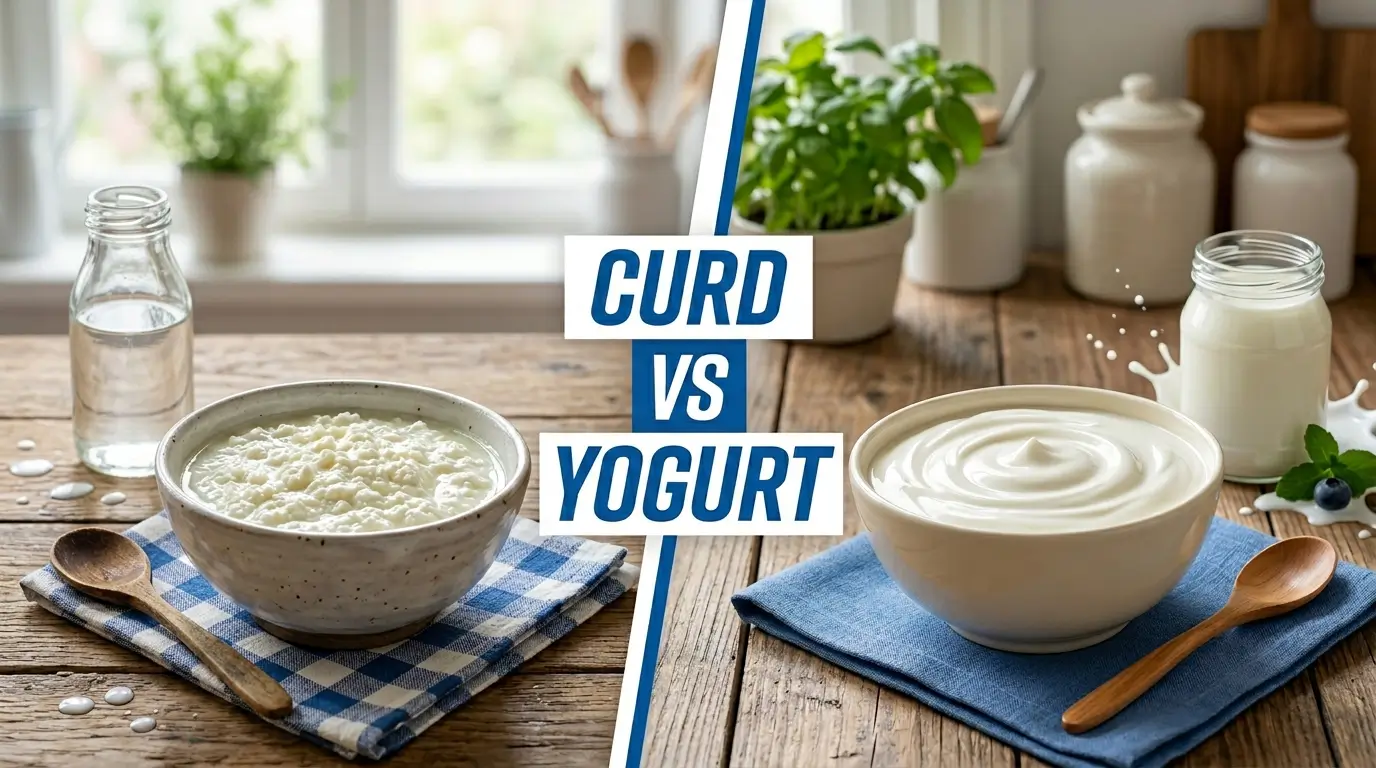
Imagine visiting a local dairy shop where one customer asks for curd while another requests yogurt. At first glance, both products look almost identical. They are creamy, white, tangy, and made from milk. However, when the shopkeeper explains their preparation methods and nutritional values, it becomes clear that they are not exactly the same.
Understanding the difference between curd and yogurt is important because these dairy products are widely consumed around the world. Many people use them interchangeably, while others believe they are completely different foods.
The difference between curd and yogurt lies mainly in their production process, bacterial cultures, texture, and nutritional profile. Learning the difference between curd and yogurt helps consumers make better dietary choices. If you are a student, food enthusiast, nutritionist, or chef, knowing the difference between curd and yogurt can improve your understanding of healthy eating.
Key Difference Between Curd and Yogurt
The primary difference is that curd is made by naturally fermenting milk using acidic substances or existing curd, while yogurt is produced using specific bacterial cultures under controlled conditions. Yogurt follows a standardized manufacturing process, whereas curd preparation varies by region and household traditions.
Why Is Their Difference Necessary to Know for Learners and Experts?
Understanding the distinction between curd and yogurt is valuable because these foods play important roles in nutrition, health, food science, and culinary traditions. Learners gain knowledge about fermentation and food production, while experts such as dietitians, microbiologists, and chefs can make informed recommendations regarding digestive health and food preparation.
In modern society, awareness of dairy products helps people choose foods that suit their dietary needs. Since yogurt often contains standardized probiotic cultures and curd may contain naturally occurring bacteria, recognizing their differences contributes to better nutritional decisions and health outcomes.
Pronunciation
Curd
| Accent | Pronunciation |
| US | /kɜrd/ |
| UK | /kɜːd/ |
Yogurt
| Accent | Pronunciation |
| US | /ˈjoʊɡərt/ |
| UK | /ˈjɒɡət/ |
Linking Hook
Although curd and yogurt may look alike in a bowl, their preparation methods, bacterial cultures, nutritional characteristics, and culinary applications reveal important differences. Let’s explore them in detail.
Difference Between Curd and Yogurt
1. Method of Preparation
Curd
Curd is produced by adding a small amount of existing curd or acidic agents to warm milk.
Examples:
- Homemade curd prepared overnight.
- Traditional village-made curd.
Yogurt
Yogurt is produced using selected bacterial cultures under controlled temperatures.
Examples:
- Greek yogurt.
- Commercial probiotic yogurt.
2. Bacterial Cultures
Curd
Contains naturally occurring bacteria from the environment.
Examples:
- Lactobacillus from previous curd batches.
- Regional bacterial strains.
Yogurt
Contains standardized cultures such as Lactobacillus bulgaricus and Streptococcus thermophilus.
Examples:
- Plain yogurt.
- Flavored probiotic yogurt.
3. Origin
Curd
Common in South Asian households.
Examples:
- Indian dahi.
- Pakistani dahi.
Yogurt
Originated in Central Asia and spread globally.
Examples:
- Turkish yogurt.
- European yogurt.
4. Texture
Curd
Texture varies according to preparation.
Examples:
- Thick homemade curd.
- Soft village curd.
Yogurt
Usually smooth and uniform.
Examples:
- Greek yogurt.
- Stirred yogurt.
5. Taste
Curd
Taste depends on bacterial activity and fermentation time.
Examples:
- Mild curd.
- Sour curd.
Yogurt
Generally has a predictable tangy flavor.
Examples:
- Vanilla yogurt.
- Plain yogurt.
6. Nutritional Consistency
Curd
Nutritional values can vary.
Examples:
- Homemade cow milk curd.
- Buffalo milk curd.
Yogurt
Nutritional profile is more standardized.
Examples:
- Low-fat yogurt.
- Protein-enriched yogurt.
7. Probiotic Content
Curd
May contain beneficial bacteria but not always specific probiotics.
Examples:
- Fresh homemade curd.
- Traditional fermented curd.
Yogurt
Often contains scientifically selected probiotics.
Examples:
- Probiotic yogurt drinks.
- Functional yogurts.
8. Shelf Life
Curd
Usually has a shorter shelf life.
Examples:
- Homemade curd lasting a few days.
- Fresh dairy curd.
Yogurt
Often lasts longer due to controlled production.
Examples:
- Packaged yogurt cups.
- Commercial yogurt tubs.
9. Commercial Production
Curd
Mostly homemade or locally produced.
Examples:
- Neighborhood dairy curd.
- Family-made curd.
Yogurt
Widely produced on an industrial scale.
Examples:
- Supermarket yogurt brands.
- International yogurt products.
10. Culinary Uses
Curd
Frequently used in traditional dishes.
Examples:
- Raita.
- Kadhi.
Yogurt
Commonly used in modern snacks and desserts.
Examples:
- Yogurt parfaits.
- Smoothies.
Nature and Behavior of Curd and Yogurt
Nature and Behavior of Curd
Curd is a naturally fermented dairy product. Its consistency, taste, and bacterial composition vary depending on temperature, milk quality, and fermentation conditions. It behaves differently in various climates and can become sour quickly.
Nature and Behavior of Yogurt
Yogurt is a controlled fermented product with predictable texture, flavor, and bacterial content. It maintains greater consistency across batches and is commonly marketed as a probiotic food.
Why Are People Confused About Their Use?
People often confuse curd and yogurt because both are milk-based fermented foods with a similar appearance. In many countries, the terms are used interchangeably in everyday conversation. Their creamy texture, white color, and sour taste further contribute to misunderstanding. Additionally, some commercial products are labeled differently depending on regional marketing practices.
Difference and Similarity Table
| Feature | Curd | Yogurt | Similarity |
| Source | Milk | Milk | Both are dairy products |
| Fermentation | Natural | Controlled | Both involve fermentation |
| Bacteria | Variable | Specific cultures | Both contain beneficial bacteria |
| Texture | Variable | Consistent | Both are creamy |
| Taste | Varies | Predictable | Both are tangy |
| Production | Mostly homemade | Commercial | Both can be homemade |
| Probiotics | Not standardized | Standardized | Both may aid digestion |
| Shelf Life | Shorter | Longer | Both require refrigeration |
| Usage | Traditional dishes | Snacks and desserts | Both are versatile |
| Nutrition | Variable | Consistent | Both provide nutrients |
Which Is Better in What Situation?
When Curd Is Better
Curd is often better for traditional cooking and home-based diets. It is economical, easy to prepare, and widely available. Many people prefer curd in recipes such as raita, kadhi, and marinades because of its natural flavor and local preparation methods. Those who enjoy homemade foods may find curd more appealing.
When Yogurt Is Better
Yogurt is generally preferred when consistent nutritional value and probiotic content are important. Athletes, health-conscious individuals, and people seeking digestive benefits often choose yogurt. It is also convenient for smoothies, breakfast bowls, and healthy snacks due to its standardized quality and longer shelf life.
How the Keywords Are Used in Metaphors and Similes
Curd
Metaphor:
“His thoughts turned into curd overnight.”
(Meaning: They became settled or transformed.)
Simile:
“The mixture was as thick as curd.”
Yogurt
Metaphor:
“Her ideas were yogurt for the mind.”
(Meaning: Healthy and nourishing.)
Simile:
“The dessert was as smooth as yogurt.”
Connotative Meanings
Curd
Positive: Traditional, natural, homemade.
Example: “Grandmother’s curd reminds us of family traditions.”
Negative: Sour or spoiled when over-fermented.
Example: “The curd became too sour to enjoy.”
Neutral: A fermented dairy product.
Example: “Curd is served with lunch.”
Yogurt
Positive: Healthy, nutritious, modern.
Example: “Yogurt is a smart breakfast choice.”
Negative: Can seem processed or commercial.
Example: “Some people prefer natural foods over packaged yogurt.”
Neutral: A cultured milk product.
Example: “Yogurt is available in many flavors.”
Idioms or Proverbs Related to the Words
There are no widely recognized English idioms directly involving curd or yogurt.
Related expressions:
“The proof of the pudding is in the eating.”
Example:
“We tried both products, and the proof of the pudding is in the eating.”
“Cream rises to the top.”
Example:
“Her excellent yogurt recipe proved that cream rises to the top.”
Works in Literature
Curd
- Curd and Cheese Making — J. J. Willaman (Food Science, 1918)
- Indian Dairy Traditions — Various Authors (Cultural Studies)
Yogurt
- The Yogurt Culture — Cheryl Sternman Rule (Food Writing, 2015)
- The Book of Yogurt — Sonia Uvezian (Cookbook, 1999)
Movies Related to the Keywords
Curd
No major internationally recognized films are directly titled “Curd.”
Yogurt
- Yogurt Utopias (2014, USA, Documentary)
- The Yogurt Shop Murders (2022, USA, Documentary Series)
Frequently Asked Questions
1. Is curd the same as yogurt?
No. Both are fermented milk products, but yogurt uses specific bacterial cultures while curd uses natural fermentation methods.
2. Which is healthier, curd or yogurt?
Both are nutritious, but yogurt often contains standardized probiotic cultures.
3. Can yogurt replace curd in recipes?
Yes, in many recipes, though the flavor and texture may differ slightly.
4. Why does curd taste different every time?
Natural fermentation causes variations in bacterial growth and acidity.
5. Is homemade curd better than store-bought yogurt?
It depends on personal preference and dietary needs. Homemade curd is natural, while yogurt offers consistency and probiotic benefits.
How Both Are Useful for Surroundings
Curd and yogurt help reduce food waste by preserving milk through fermentation. Their production supports dairy farming and local economies. Both products encourage sustainable food practices and provide nutritious dietary options for communities worldwide.
Final Words for Both
Curd represents tradition, simplicity, and homemade nourishment. Yogurt represents scientific food processing, consistency, and probiotic benefits. Both hold significant value in healthy diets and culinary traditions.
Conclusion
The difference between curd and yogurt extends beyond simple terminology. While both are fermented dairy products made from milk, their preparation methods, bacterial cultures, nutritional consistency, and culinary uses differ significantly.
Curd is traditionally prepared through natural fermentation and remains a staple in many households. Yogurt, on the other hand, is manufactured using specific bacterial cultures under controlled conditions, resulting in a more standardized product.
Understanding these distinctions helps consumers choose the option that best suits their health goals, cooking needs, and personal preferences. If you enjoy homemade curd or commercially produced yogurt, both provide valuable nutrients and contribute to a balanced diet.

Jordan L. Carter is a contributing language analyst at WordCompares.com, focusing on modern English usage, evolving vocabulary trends, and digital communication language. With over a decade of writing experience, Jordan provides insightful word comparisons that make complex language differences simple for everyday readers.