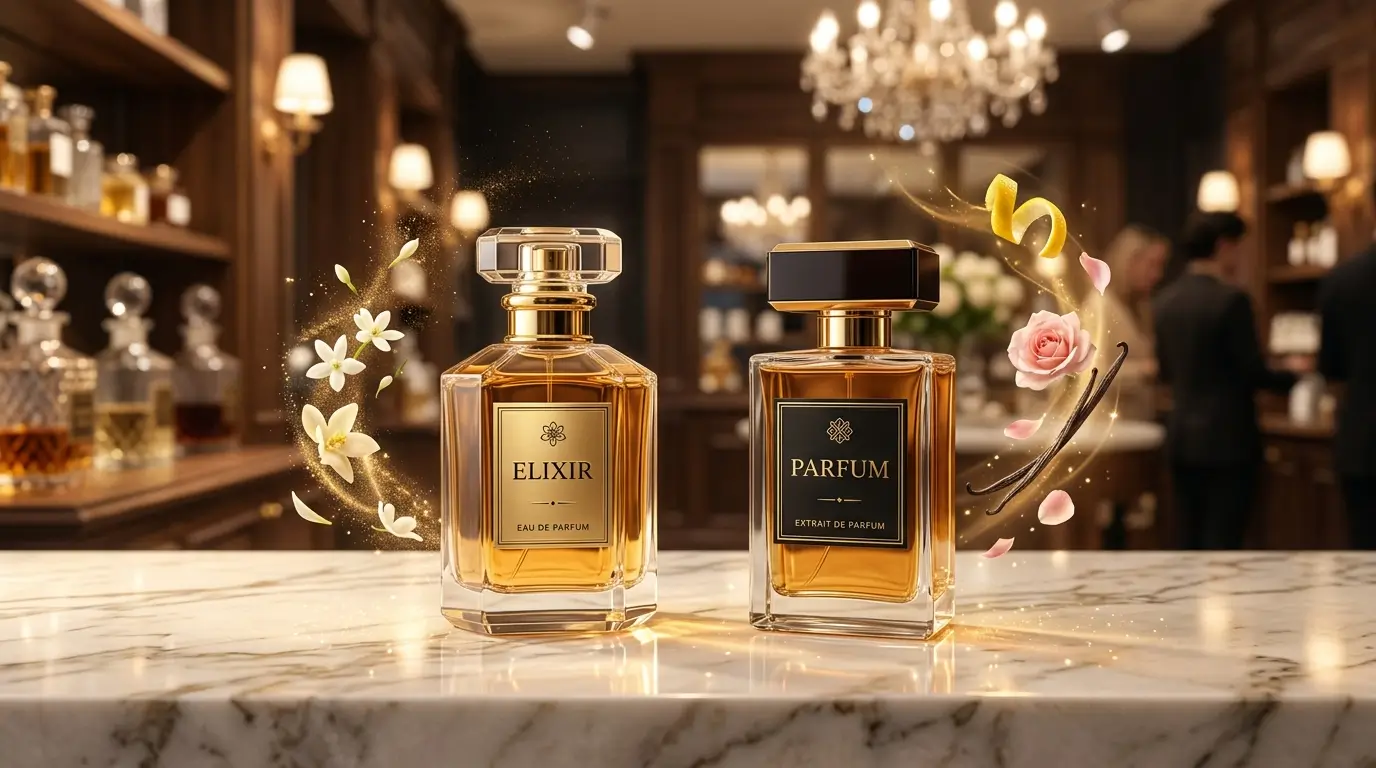
Imagine walking into a luxury perfume store before an important event. You notice two bottles of the same fragrance. One says “Parfum” while the other says “Elixir.” The packaging looks similar, but the prices, scent intensity, and longevity are different. Many fragrance enthusiasts face this exact situation and wonder which option is right for them.
Understanding the difference between elixir and parfum helps consumers make better purchasing decisions. The difference between elixir and parfum is mainly related to concentration, intensity, longevity, and scent composition.
If you are a beginner exploring fragrances or an expert collector, knowing the difference between elixir and parfum can improve your fragrance experience. This guide explains the difference between elixir and parfum in simple language so everyone can understand it easily.
Key Difference Between Elixir and Parfum
An elixir is usually a richer, more intense, and often more concentrated version of an existing fragrance. It is designed to provide stronger projection and longer-lasting performance.
A parfum (or perfume extract) refers to a fragrance category with a very high concentration of aromatic oils, usually offering excellent longevity and a smoother scent experience.
Why Is Their Difference Necessary to Know for Learners and Experts?
Understanding the difference helps consumers spend money wisely and select fragrances that suit their lifestyle. Beginners can avoid buying products that may be too strong or too subtle for their needs. Experts benefit because they can better evaluate fragrance quality, performance, and value.
In modern society, fragrances play important roles in personal grooming, professional appearance, social interactions, and luxury branding. Knowing the distinctions between fragrance categories helps people make informed choices and appreciate the artistry behind perfumery.
Pronunciation
Elixir
| Accent | Pronunciation |
| US | ih-LIK-ser |
| UK | ih-LIK-suh |
Parfum
| Accent | Pronunciation |
| US | par-FUM |
| UK | par-FUM |
Before comparing them in detail, let’s explore the major differences that make each fragrance type unique.
Difference Between Elixir and Parfum
1. Meaning
Elixir
An elixir is typically a stronger and more intense version of a fragrance.
Examples:
- Dior Sauvage Elixir
- Le Male Elixir
Parfum
Parfum is a fragrance concentration category containing high perfume oil content.
Examples:
- Chanel No. 5 Parfum
- Guerlain Shalimar Parfum
2. Fragrance Concentration
Elixir
Concentration varies by brand and may exceed standard versions.
Examples:
- Stronger than Eau de Toilette
- Stronger than Eau de Parfum
Parfum
Usually contains 20–40% fragrance oils.
Examples:
- Luxury perfume extracts
- Traditional French parfums
3. Longevity
Elixir
Often lasts 10–14 hours or more.
Examples:
- Evening events
- Winter wear
Parfum
Usually lasts 8–12 hours.
Examples:
- Office wear
- Formal gatherings
4. Projection
Elixir
Projects strongly and is noticeable from a distance.
Examples:
- Parties
- Outdoor celebrations
Parfum
Projects moderately and stays closer to the skin.
Examples:
- Business meetings
- Intimate dinners
5. Scent Intensity
Elixir
Very bold and powerful.
Examples:
- Spicy fragrances
- Woody fragrances
Parfum
Rich but smoother.
Examples:
- Floral perfumes
- Oriental perfumes
6. Target Audience
Elixir
Popular among fragrance enthusiasts seeking performance.
Examples:
- Collectors
- Club-goers
Parfum
Appeals to luxury and elegance seekers.
Examples:
- Professionals
- Formal users
7. Seasonal Suitability
Elixir
Works best in cool weather.
Examples:
- Autumn
- Winter
Parfum
Suitable throughout the year.
Examples:
- Spring
- Fall
8. Price
Elixir
Usually premium-priced due to enhanced formulation.
Examples:
- Designer Elixirs
- Limited editions
Parfum
Generally expensive because of high oil concentration.
Examples:
- Luxury perfume extracts
- Niche parfums
9. Purpose
Elixir
Designed for maximum impact.
Examples:
- Date nights
- Special occasions
Parfum
Designed for refinement and sophistication.
Examples:
- Corporate settings
- Weddings
10. Brand Usage
Elixir
A marketing and fragrance-development term.
Examples:
- Sauvage Elixir
- Le Male Elixir
Parfum
An established fragrance classification.
Examples:
- Acqua Di Gio Parfum
- Bleu de Chanel Parfum
Nature and Behaviour
Elixir
- Bold and powerful
- Strong projection
- Highly noticeable
- Often darker and richer
Parfum
- Elegant and refined
- Smooth scent profile
- Longer skin presence
- Less aggressive projection
Why Are People Confused About Their Use?
People often assume that elixir and parfum mean exactly the same thing because both represent premium fragrance versions. The confusion increases because different brands use the term “elixir” differently. While parfum has a generally recognized concentration level, elixir is more of a branding term and can vary significantly from one manufacturer to another.
Difference and Similarity Table
| Feature | Elixir | Parfum | Similarity |
| Meaning | Enhanced version | Concentration category | Both are premium fragrances |
| Strength | Very strong | Strong | Long-lasting |
| Projection | High | Moderate | Noticeable scent |
| Longevity | Very long | Long | Better than EDT |
| Price | Premium | Premium | Luxury products |
| Usage | Special occasions | Everyday luxury | Personal fragrance |
| Popularity | Growing | Established | Loved by enthusiasts |
| Scent Style | Intense | Smooth | Rich aromas |
| Marketing | Brand-dependent | Industry standard | High-end positioning |
| Audience | Performance seekers | Elegance seekers | Fragrance lovers |
Which Is Better in What Situation?
When Elixir Is Better
Elixir is better when you want maximum performance and attention. It is ideal for winter evenings, parties, outdoor events, and occasions where you need a fragrance to stand out. People who enjoy strong scents often prefer elixir versions because they provide excellent projection and longevity.
When Parfum Is Better
Parfum is better when elegance and sophistication are priorities. It works exceptionally well in offices, formal meetings, weddings, and upscale social events. Its smoother composition makes it easier to wear in professional environments while still providing impressive longevity.
How the Keywords Are Used in Metaphors and Similes
Elixir
Metaphor:
- Confidence is an elixir that transforms ordinary moments into extraordinary experiences.
Simile:
- His motivation was like an elixir that energized the entire team.
Parfum
Metaphor:
- Her kindness was a parfum that filled the room with warmth.
Simile:
- The memory lingered like a fine parfum on the skin.
Connotative Meanings
Elixir
Positive
- Power
- Transformation
- Energy
Example:
- Education is an elixir for social progress.
Negative
- Over-intensity
- Excess
Example:
- Fame became an elixir he depended on too much.
Neutral
- A specialized solution.
Parfum
Positive
- Luxury
- Elegance
- Sophistication
Example:
- Her reputation carried the parfum of excellence.
Negative
- Expensiveness
- Exclusivity
Example:
- The event had a parfum of elitism.
Neutral
- Pleasant scent association.
Idioms or Proverbs Related to the Words
There are no widely recognized English idioms specifically using “elixir” or “parfum.”
Related expressions include:
Elixir of Life
Meaning: Something that gives vitality.
Example:
- Daily exercise is the elixir of life.
Sweet Smell of Success
Meaning: Achievement and victory.
Example:
- After years of effort, she finally enjoyed the sweet smell of success.
Works in Literature
Elixir
- The Elixir of Life — Short Story, Honoré de Balzac, 1830
- The Elixir of Immortality — Fantasy Fiction, various editions
Parfum
- Perfume: The Story of a Murderer — Novel, Patrick Süskind, 1985
Movies Related to the Keywords
Elixir
- The Elixir of Love (1946, Italy)
- Elixir (2015, United States)
Parfum / Perfume
- Perfume: The Story of a Murderer (2006, Germany/France/Spain)
- Perfume (2001, India)
Frequently Asked Questions
1. Is elixir stronger than parfum?
Usually yes, but it depends on the brand’s formulation.
2. Does parfum last longer than elixir?
Not always. Many elixirs are designed to last longer than standard parfums.
3. Which is more expensive?
Both can be expensive, but premium parfums often cost more due to higher oil concentration.
4. Can elixir be worn daily?
Yes, but lighter application is recommended.
5. Is parfum suitable for professional settings?
Yes, its smoother projection makes it ideal for offices and meetings.
How Both Are Useful for Surroundings
Elixirs and parfums enhance personal presentation, improve confidence, contribute to social interactions, and support the fragrance industry. They also influence fashion, luxury marketing, and cultural expression around the world.
Final Words for Both
Elixir
A bold, modern fragrance choice focused on power, longevity, and strong performance.
Parfum
A timeless fragrance category representing elegance, refinement, and luxury.
Conclusion
The difference between elixir and parfumlies primarily in their purpose, concentration, intensity, and performance. Elixirs are generally created to deliver a stronger and more impactful fragrance experience, while parfums emphasize richness, balance, and sophistication.
Both offer excellent longevity and premium quality, but they serve different preferences and situations. If you enjoy bold fragrances that attract attention, an elixir may be the better option. If you prefer elegance and versatility, a parfum is often the ideal choice.
Understanding the difference between elixir and parfum allows fragrance lovers to choose the right scent for every occasion and appreciate the craftsmanship behind modern perfumery.

Jordan L. Carter is a contributing language analyst at WordCompares.com, focusing on modern English usage, evolving vocabulary trends, and digital communication language. With over a decade of writing experience, Jordan provides insightful word comparisons that make complex language differences simple for everyday readers.