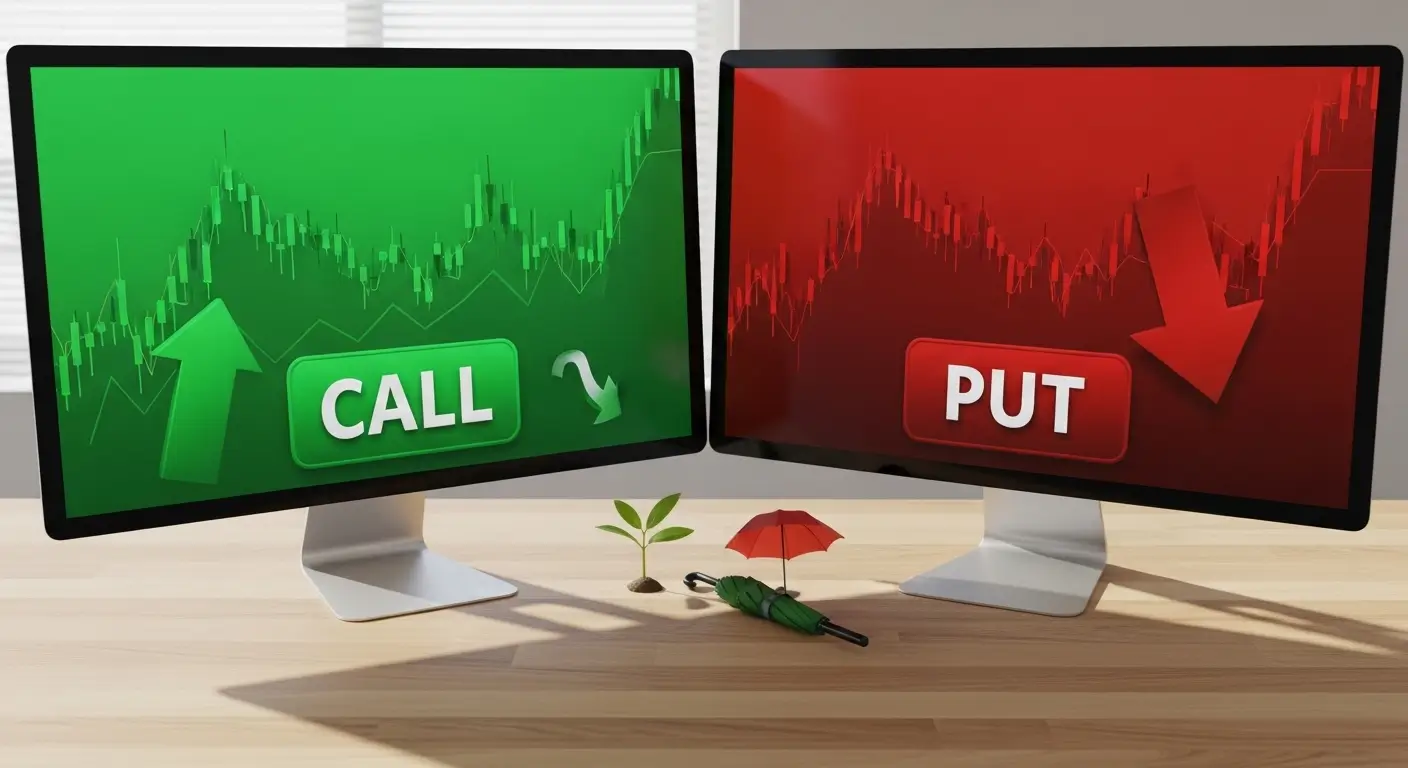
Imagine two friends discussing the future of a company’s stock. One believes the price will rise, so he pays a small amount today for the right to buy shares later at a fixed price. The other expects the price to fall, so she pays for the right to sell her shares at a higher price in the future. These two strategies represent the core difference between puts and calls, which are essential tools in options trading.
Understanding the difference between puts and calls helps investors protect their money, reduce risk, and even profit from market changes. Whether you are a beginner or an experienced trader, knowing the difference between puts and calls can guide smarter financial decisions. In simple terms, the difference between puts and calls lies in the direction of market expectations—one benefits from rising prices, while the other benefits from falling prices.
Key Difference Between the Both
A call option gives the holder the right to buy an asset at a specific price before a certain date, while a put option gives the holder the right to sell an asset at a specific price before a certain date.
Why Their Difference Is Necessary to Know
Understanding the difference between puts and calls is important for both learners and experts because these financial instruments shape modern investment strategies. Investors use calls to profit from rising markets and puts to protect themselves during market downturns.
This knowledge helps individuals manage risks, diversify portfolios, and make informed decisions in volatile economic conditions. In today’s society, where personal investing has become more common through online platforms, knowing how puts and calls work can prevent financial losses and improve financial literacy.
Pronunciation of Both Terms
| Term | US Pronunciation | UK Pronunciation |
| Put | /pʊt/ | /pʊt/ |
| Call | /kɔːl/ | /kɔːl/ |
Linking Hook
Now that we understand the basic idea behind these two options, let’s explore their detailed differences and how each works in real-world trading situations.
H2: Difference Between Puts and Calls
1. Basic Definition
Call: Right to buy an asset.
Put: Right to sell an asset.
Examples:
- A trader buys a call option expecting a stock price to rise.
- Another trader buys a put option expecting the same stock price to fall.
2. Market Expectation
Call: Used when investors are bullish (expect price increase).
Put: Used when investors are bearish (expect price decrease).
Examples:
- If a company announces strong earnings, traders may buy calls.
- If negative news spreads, traders may buy puts.
3. Profit Direction
Call: Profits when asset price rises above strike price.
Put: Profits when asset price falls below strike price.
Examples:
- A call option gains value as stock price climbs.
- A put option gains value as stock price drops.
4. Risk Protection
Call: Often used for speculation or leverage.
Put: Often used as insurance against losses.
Examples:
- Investors buy calls to multiply gains with less capital.
- Investors buy puts to protect their existing stock holdings.
5. Buyer’s Obligation
Call: Buyer has the right to buy but is not forced.
Put: Buyer has the right to sell but is not forced.
Examples:
- A trader may let a call expire if price doesn’t rise.
- A trader may ignore a put if the price remains stable.
6. Seller’s Responsibility
Call Seller: Must sell shares if buyer exercises.
Put Seller: Must buy shares if buyer exercises.
Examples:
- A call writer must deliver shares at strike price.
- A put writer must purchase shares if assigned.
7. Typical Investors
Call: Used by aggressive or growth-focused investors.
Put: Used by cautious or risk-averse investors.
Examples:
- Day traders often buy calls for quick profits.
- Long-term investors buy puts for portfolio protection.
8. Market Strategy
Call: Used in bullish strategies.
Put: Used in bearish or hedging strategies.
Examples:
- A trader buys calls during economic recovery.
- A trader buys puts during recession fears.
9. Value Movement
Call: Value increases when stock price rises.
Put: Value increases when stock price falls.
Examples:
- Rising tech stock boosts call option price.
- Falling energy stock boosts put option price.
10. Emotional Impact
Call: Associated with optimism and growth.
Put: Associated with caution and protection.
Examples:
- Investors buying calls show confidence in market.
- Investors buying puts show concern about risks.
Nature and Behaviour of Both
Calls:
Calls behave like growth-oriented tools. They reflect confidence and risk-taking behavior because investors use them to chase rising prices.
Puts:
Puts behave like safety tools. They reflect defensive strategies because investors use them to guard against losses.
Why People Are Confused About Their Use
Many beginners confuse puts and calls because both are options contracts with similar structures, such as strike price, expiration date, and premium. The only difference is the direction of profit, which can be difficult to remember at first.
Table Showing Difference and Similarity
| Feature | Call Option | Put Option | Similarity |
| Basic Right | Buy asset | Sell asset | Both are options contracts |
| Market View | Bullish | Bearish | Both depend on market movement |
| Risk | Limited to premium | Limited to premium | Both offer limited loss |
| Purpose | Profit from rise | Protect from fall | Both used in trading strategies |
| Expiration | Yes | Yes | Both expire on fixed date |
Which Is Better in What Situation?
When Calls Are Better
Call options are better when an investor strongly believes that the price of an asset will rise. They allow traders to control large positions with smaller investments, making them suitable for growth-focused strategies and bullish markets.
When Puts Are Better
Put options are better when investors expect market declines or want protection for existing investments. They act as a financial safety net during uncertain or volatile market conditions.
Use in Metaphors and Similes
- “Buying a call is like planting a seed and expecting it to grow.”
- “Holding a put is like carrying an umbrella in case it rains.”
Connotative Meaning
| Term | Connotation | Example |
| Call | Positive / hopeful | “He placed a call on the company’s future success.” |
| Put | Neutral / cautious | “She bought a put to stay safe in uncertain markets.” |
Idioms and Proverbs Related to the Words
Idioms with “Put”
- Put your money where your mouth is – support your claims with action.
Example: If you believe the stock will fall, put your money where your mouth is and buy a put option.
Idioms with “Call”
- Call the shots – be in control.
Example: Large investors often call the shots in the stock market.
Works in Literature
- “Options, Futures, and Other Derivatives” – Finance / John C. Hull / 1989
- “Options as a Strategic Investment” – Finance / Lawrence McMillan / 1980
Movies Related to the Keywords
- “Wall Street” – 1987 – USA
- “The Big Short” – 2015 – USA
Frequently Asked Questions
1. What is the main difference between puts and calls?
A call gives the right to buy, while a put gives the right to sell.
2. Which is riskier, puts or calls?
Both carry similar risk because the maximum loss is limited to the premium paid.
3. Can beginners trade puts and calls?
Yes, but they should first understand how options work to avoid financial losses.
4. Are puts only used in falling markets?
Mostly yes, but they are also used to protect existing investments.
5. Can you use both puts and calls together?
Yes, many advanced strategies combine both to manage risk and profit in different scenarios.
How Both Are Useful for Surroundings
Puts and calls help stabilize financial markets by allowing investors to hedge risks and manage uncertainty. This contributes to more balanced market behavior and encourages responsible investing practices.
Final Words for Both
Puts and calls are powerful financial tools that give investors flexibility and control over their investments. When used correctly, they can enhance profits and reduce risks, making them essential elements of modern trading.
Conclusion
The difference between puts and calls is fundamental to understanding options trading. While calls allow investors to benefit from rising markets, puts offer protection and profit opportunities during falling markets. Both serve different purposes but share the same structure and risk-management features.
Learning how these tools work can significantly improve financial decision-making and help investors navigate complex market conditions. Whether used for speculation or protection, puts and calls play a vital role in shaping modern financial strategies and empowering individuals to take control of their investments.

Alexandra “Alex” Monroe is a senior linguistics contributor at WordCompares.com, where she specializes in comparative word analysis, semantics, and language clarity. With over 15 years of academic and editorial experience, Alex helps readers understand subtle differences between commonly confused words and phrases. Her research-driven yet practical writing style strengthens the educational authority of WordCompares.com.