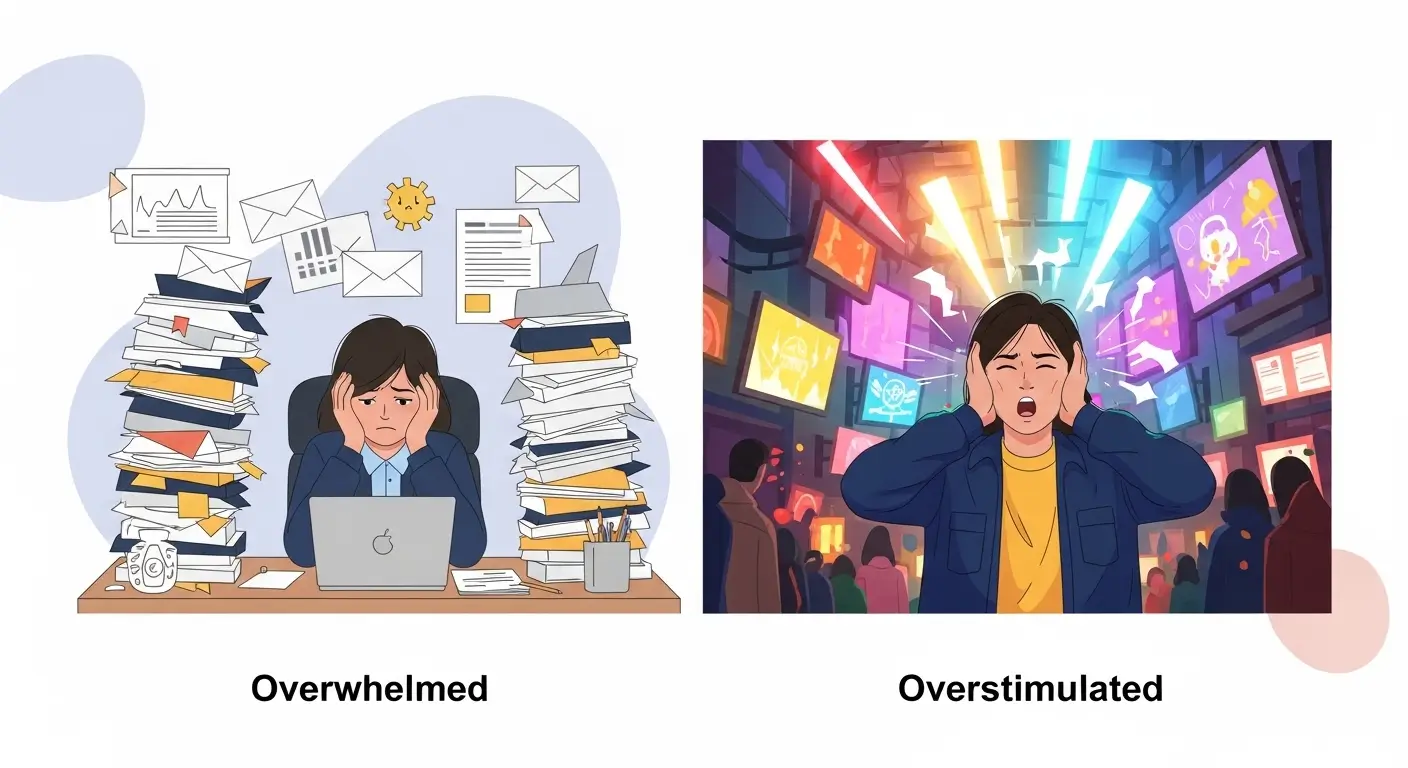
Last week, Sarah sat at her desk juggling emails, deadlines, and constant phone notifications. She felt like everything was piling up at once completely overwhelmed. Later that evening, she went to a crowded market filled with loud music, bright lights, and chatter. This time, she wasn’t burdened by tasks, but her senses were overloaded she felt overstimulated.
Understanding the difference between overwhelmed and overstimulated is essential in today’s fast-paced world. While both feelings can be uncomfortable, they stem from different causes.
The difference between overwhelmed and overstimulated often lies in mental versus sensory overload. Many people confuse them, but recognizing the difference between overwhelmed and overstimulated can help manage stress better. In fact, knowing the difference between overwhelmed and overstimulated allows individuals to respond appropriately to each situation.
Key Difference Between the Both
The main difference lies in the source:
- Overwhelmed is caused by too many responsibilities or emotions.
- Overstimulated is caused by excessive sensory input like noise, light, or activity.
Why Is Their Difference Important for Learners and Experts?
Understanding these terms is crucial for both personal and professional growth. Students, teachers, psychologists, and even workplace leaders benefit from recognizing whether someone is overwhelmed or overstimulated. It helps in applying the right coping strategy reducing workload or minimizing sensory input. In society, awareness improves mental health support, enhances communication, and promotes empathy. Experts in education and healthcare rely on this distinction to design better environments and interventions.
Pronunciation (US & UK)
- Overwhelmed
- US: /ˌoʊvərˈwɛlmd/
- UK: /ˌəʊvəˈwelmd/
- Overstimulated
- US: /ˌoʊvərˈstɪmjəˌleɪtɪd/
- UK: /ˌəʊvəˈstɪmjʊleɪtɪd/
Linking Hook
Now that you understand the basics, let’s explore the difference between overwhelmed and overstimulated in depth with clear comparisons and real-life examples.
Difference Between Overwhelmed and Overstimulated
1. Source of Feeling
- Overwhelmed: Caused by tasks or emotions
- Example 1: Too many assignments
- Example 2: Emotional stress after bad news
- Overstimulated: Caused by sensory input
- Example 1: Loud concert
- Example 2: Bright flashing lights
2. Mental vs Sensory
- Overwhelmed: Mental overload
- Example 1: Too many decisions
- Example 2: Work pressure
- Overstimulated: Sensory overload
- Example 1: Noisy environment
- Example 2: Strong smells
3. Emotional Impact
- Overwhelmed: Leads to anxiety or helplessness
- Example 1: Crying due to stress
- Example 2: Feeling stuck
- Overstimulated: Leads to irritation
- Example 1: Covering ears
- Example 2: Wanting silence
4. Duration
- Overwhelmed: Can last longer
- Example 1: Weeks of stress
- Example 2: Long-term burnout
- Overstimulated: Usually temporary
- Example 1: Leaves noisy place → relief
- Example 2: Quiet room helps quickly
5. Physical Response
- Overwhelmed: Fatigue
- Example 1: Low energy
- Example 2: Exhaustion
- Overstimulated: Hyperactivity or discomfort
- Example 1: Restlessness
- Example 2: Headache
6. Trigger Type
- Overwhelmed: Internal + external pressures
- Example 1: Deadlines
- Example 2: Personal problems
- Overstimulated: External sensory triggers
- Example 1: Noise
- Example 2: Crowds
7. Common Settings
- Overwhelmed: Workplace or school
- Example 1: Office overload
- Example 2: Exam pressure
- Overstimulated: Busy environments
- Example 1: Mall
- Example 2: Festival
8. Solution
- Overwhelmed: Prioritizing tasks
- Example 1: Making a to-do list
- Example 2: Asking for help
- Overstimulated: Reducing stimuli
- Example 1: Quiet room
- Example 2: Turning off lights
9. Brain Activity
- Overwhelmed: Cognitive overload
- Example 1: Too much thinking
- Example 2: Decision fatigue
- Overstimulated: Sensory overload
- Example 1: Too many sounds
- Example 2: Visual clutter
10. Associated Conditions
- Overwhelmed: Anxiety, burnout
- Example 1: Work stress
- Example 2: Emotional exhaustion
- Overstimulated: ADHD, autism sensitivity
- Example 1: Sensory sensitivity
- Example 2: Noise intolerance
Nature and Behaviour
- Overwhelmed: Internal, emotional, and cognitive. People may withdraw, procrastinate, or feel stuck.
- Overstimulated: External and sensory-driven. People may become irritable, restless, or seek isolation.
Why People Are Confused
Both states involve discomfort and stress. The confusion arises because both can happen simultaneously. For example, a person in a noisy office with heavy workload may feel both overwhelmed and overstimulated.
Table: Difference and Similarity
| Aspect | Overwhelmed | Overstimulated | Similarity |
| Cause | Tasks/emotions | Sensory input | Both cause stress |
| Type | Mental | Sensory | Affect well-being |
| Duration | Longer | Shorter | Can overlap |
| Solution | Reduce workload | Reduce stimuli | Need awareness |
| Impact | Emotional fatigue | Sensory discomfort | Reduce productivity |
Which Is Better in What Situation?
Being overwhelmed is not “better,” but it can sometimes signal growth like taking on new responsibilities or challenges. In controlled amounts, it may push individuals to improve time management and resilience. However, chronic overwhelm is harmful and leads to burnout.
Overstimulation, on the other hand, is rarely beneficial. It often reduces focus and comfort. However, mild stimulation (like music while working) can boost productivity. The key is balance too much sensory input becomes distracting and stressful.
Metaphors and Similes
- Overwhelmed: “Drowning in responsibilities,” “Like a sinking ship”
- Overstimulated: “Like a buzzing machine,” “Brain on overload like flashing lights”
Connotative Meaning
- Overwhelmed: Mostly negative
- Example: “She felt overwhelmed with grief.”
- Overstimulated: Neutral to negative
- Example: “The child became overstimulated at the party.”
Idioms and Proverbs
- “Too much on one’s plate” (Overwhelmed)
- Example: I have too much on my plate this week.
- “Sensory overload” (Overstimulated)
- Example: The concert gave me sensory overload.
Works in Literature
- Overwhelmed
- “The Bell Jar” – Sylvia Plath (Novel, 1963)
- Overstimulated
- “Brave New World” – Aldous Huxley (Dystopian, 1932)
Movies
- Overwhelmed themes
- “The Pursuit of Happyness” (2006, USA)
- Overstimulated themes
- “Baby Driver” (2017, USA/UK)
FAQs
1. Are overwhelmed and overstimulated the same?
No, overwhelmed is mental overload, while overstimulated is sensory overload.
2. Can you feel both at the same time?
Yes, especially in stressful and noisy environments.
3. Which is more serious?
Both can be serious if persistent, but overwhelm often lasts longer.
4. How to reduce overwhelm?
Prioritize tasks and take breaks.
5. How to reduce overstimulation?
Move to a calm, quiet environment.
How Both Are Useful for Surroundings
Understanding these conditions helps create supportive environments quiet classrooms, manageable workloads, and better communication. It improves productivity and mental health in society.
Final Words
Overwhelmed and overstimulated may feel similar, but their roots differ. Recognizing them helps you take the right action organize your mind or calm your senses.
Conclusion
The difference between overwhelmed and overstimulated is essential for navigating modern life. While overwhelm comes from mental and emotional pressure, overstimulation arises from sensory overload. Knowing this distinction empowers individuals to manage stress effectively and support others better.
By identifying the source of discomfort, you can choose the right coping strategy whether it’s simplifying tasks or reducing noise and distractions. Ultimately, awareness of these terms leads to improved well-being, productivity, and emotional balance in both personal and professional settings.

Dr. Marcus Reed is a lead editorial author at WordCompares.com and a specialist in communication studies and written clarity. With more than 12 years of university-level teaching experience, he focuses on explaining word distinctions in a clear and structured manner. His work ensures that WordCompares.com maintains accuracy, depth, and reader trust.