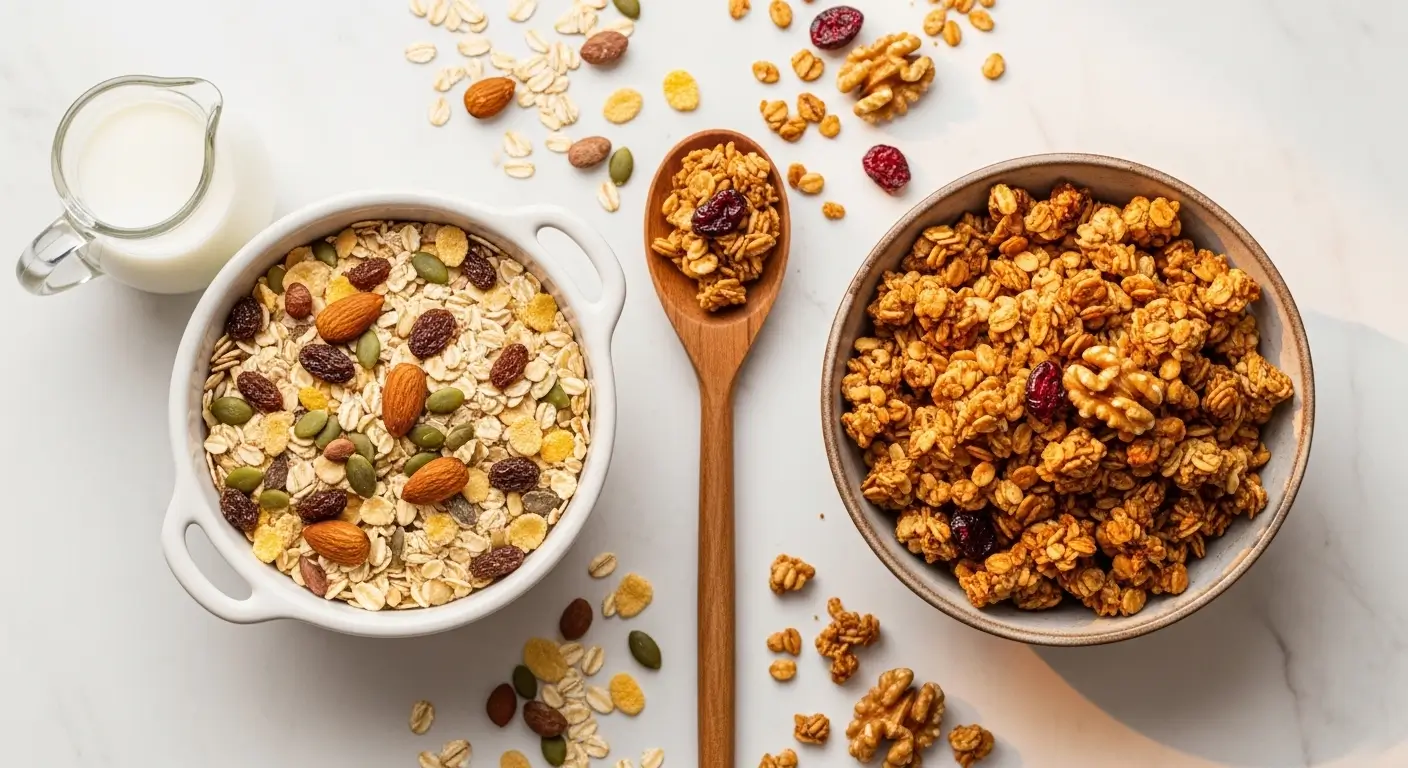
On a busy morning, many people grab a quick bowl of cereal before rushing to work or school. In supermarkets, two healthy looking options often sit side by side: muesli and granola. At first glance, they seem identical both contain oats, nuts, and dried fruits but the difference between muesli and granola becomes clear once you learn how they are prepared and consumed.
Understanding the difference between muesli and granola helps shoppers choose the right breakfast based on taste, nutrition, and lifestyle. Many health conscious individuals compare them daily, making the difference between muesli and granola a popular topic in diet discussions. By exploring the difference between muesli and granola, readers can make smarter and healthier food choices.
Key Difference Between the Both
The primary difference between muesli and granola lies in preparation. Muesli is usually raw and soaked before eating, while granola is baked with oil and sweeteners, making it crunchy and sweeter.
Why Knowing Their Difference Is Important for Learners and Experts
Understanding the difference between muesli and granola is important not only for nutrition students but also for chefs, dietitians, and health enthusiasts. In society, where lifestyle diseases like obesity and diabetes are increasing, choosing the right breakfast can influence overall health. Experts need to guide people toward low sugar, high fiber foods, while learners benefit from understanding how food processing affects nutrition. This knowledge helps consumers read labels, avoid hidden sugars, and develop balanced eating habits.
Pronunciation (US & UK)
| Word | US Pronunciation | UK Pronunciation |
| Muesli | MYOOZ lee /ˈmjuːzli/ | MYOOZ lee /ˈmjuːzli/ |
| Granola | gruh NOH luh /ɡrəˈnoʊlə/ | gra NOH luh /ɡrəˈnəʊlə/ |
Linking Hook
Now that we understand what these breakfast cereals are and why their differences matter, let’s explore the difference between muesli and granola in detail.
Difference Between Muesli and Granola
10 Points of Difference
1. Preparation Method
Muesli: Raw mixture soaked in milk or yogurt.
Granola: Baked with oil and sweeteners to form crunchy clusters. Examples:
- A student preparing overnight oats with muesli.
- A hiker eating baked granola as a crunchy snack.
2. Texture
Muesli: Soft and chewy.
Granola: Crispy and crunchy.
Examples:
- Muesli becomes soft after soaking overnight.
- Granola stays crunchy even when mixed with yogurt.
3. Sweetness Level
Muesli: Naturally sweet from dried fruits.
Granola: Usually sweeter due to added honey or sugar.
Examples:
- Plain muesli with no added sugar.
- Chocolate granola with honey and maple syrup.
4. Fat Content
Muesli: Lower fat because it is not cooked with oil.
Granola: Higher fat due to added oils during baking.
Examples:
- Low fat muesli for weight watchers.
- Oil roasted granola providing more calories.
5. Serving Style
Muesli: Often soaked or cooked into porridge.
Granola: Eaten dry or sprinkled over yogurt.
Examples:
- Cold soaked muesli in summer.
- Granola topping on smoothie bowls.
6. Shelf Stability
Muesli: Shorter shelf life once mixed with fresh ingredients.
Granola: Longer shelf life because baking removes moisture.
Examples:
- Homemade muesli stored in the fridge.
- Packaged granola lasting months on shelves.
7. Origin
Muesli: Originated in Switzerland as a health food.
Granola: Developed in the United States as a baked cereal.
Examples:
- Swiss clinics serving muesli to patients.
- American hikers carrying granola for energy.
8. Calorie Density
Muesli: Lower calories per serving.
Granola: Higher calories due to oils and sugars.
Examples:
- Dieters choosing muesli for breakfast.
- Athletes choosing granola for energy.
9. Cooking Requirement
Muesli: Often soaked or lightly cooked.
Granola: Ready to eat with no preparation.
Examples:
- Overnight soaked muesli before school.
- Granola eaten directly from the packet.
10. Cost Factor
Muesli: Usually cheaper due to simpler preparation.
Granola: Often more expensive due to processing and packaging.
Examples:
- Bulk muesli from health stores.
- Premium organic granola in supermarkets.
Nature and Behaviour of Both
Nature of Muesli
Muesli is natural, simple, and minimally processed. It reflects a health first philosophy and traditional European dietary habits.
Nature of Granola
Granola is modern, processed, and designed for taste and convenience. It appeals to people who prefer crunchy textures and sweet flavors.
Why People Are Confused About Their Use
People often confuse these foods because they share similar ingredients oats, nuts, and dried fruits. In stores, both are displayed in the cereal aisle, and packaging sometimes looks alike, leading to misunderstanding. Additionally, some brands label baked muesli as “crunchy muesli,” which blurs the difference further.
Table Showing Difference and Similarity
| Feature | Muesli | Granola | Similarity |
| Preparation | Raw | Baked | Both use oats |
| Taste | Mild | Sweet | Both can include dried fruit |
| Texture | Soft | Crunchy | Both are breakfast cereals |
| Calories | Lower | Higher | Both nutritious |
| Usage | Soaked or cooked | Ready to eat | Both eaten with milk or yogurt |
Which Is Better in What Situation?
Muesli
Muesli is better for people who want a low sugar, high fiber breakfast. It suits those who prefer natural and less processed foods. It is ideal for weight management, diabetic diets, and traditional meal plans where soaking food is acceptable.
Granola
Granola is better for people who need quick energy and convenience. Athletes, travelers, and busy professionals benefit from its ready to eat nature. Its crunchy texture also makes it a popular topping for desserts and smoothies.
Use in Metaphors and Similes
Writers sometimes use food to describe personalities.
- “She was as calm as a bowl of muesli in the morning.”
- “His energy was like granola crunchy and packed with power.”
Connotative Meanings
Muesli
Connotation: Positive and neutral
Examples:
- “He lives a muesli lifestyle” (meaning healthy and disciplined).
Granola
Connotation: Sometimes positive, sometimes humorous
Examples:
- “She’s very granola,” meaning eco friendly or health obsessed.
Idioms or Proverbs Related to the Words
There are no direct idioms, but related expressions exist:
- “Crunchy granola type” – refers to environmentally conscious people.
Example: “He’s a crunchy granola type who bikes to work.”
Works in Literature Featuring These Words
- The Wellness Diaries – Health memoir, Jane Collins, 2015
- Clean Eating Revolution – Non fiction nutrition guide, Mark Harris, 2012
Movies Featuring These Foods
- Super Size Me (2004, USA) – Documentary discussing healthy foods like granola
- That Sugar Film (2014, Australia) – Explores breakfast cereals including granola
Frequently Asked Questions
1. Is muesli healthier than granola?
Generally yes, because it contains less sugar and fat.
2. Can granola be eaten daily?
Yes, but in moderation due to its calorie and sugar content.
3. Can muesli be eaten without soaking?
Yes, but soaking improves digestion and texture.
4. Are both suitable for children?
Yes, but parents should check sugar levels in granola.
5. Can I make both at home?
Yes, homemade versions allow control over ingredients and sweetness.
How Both Are Useful for Surroundings
Muesli and granola support sustainable eating habits when made from whole grains and local ingredients. They reduce reliance on highly processed breakfast foods and promote healthier communities.
Final Words for Both
Muesli represents simplicity and traditional nutrition, while granola reflects convenience and modern taste preferences. Both have earned a strong place in healthy diets worldwide.
Conclusion
In conclusion, understanding the difference between muesli and granola helps individuals choose the right breakfast based on their health goals, taste preferences, and lifestyle. While both cereals share similar ingredients, their preparation methods create significant differences in texture, nutrition, and calorie content.
Muesli is ideal for those who prefer natural and less processed foods, whereas granola suits people who enjoy crunchy textures and quick energy. By recognizing the difference between muesli and granola, consumers can make informed dietary decisions and maintain balanced eating habits in their daily lives.

Alexandra “Alex” Monroe is a senior linguistics contributor at WordCompares.com, where she specializes in comparative word analysis, semantics, and language clarity. With over 15 years of academic and editorial experience, Alex helps readers understand subtle differences between commonly confused words and phrases. Her research-driven yet practical writing style strengthens the educational authority of WordCompares.com.