When Sara joined a fast-growing tech startup, she noticed something unusual in meetings. Her manager kept talking about KPIs, while the CEO emphasized OKRs. At first, Sara assumed they meant the same thing; both sounded like performance goals. But soon she realized they were used differently. Understanding the difference between KPI and OKR helped her track her work better and align it with company goals.
In today’s performance-driven workplaces, knowing the difference between KPI and OKR is essential for employees, managers, and business owners alike. While both help measure success, their purpose, structure, and application vary. This guide explains the difference between KPI and OKR in simple terms so you can apply them effectively in professional and academic settings.
Key Difference Between the Two
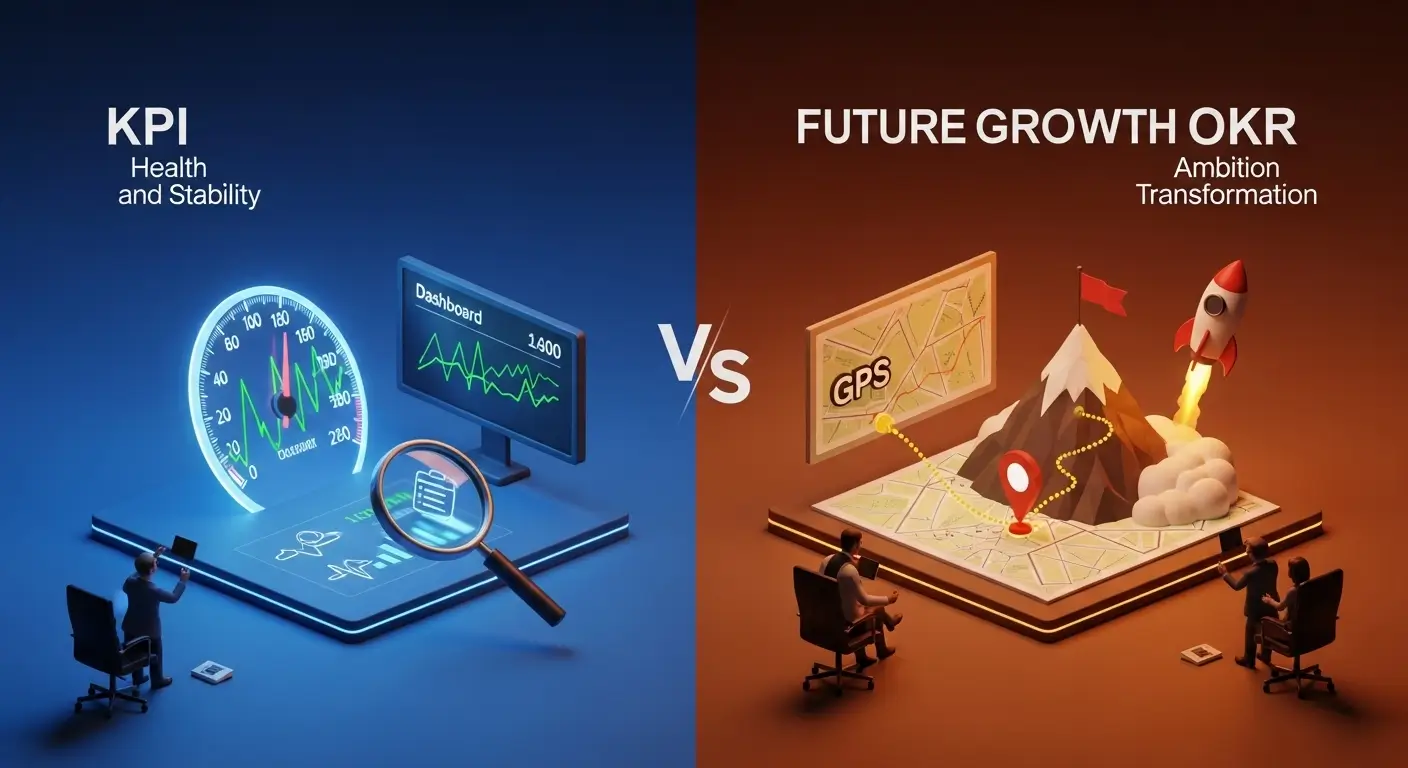
The core difference between KPI and OKR lies in their purpose. KPIs (Key Performance Indicators) measure ongoing performance, while OKRs (Objectives and Key Results) define ambitious goals and track progress toward achieving them. KPIs focus on stability and consistency, whereas OKRs focus on growth and transformation.
Why is the difference necessary to Know for Learners and Experts?
Understanding the difference is important because KPIs and OKRs influence decision-making, productivity, and strategic planning. Students studying business management, entrepreneurs running startups, and corporate professionals all rely on these frameworks to evaluate success. Without knowing the difference, teams may set goals without measurable outcomes or track metrics without a strategic direction. This confusion can lead to wasted resources and poor performance.
In modern society, organizations from schools to multinational corporations use these systems to ensure accountability, transparency, and continuous improvement.
Pronunciation of Both Terms
| Term | US Pronunciation | UK Pronunciation |
| KPI | /ˌkeɪ.piːˈaɪ/ | /ˌkeɪ.piːˈaɪ/ |
| OKR | /ˌoʊ.keɪˈɑːr/ | /ˌəʊ.keɪˈɑː/ |
Linking Hook to the Main Discussion
Now that we understand what KPIs and OKRs are and why they matter, let’s explore their differences in detail to see how they function in real-world scenarios.
Difference Between KPI and OKR
1. Purpose
KPI: Measures ongoing performance.
OKR: Sets ambitious goals and tracks progress.
Example 1: A sales team tracks monthly revenue as a KPI.
Example 2: The same team sets an OKR to increase revenue by 25% this quarter.
2. Nature of Measurement
KPI: Quantitative and static.
OKR: Qualitative objective with measurable results.
Example 1: Customer satisfaction score is a KPI.
Example 2: Improve customer satisfaction to 90% is an OKR.
3. Time Frame
KPI: Continuous tracking.
OKR: Short cycles, usually quarterly.
Example 1: Daily website traffic is a KPI.
Example 2: Launch a new website in 3 months is an OKR.
4. Flexibility
KPI: Rarely changes.
OKR: Adjusted frequently.
Example 1: Profit margin KPI stays constant.
Example 2: OKRs change when company strategy changes.
5. Scope
KPI: Focuses on specific metrics.
OKR: Focuses on broader strategic goals.
Example 1: Number of support tickets resolved is a KPI.
Example 2: Deliver world-class customer service is an OKR.
6. Motivation Level
KPI: Maintains performance.
OKR: Encourages innovation and growth.
Example 1: Maintain 95% uptime (KPI).
Example 2: Achieve zero downtime through new infrastructure (OKR).
7. Structure
KPI: Single metric.
OKR: Objective + multiple key results.
Example 1: KPI: 10% conversion rate.
Example 2: OKR: Improve conversion rate to 15% through three specific actions.
8. Usage
KPI: Used in operational management.
OKR: Used in strategic planning.
Example 1: Daily production output is a KPI.
Example 2: Expand production capacity by 20% is an OKR.
9. Evaluation Style
KPI: Performance is judged strictly.
OKR: Partial achievement is acceptable.
Example 1: Missing KPI targets may indicate poor performance.
Example 2: Achieving 70% of an OKR is still considered successful.
10. Focus
KPI: Tracks what is happening.
OKR: Drives what should happen.
Example 1: Current market share is a KPI.
Example 2: Capture 10% more market share is an OKR.
Nature and Behaviour of Both
KPI Nature:
KPIs are stable, consistent, and data-driven. They behave like health indicators, continuously monitoring performance.
OKR Nature:
OKRs are dynamic and forward-looking. They behave like a roadmap, guiding teams toward future achievements.
Why People Are Confused About Their Use
People often confuse KPIs and OKRs because both involve metrics and performance tracking. Many organizations even use them together, which makes it harder to distinguish their roles. Additionally, both acronyms are commonly discussed in business literature, leading beginners to assume they are interchangeable.
Table Showing Difference and Similarity
| Aspect | KPI | OKR | Similarity |
| Full Form | Key Performance Indicator | Objectives and Key Results | Both measure performance |
| Purpose | Track performance | Drive improvement | Both support decision-making |
| Time Frame | Continuous | Short cycles | Both reviewed regularly |
| Nature | Stable | Flexible | Both use metrics |
| Focus | Operations | Strategy | Both align teams |
Which Is Better in What Situation?
KPI is better when an organization needs consistent performance monitoring. For example, banks track daily transactions and error rates using KPIs to maintain reliability. In such environments, stability matters more than experimentation.
OKR is better when companies want growth, innovation, or transformation. Startups, tech firms, and research organizations use OKRs to push teams beyond comfort zones. When change is the priority, OKRs provide direction and motivation.
Use in Metaphors and Similes
- KPI: “KPIs are like a dashboard in a car, showing how fast you are going.”
- OKR: “OKRs are like a GPS, guiding you to your destination.”
Connotative Meaning
| Term | Connotation | Example |
| KPI | Neutral/Positive | “Meeting KPIs shows reliability.” |
| OKR | Positive | “OKRs inspire teams to dream bigger.” |
Idioms or Proverbs Related
Though no direct idioms use these acronyms, related expressions include:
- “What gets measured gets managed.”
Example: Companies rely on KPIs because what gets measured gets managed. - “Aim for the stars.”
Example: OKRs encourage teams to aim for the stars with ambitious goals.
Works in Literature Mentioning These Concepts
- Measure What Matters – Business/Non-fiction – John Doerr – 2018
- The KPI Book – Business/Reference – Jeff Smith – 2013
Movies Related to Performance and Goals
While no movies are titled KPI or OKR, films exploring goal-setting themes include:
- The Social Network – 2010 – USA
- Moneyball – 2011 – USA
Frequently Asked Questions
1. Can KPIs and OKRs be used together?
Yes, organizations often use KPIs to monitor ongoing performance and OKRs to drive strategic change.
2. Are OKRs replacing KPIs?
No, OKRs complement KPIs rather than replace them.
3. Which is easier to implement?
KPIs are easier because they involve simple metrics, while OKRs require strategic planning.
4. Do small businesses need OKRs?
Yes, OKRs help small businesses set clear growth goals.
5. How often should OKRs be reviewed?
Typically every quarter, though some organizations review them monthly.
How Both Are Useful for Surroundings
KPIs ensure that systems, institutions, and businesses operate efficiently, which benefits employees, customers, and communities. OKRs, on the other hand, encourage innovation and long-term development, leading to new products, improved services, and economic growth. Together, they contribute to organized and progressive societies.
Final Words for Both
KPIs maintain stability, while OKRs create progress. One keeps operations smooth; the other pushes boundaries. Understanding both helps individuals and organizations perform better.
Conclusion
In summary, the difference between KPI and OKR lies in their purpose, structure, and application. KPIs measure ongoing performance and ensure consistency, while OKRs define ambitious goals and guide strategic change.
Both are essential tools in modern organizations, and using them together provides a balanced approach to performance management. By understanding their roles and limitations, professionals can make better decisions, align teams effectively, and achieve meaningful results.

Jordan L. Carter is a contributing language analyst at WordCompares.com, focusing on modern English usage, evolving vocabulary trends, and digital communication language. With over a decade of writing experience, Jordan provides insightful word comparisons that make complex language differences simple for everyday readers.