Imagine a teacher helping a student understand a difficult concept before an important exam. The student might say, “Your guidance was invaluable.” Interestingly, the word invaluable sounds like it means “not valuable,” yet it actually means extremely valuable. This small language twist often confuses learners and even experienced writers.
Understanding the difference between valuable and invaluable helps us communicate appreciation more accurately. A valuable object or idea has clear worth or usefulness, while something invaluable is so important that its value cannot easily be measured. The difference between valuable and invaluable appears in everyday language, literature, education, and professional communication. By exploring the difference between valuable and invaluable, learners can improve vocabulary and avoid common misunderstandings. In fact, knowing the difference between valuable and invaluable allows speakers and writers to express gratitude and importance more effectively in both formal and casual contexts.
Key Difference Between the Both
The main difference is based on the degree and expression of value.
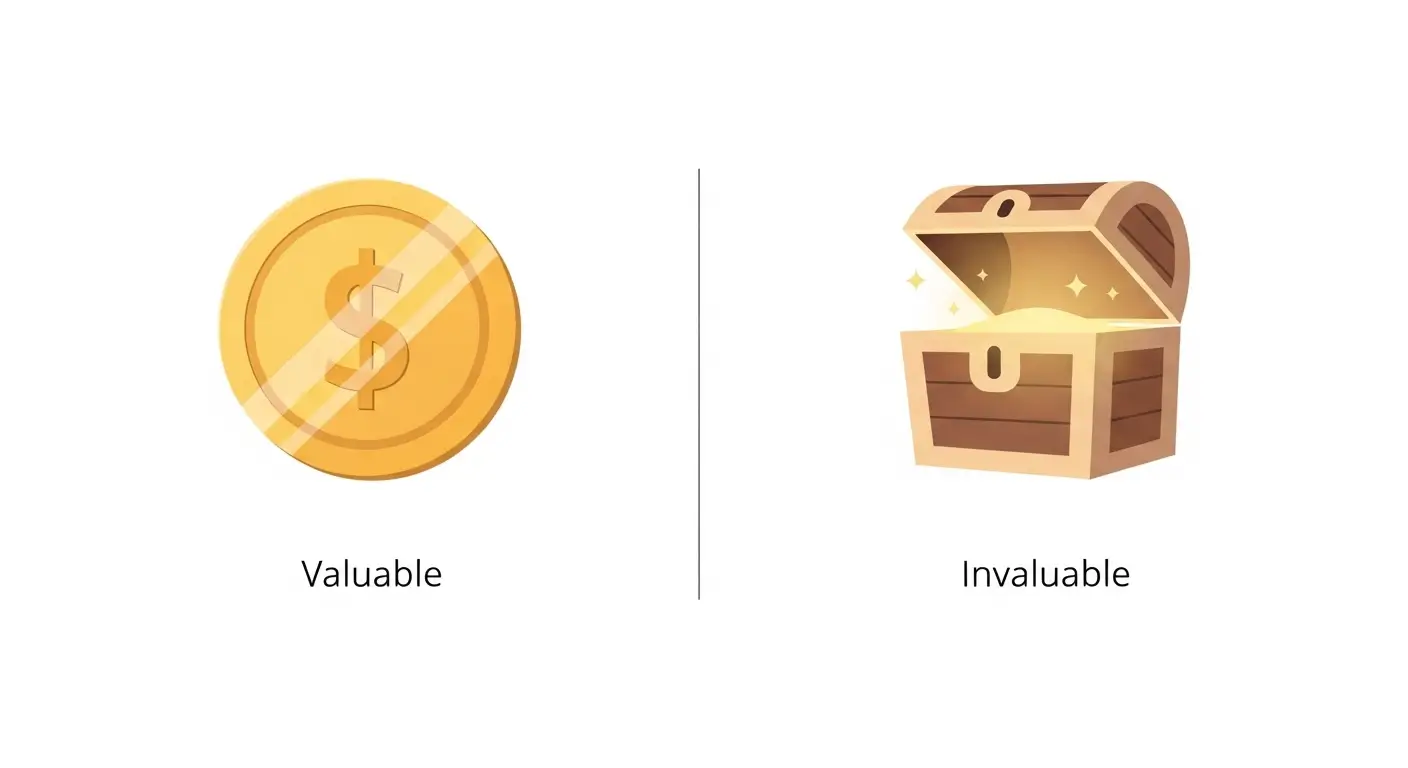
- Valuable refers to something that has clear worth, usefulness, or importance, often measurable or recognized.
- Invaluable refers to something so precious or helpful that its value cannot be measured, meaning it is extremely valuable.
Why Is Their Difference Necessary to Know for Learners and Experts?
Understanding the difference is important because language shapes how people express appreciation and importance. Learners need this knowledge to avoid mistakes in writing and speaking, while experts such as teachers, writers, and professionals must use precise language to convey meaning clearly.
In society, the words valuable and invaluable are often used to describe knowledge, advice, relationships, and resources. If someone calls a piece of advice invaluable, they are emphasizing that it is beyond ordinary value. Knowing the correct difference helps individuals express gratitude, respect, and recognition more effectively.
Pronunciation
| Word | US Pronunciation | UK Pronunciation |
| Valuable | /ˈvæljuəbəl/ | /ˈvæljuːəbəl/ |
| Invaluable | /ɪnˈvæljuəbəl/ | /ɪnˈvæljuːəbəl/ |
Linking Hook
Now that we understand the basic meanings and importance of these words, let us explore the difference between valuable and invaluable in detail through practical comparisons.
Difference Between Valuable and Invaluable
1. Level of Worth
Valuable means something has significant worth.
Invaluable means something is priceless or beyond measurable worth.
Examples:
Valuable
- This watch is valuable because it is made of gold.
- Her research data is valuable for the project.
Invaluable
- His advice during the crisis was invaluable.
- The teacher’s support was invaluable to the students.
2. Measurability of Value
Valuable things often have a measurable or estimated price.
Invaluable things usually cannot be measured in money.
Examples:
Valuable
- The painting is valuable and worth thousands of dollars.
- The antique coin is valuable in the market.
Invaluable
- The experience gained from travel is invaluable.
- Friendship during difficult times is invaluable.
3. Emotional Significance
Valuable may or may not involve emotions.
Invaluable often carries strong emotional importance.
Examples:
Valuable
- The tool is valuable for construction work.
- The document is valuable evidence.
Invaluable
- A mother’s guidance is invaluable.
- Emotional support from friends is invaluable.
4. Usage in Formal Language
Valuable appears frequently in business and finance.
Invaluable appears more in praise or appreciation.
Examples:
Valuable
- The company owns valuable assets.
- Her feedback is valuable for improvement.
Invaluable
- The mentor’s guidance was invaluable.
- The volunteer work was invaluable to the community.
5. Strength of Meaning
Valuable indicates importance.
Invaluable emphasizes extreme importance.
Examples:
Valuable
- Time management skills are valuable in the workplace.
- Good communication is valuable for leaders.
Invaluable
- Trust between partners is invaluable.
- The historical records are invaluable for researchers.
6. Context of Use
Valuable is used for both objects and ideas.
Invaluable is often used for advice, experience, or relationships.
Examples:
Valuable
- This laptop is a valuable device for work.
- The information is valuable for students.
Invaluable
- The doctor’s quick decision was invaluable.
- Her encouragement was invaluable.
7. Literal vs Figurative Meaning
Valuable is mostly literal.
Invaluable is often figurative.
Examples:
Valuable
- The jewelry is valuable.
- The rare book is valuable.
Invaluable
- His wisdom is invaluable.
- The training session was invaluable.
8. Market Value
Valuable items usually have market value.
Invaluable items may have emotional or intellectual value.
Examples:
Valuable
- Diamonds are valuable gemstones.
- The property is valuable real estate.
Invaluable
- Knowledge gained from education is invaluable.
- Cultural heritage is invaluable.
9. Frequency in Appreciation
Valuable is neutral in tone.
Invaluable is more expressive.
Examples:
Valuable
- Your suggestions are valuable.
- The training materials are valuable resources.
Invaluable
- Your support has been invaluable.
- The mentor’s advice was invaluable.
10. Perceived Importance
Valuable suggests usefulness.
Invaluable suggests irreplaceable importance.
Examples:
Valuable
- The guidebook is valuable for tourists.
- The software is valuable for designers.
Invaluable
- Family traditions are invaluable.
- The scientist’s discovery was invaluable.
Nature and Behaviour of the Words
Valuable
This word describes something that possesses clear worth or usefulness. It can refer to objects, ideas, or services that are beneficial or profitable.
Invaluable
This word expresses something so precious that its value cannot be calculated. It is often used to show deep appreciation or gratitude.
Why People Are Confused About Their Use
The confusion occurs because the prefix “in-” usually means not. For example, “invisible” means not visible. However, in the word invaluable, the prefix intensifies the meaning rather than negating it. As a result, many people mistakenly assume that invaluable means “not valuable,” when it actually means “extremely valuable.”
Table Showing Difference and Similarity
| Feature | Valuable | Invaluable | Similarity |
| Meaning | Worth something | Extremely valuable | Both relate to value |
| Measurability | Often measurable | Usually immeasurable | Both show importance |
| Tone | Neutral | Highly appreciative | Both positive |
| Usage | Objects, ideas, assets | Advice, experience, help | Used in praise |
| Emotional Impact | Moderate | Strong | Both express worth |
Which Is Better in What Situation?
Valuable
The word valuable is better when describing something with clear usefulness or monetary worth. It is common in business, education, and practical discussions. For example, a company may describe its resources or assets as valuable. Teachers might say that certain skills are valuable for students’ future careers. In these situations, the word emphasizes usefulness without exaggeration.
Invaluable
The word invaluable is better when expressing deep appreciation or highlighting something priceless. It is often used when talking about support, guidance, or knowledge. For instance, a mentor’s advice or a friend’s encouragement may be described as invaluable. In such cases, the word communicates strong gratitude and emphasizes that the benefit cannot be measured.
Use in Metaphors and Similes
Valuable
- “Time is as valuable as gold.”
- “Knowledge is a valuable treasure.”
Invaluable
- “Her wisdom was an invaluable compass.”
- “Friendship is like an invaluable jewel.”
Connotative Meaning
Valuable – Positive
Example: “The training program provided valuable skills.”
Invaluable – Strongly positive
Example: “Your help during the project was invaluable.”
Idioms or Proverbs Related to Value
- Time is money
Example: “Finish the task quickly because time is money.” - Worth its weight in gold
Example: “Her advice was worth its weight in gold.”
Works in Literature (Containing the Words)
- The Invaluable Gift – Short story, O. Henry, 1907
- Valuable Lessons – Essay collection, Various authors, modern educational genre
Movies Related to the Words
- Precious – 2009, United States
- The Value of Life – 2007, United States
Frequently Asked Questions
1. Do valuable and invaluable mean the same thing?
No. Valuable means something has worth, while invaluable means extremely valuable or priceless.
2. Why does invaluable not mean “not valuable”?
Because the prefix “in-” in this word intensifies the meaning rather than negating it.
3. Can both words be used for people?
Yes. For example, a person’s help may be valuable or invaluable depending on the level of importance.
4. Which word shows stronger appreciation?
Invaluable shows stronger appreciation.
5. Are these words positive in meaning?
Yes, both usually carry positive meanings.
How Both Are Useful for Surroundings
Both words help people recognize and express value in their environment. Valuable highlights practical benefits such as tools, knowledge, or resources. Invaluable highlights emotional and intellectual contributions such as wisdom, experience, and support. Together, they help society acknowledge both measurable and immeasurable contributions.
Final Words for the Both
Valuable and invaluable are closely related but differ in intensity. One describes importance, while the other describes priceless importance.
Conclusion
Understanding the difference between valuable and invaluable is essential for clear and effective communication. Although the words appear similar, their meanings express different levels of worth. Valuable refers to something useful or important, often with measurable value, while invaluable emphasizes something priceless or beyond calculation.
Learning this distinction helps writers, students, and professionals use language more accurately. In everyday conversations, literature, and professional settings, choosing the right word ensures that appreciation and meaning are conveyed correctly.
Ultimately, both words enrich communication by helping people describe the many forms of value found in knowledge, relationships, and experiences.

Dr. Marcus Reed is a lead editorial author at WordCompares.com and a specialist in communication studies and written clarity. With more than 12 years of university-level teaching experience, he focuses on explaining word distinctions in a clear and structured manner. His work ensures that WordCompares.com maintains accuracy, depth, and reader trust.