Imagine a business owner running an online store during a busy holiday season. Customers expect the website to load quickly, process payments smoothly, and remain available all the time. To ensure this reliability, the company works with a cloud service provider. Here, two important terms come into play: Service Level Agreement (SLA) and Service Level Objective (SLO). Understanding the difference between SLA and SLO helps businesses manage expectations and maintain service quality.
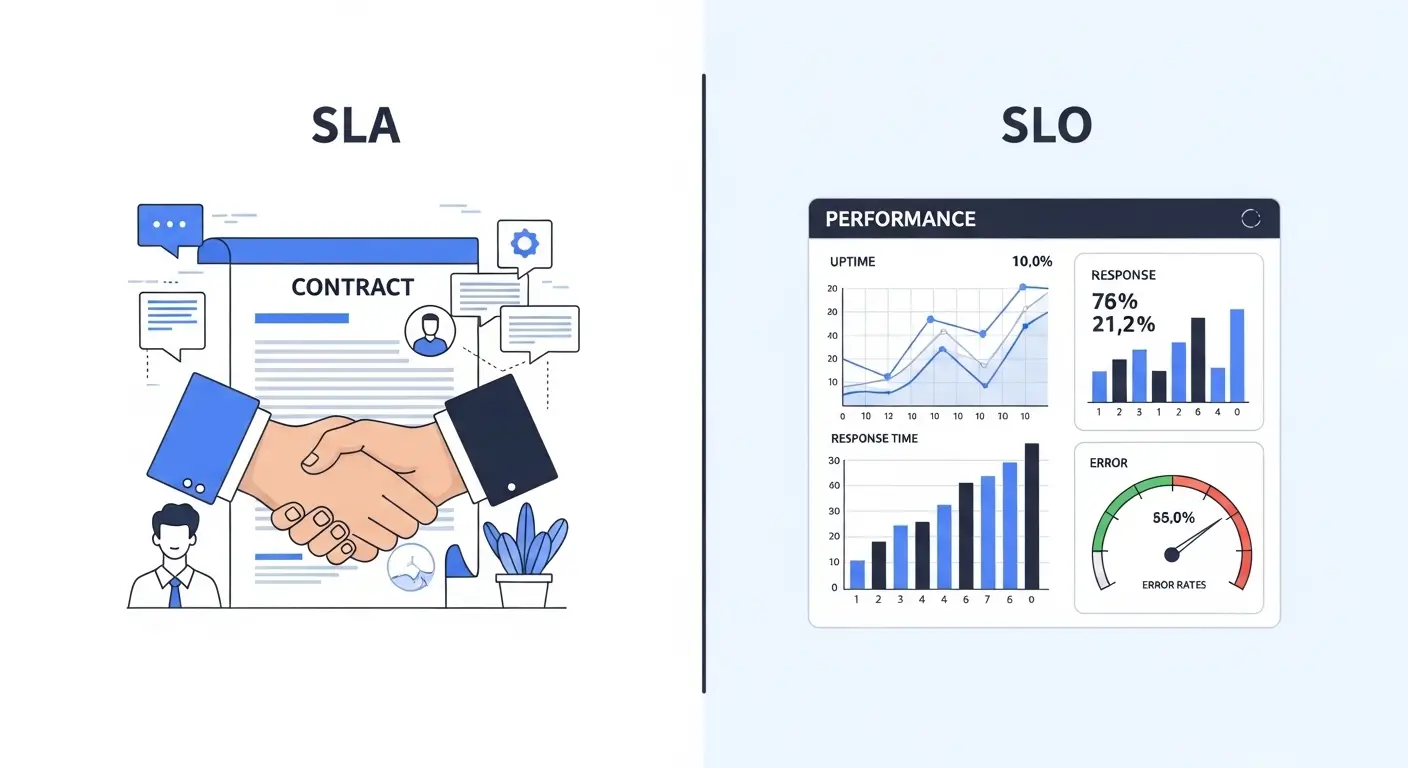
In simple words, an SLA is a formal contract between a service provider and a customer, while an SLO is a measurable target used internally to maintain performance standards. The difference between SLA and SLO becomes important when companies define what level of service they promise and how they measure their success.
Many professionals study the difference between SLA and SLO to improve system reliability and customer satisfaction. For IT teams, knowing the difference between SLA and SLO helps them monitor performance and prevent service failures before they affect users.
Key Difference Between the Two
The difference between SLA and SLO lies mainly in their purpose. An SLA is an external commitment made to customers, usually written in a legal contract. An SLO, on the other hand, is an internal performance target used by service providers to ensure they meet the promises defined in the SLA.
Why Their Difference Is Necessary to Know for Learners and Experts
Understanding the difference between SLA and SLO is important for both beginners and professionals in fields such as IT, cloud computing, and service management.
For learners, it helps them understand how organizations maintain service quality and reliability. Many students studying computer science or IT management encounter these terms when learning about system performance and monitoring.
For experts and professionals, the distinction is crucial for designing reliable systems. Organizations depend on SLAs to build trust with customers. Meanwhile, SLOs help teams monitor internal performance and fix issues before they violate agreements. In modern digital services—such as cloud hosting, streaming platforms, and banking systems—these concepts ensure smooth operations and protect customer experience.
Pronunciation
| Term | US Pronunciation | UK Pronunciation |
| SLA | /ˌɛs ɛl ˈeɪ/ | /ˌɛs ɛl ˈeɪ/ |
| SLO | /ˌɛs ɛl ˈoʊ/ | /ˌɛs ɛl ˈəʊ/ |
Before exploring deeper technical aspects, it is helpful to examine the difference between SLA and SLO in detail through clear comparisons.
Difference Between SLA and SLO
1. Definition
SLA: A formal agreement between a service provider and a customer that defines the level of service expected.
Example 1: A cloud company promises 99.9% uptime in its SLA.
Example 2: An internet provider guarantees customer support within 24 hours in its SLA.
SLO: A specific performance target that helps achieve the SLA.
Example 1: Engineers monitor uptime every minute to maintain the 99.9% goal.
Example 2: Response time targets ensure customer requests are answered quickly.
2. Purpose
SLA: Protects customers by defining service commitments.
Example 1: Businesses rely on SLAs to ensure service availability.
Example 2: Companies use SLAs to claim compensation if services fail.
SLO: Helps teams measure performance and maintain reliability.
Example 1: Engineers track system uptime daily.
Example 2: Monitoring tools compare performance against SLO targets.
3. Audience
SLA: Intended for customers and external stakeholders.
Example 1: A company signs an SLA with its hosting provider.
Example 2: Clients review the SLA before purchasing services.
SLO: Used internally by engineers and operations teams.
Example 1: DevOps teams track system performance with SLO metrics.
Example 2: IT managers use SLOs to evaluate service health.
4. Legal Status
SLA: Legally binding in many cases.
Example 1: Violating an SLA may require compensation.
Example 2: Contracts often include penalties for downtime.
SLO: Not legally binding.
Example 1: Missing an SLO usually triggers internal review.
Example 2: Teams adjust system performance strategies.
5. Measurement
SLA: Measured using customer facing metrics.
Example 1: Monthly uptime reports.
Example 2: Average response time guarantees.
SLO: Measured using detailed technical metrics.
Example 1: Latency tracking.
Example 2: Error rate monitoring.
6. Scope
SLA: Covers overall service commitments.
Example 1: Network availability guarantees.
Example 2: Customer support response times.
SLO: Focuses on individual performance targets.
Example 1: Database response time.
Example 2: API availability metrics.
7. Consequences
SLA: Violations may lead to penalties or refunds.
Example 1: Hosting provider gives service credit.
Example 2: Customers may terminate contracts.
SLO: Violations trigger technical improvements.
Example 1: Engineers upgrade infrastructure.
Example 2: Monitoring tools identify system problems.
8. Level of Detail
SLA: More general and customer focused.
Example 1: Promises high availability.
Example 2: Guarantees support response time.
SLO: Highly technical and specific.
Example 1: Defines acceptable latency levels.
Example 2: Specifies error rate thresholds.
9. Usage
SLA: Used in business agreements.
Example 1: Cloud service contracts.
Example 2: IT outsourcing agreements.
SLO: Used in internal system monitoring.
Example 1: DevOps performance dashboards.
Example 2: System reliability monitoring tools.
10. Relationship
SLA: Depends on SLOs to be achieved.
Example 1: SLA uptime depends on internal performance targets.
Example 2: SLO metrics help maintain SLA promises.
SLO: Supports the SLA.
Example 1: Engineers design SLOs to avoid SLA violations.
Example 2: Monitoring systems ensure SLA requirements are met.
Nature and Behaviour
SLA:
An SLA behaves like a formal promise. It defines responsibilities and ensures accountability between service providers and customers.
SLO:
An SLO behaves like a performance guide. It helps technical teams monitor and maintain system reliability.
Why People Are Confused About Their Use
Many people confuse SLA and SLO because both relate to service performance. They also use similar metrics such as uptime, response time, and reliability. Another reason is that both terms appear together in IT service management discussions. However, the main difference is that an SLA is a customer contract, while an SLO is an internal target used to achieve that contract.
Table Showing Difference and Similarities
| Feature | SLA | SLO | Similarity |
| Meaning | Service agreement | Performance target | Both define service quality |
| Audience | Customers | Internal teams | Used in service management |
| Legal status | Often binding | Not binding | Both relate to commitments |
| Scope | Broad service promises | Specific metrics | Focus on reliability |
| Purpose | Define expectations | Achieve performance goals | Improve service quality |
Which Is Better in What Situation?
SLA:
An SLA is better when a company needs to establish clear expectations with customers. Businesses use SLAs in contracts for cloud services, hosting, and IT outsourcing. These agreements protect clients and ensure accountability.
SLO:
An SLO is better for internal service management. Engineers use SLOs to monitor performance and prevent service failures. By meeting SLO targets, organizations ensure that their SLAs remain intact.
Metaphors and Similes
SLA and SLO are often explained through comparisons.
Example metaphors:
- An SLA is like a promise written in stone, guaranteeing service quality.
- An SLO is like a compass, guiding teams toward reliable performance.
Example similes:
- An SLA works like a contract between partners.
- An SLO functions like a speedometer for service performance.
Connotative Meaning
SLA – Neutral to Positive
Example: “The company strengthened its SLA to build customer trust.”
SLO – Neutral
Example: “The engineering team improved its SLO targets for better reliability.”
Idioms or Proverbs (Related Conceptually)
- “A promise is a promise.”
Example: The company followed its SLA because a promise is a promise. - “Measure twice, cut once.”
Example: Engineers follow SLOs because accurate measurement prevents mistakes.
Works in Literature Mentioning the Concepts
Although SLA and SLO are technical terms, they appear in modern IT literature:
- Site Reliability Engineering — Non fiction, Google Engineers, 2016
- The DevOps Handbook — Technology/Management, Gene Kim, 2016
- Seeking SRE — Technology guide, David Blank Edelman, 2018
Movies Related to Technology and System Reliability
- The Social Network (2010, USA)
- Hackers (1995, USA)
- Blackhat (2015, USA)
Frequently Asked Questions
1. What is the main difference between SLA and SLO?
An SLA is a contract with customers, while an SLO is an internal performance target.
2. Are SLAs legally binding?
Yes, many SLAs are part of formal business agreements.
3. Do SLOs support SLAs?
Yes, SLOs help teams meet the commitments defined in SLAs.
4. Can a company have multiple SLOs for one SLA?
Yes, several SLOs may support a single SLA requirement.
5. Why do companies track SLOs?
They help maintain reliability and prevent SLA violations.
How Both Are Useful for Surroundings
SLA and SLO help maintain reliable digital services in everyday life. Online banking, cloud storage, video streaming, and e commerce platforms all depend on these systems. By defining expectations and measuring performance, organizations ensure stable technology environments for users worldwide.
Final Words on Both Terms
SLA represents commitment and accountability, while SLO represents measurement and improvement. Together they create a balanced system where businesses promise quality and engineers ensure it is achieved.
Conclusion
The difference between SLA and SLO lies mainly in their purpose and usage. An SLA is a formal promise made to customers about service performance, while an SLO is an internal performance target that helps teams achieve those promises.
Understanding this distinction helps organizations maintain trust and reliability. In modern digital infrastructure, both concepts work together to ensure stable and high quality services. While SLAs focus on external commitments, SLOs concentrate on internal monitoring and improvement.
When businesses properly manage both, they can deliver reliable services, prevent downtime, and build strong relationships with their customers.

Dr. Marcus Reed is a lead editorial author at WordCompares.com and a specialist in communication studies and written clarity. With more than 12 years of university-level teaching experience, he focuses on explaining word distinctions in a clear and structured manner. His work ensures that WordCompares.com maintains accuracy, depth, and reader trust.