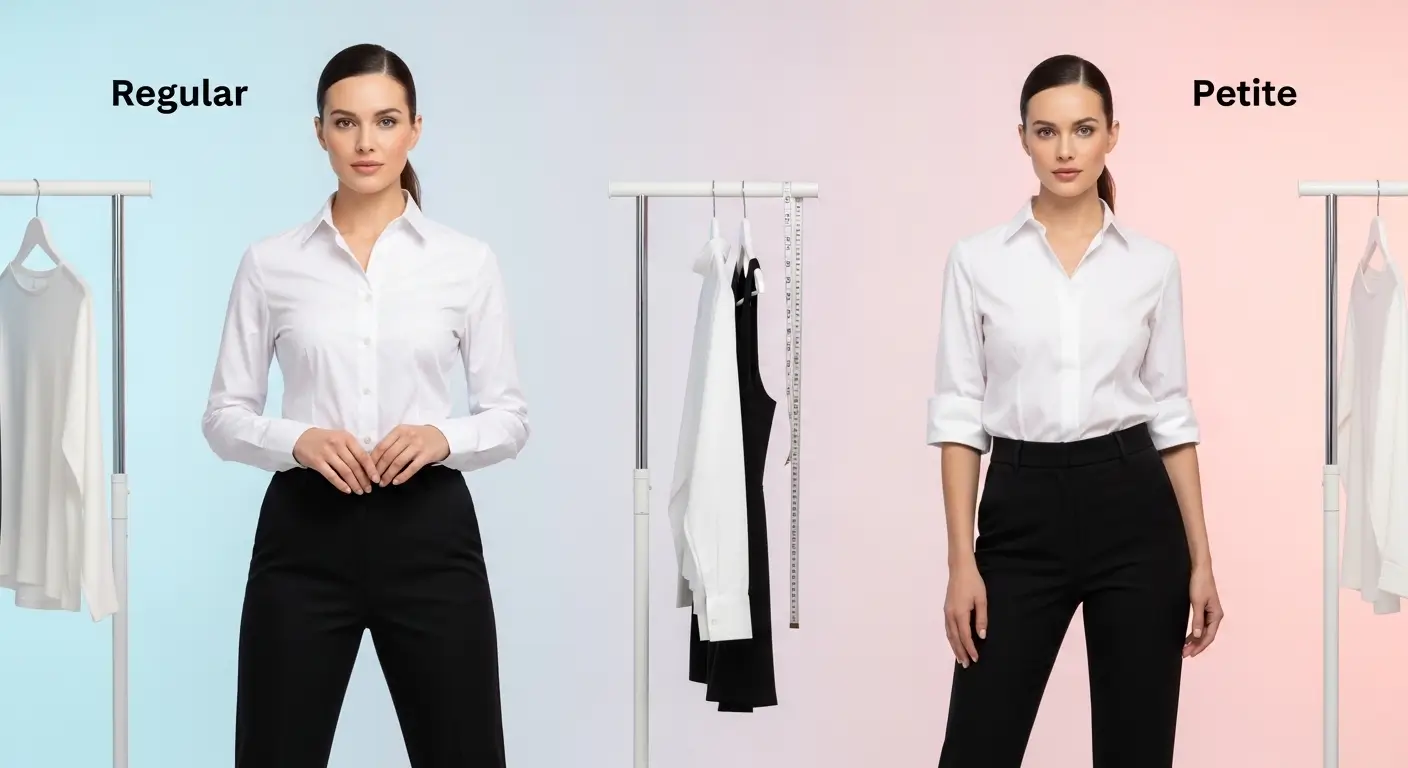
The terms regular and petite are common in fashion, but many people remain confused about their meaning. While shopping for dresses, jeans, or jackets, you might notice some items labeled as “regular” and others for shorter frames. Regular refers to standard sizing for average height, whereas the smaller-size category is designed for individuals under 5’4” (162 cm).
Understanding this difference is important for buying clothes that fit well and look flattering. Fashion enthusiasts and shoppers benefit from knowing the distinctions, as these sizes cater to different proportions, ensuring comfort, style, and confidence.
Pronunciation:
- Regular: US /ˈreɡjələr/, UK /ˈreɡjʊlə/
- Petite: US /pəˈtiːt/, UK /pəˈtiːt/
Now, let’s explore the main differences between these two sizing types and why it matters for everyone, from learners to experts.
Difference Between Regular and Shorter Sizes
1. Height Consideration
- Regular: Designed for average heights (5’4”–5’8”). Example: A blazer fits someone 5’6” comfortably.
- Smaller Sizes: Made for shorter individuals (below 5’4”). Example: Dresses avoid dragging on the floor.
2. Proportion of Clothing
- Regular: Standard proportions in sleeves, torso, and legs. Example: Regular shirts have longer sleeves. Example: Regular trousers fit average leg length.
- Smaller Sizes: Adjusted to fit smaller frames. Example: Jackets shorten the torso.
3. Waist and Hip Fit
- Regular: Fits average waist-to-hip ratio. Example: Regular skirts sit naturally on the hips. Example: Regular trousers fit standard waist sizes.
- Smaller Sizes: Tailored for shorter proportions. Example: Pants prevent baggy fit.
4. Sleeve and Inseam Length
- Regular: Longer sleeves and inseams. Example: Regular shirts reach wrists properly. Example: Regular jeans need cuffing for shorter wearers.
- Smaller Sizes: Shorter and proportionate sleeves. Example: Blouses fit without folding.
5. Neckline Position
- Regular: Necklines sit at standard level. Example: Regular V-neck appears mid-chest. Example: Regular collared shirts align with neck bones.
- Smaller Sizes: Necklines adjusted for shorter torsos. Example: V-neck doesn’t appear too low.
6. Jacket and Coat Length
- Regular: Hits standard mid-hip or thigh. Example: Regular coats may overwhelm short frames. Example: Regular blazers may look oversized.
- Smaller Sizes: Tailored for shorter bodies. Example: Blazers avoid extra bulk.
7. Overall Fit
- Regular: Provides comfort for average body dimensions. Example: Regular casual wear suits 5’5”–5’8”. Example: Regular trousers don’t require adjustments.
- Smaller Sizes: Prevents excess fabric. Example: Jeans follow natural curves.
8. Brand Variations
- Regular: Produced by almost all brands. Example: H&M, Zara.
- Smaller Sizes: Offered by fewer brands. Example: ASOS Shorter Line, Banana Republic Petite.
9. Target Audience
- Regular: Targets average-height adults. Example: People 5’4”–5’8”. Example: Commonly used in retail sizing charts.
- Petite: Targets shorter adults or teenagers. Example: Young adults under 5’4”. Example: Petite lines in women’s clothing stores.
10. Alteration Needs
- Regular: Minimal alteration for average height. Example: Regular pants need cuffing for short people. Example: Regular sleeves may be too long for petite frames.
- Petite: Reduces need for tailoring. Example: Petite tops fit out-of-the-box. Example: Petite skirts sit correctly on hips.
Nature and Behaviour
- Regular: Flexible, universal, and suits most average individuals. Neutral in style, more common in stores.
- Petite: Specialized, proportion-focused, designed for comfort and style in shorter frames. Positive in helping confidence in fashion.
Why People Are Confused
People often mix regular and petite because both look similar in labels, and some brands don’t clearly define their sizing. Many shoppers assume “petite” is about body weight, not height.
Table: Difference and Similarity
| Feature | Regular | Petite | Similarity |
| Height | 5’4”–5’8” | Below 5’4” | Both are standard sizing types |
| Sleeve Length | Longer | Shorter | Designed for comfort |
| Torso Fit | Standard | Shortened | Can be stylish |
| Target Audience | Average height | Shorter individuals | Both used in clothing industry |
| Alteration | Sometimes needed | Rarely needed | Improve fit |
| Brand Availability | Common | Limited | Offered by fashion brands |
Which is Better in What Situation?
Regular: Best for average-height individuals, suits most workplaces and casual settings without alteration. Provides a universal fit and easy availability in stores.
Petite: Ideal for shorter individuals seeking better proportion and comfort. Prevents excessive folding or baggy clothing and boosts confidence. Petite is perfect for tailored looks and formal wear.
Use in Metaphors and Similes
- Regular: “As regular as clockwork” – predictable and consistent.
- Petite: “Petite as a sparrow” – small and delicate.
Connotative Meaning:
- Regular: Neutral; Example: Regular coffee is fine for everyday use.
- Petite: Positive; Example: She looked petite and elegant in the evening gown.
Idioms or Proverbs Related
- Regular: “Regular as rain” – happens predictably. Example: He visits the library, regular as rain.
- Petite: “Small but mighty” – petite yet powerful. Example: The petite dancer amazed everyone.
Works in Literature
- “The Petite Bourgeoisie” – Novel, George Bernard Shaw, 1894
- “Regular Folks” – Short Story, F. Scott Fitzgerald, 1925
Movies on Keywords
- Petite Maman – 2021, France
- Regular Show: The Movie – 2015, USA
FAQ
- What does regular size mean?
It fits average height individuals, usually 5’4”–5’8”. - What does petite size mean?
Designed for shorter individuals below 5’4”. - Can tall people wear petite?
Not recommended; proportions will be too small. - Is petite only for women?
Mostly in women’s fashion, but men’s petite options exist. - Are petite clothes more expensive?
Sometimes, due to specialized tailoring, but not always.
How Both Are Useful for Surroundings
Regular and petite clothing options make fashion inclusive, catering to different heights and body types. This supports diversity in style, comfort, and self-expression.
Final Words
Understanding the difference between regular and petite allows shoppers to choose the right fit and enhances confidence in daily wear. Both sizes are equally important depending on body type.
Conclusion
The difference between regular and petite is more than just a label—it’s about proportion, comfort, and personal style. Regular clothing suits average-height individuals, while petite ensures shorter frames get a perfect fit.
Misunderstanding these can lead to discomfort and poor appearance, but knowing the distinction empowers consumers. Fashion brands increasingly recognize these differences, offering better options for everyone.
Ultimately, understanding regular versus petite helps people shop smartly, feel confident, and express themselves effectively through clothing choices.

Jordan L. Carter is a contributing language analyst at WordCompares.com, focusing on modern English usage, evolving vocabulary trends, and digital communication language. With over a decade of writing experience, Jordan provides insightful word comparisons that make complex language differences simple for everyday readers.