Last autumn, a family at a local market argued over whether the large orange vegetable they bought was a pumpkin or a squash. The shopkeeper smiled and explained that pumpkins are actually a type of squash, which surprised them. This common confusion shows why understanding the difference between pumpkin and squash is important.
Many people use these words interchangeably, but they are not exactly the same. Knowing the difference between pumpkin and squash helps in cooking, gardening, and even in cultural traditions like Halloween and harvest festivals. Whether you are a student, gardener, or chef, understanding the difference between pumpkin and squash can make your knowledge clearer and your choices smarter in daily life.
Key Difference Between the Both
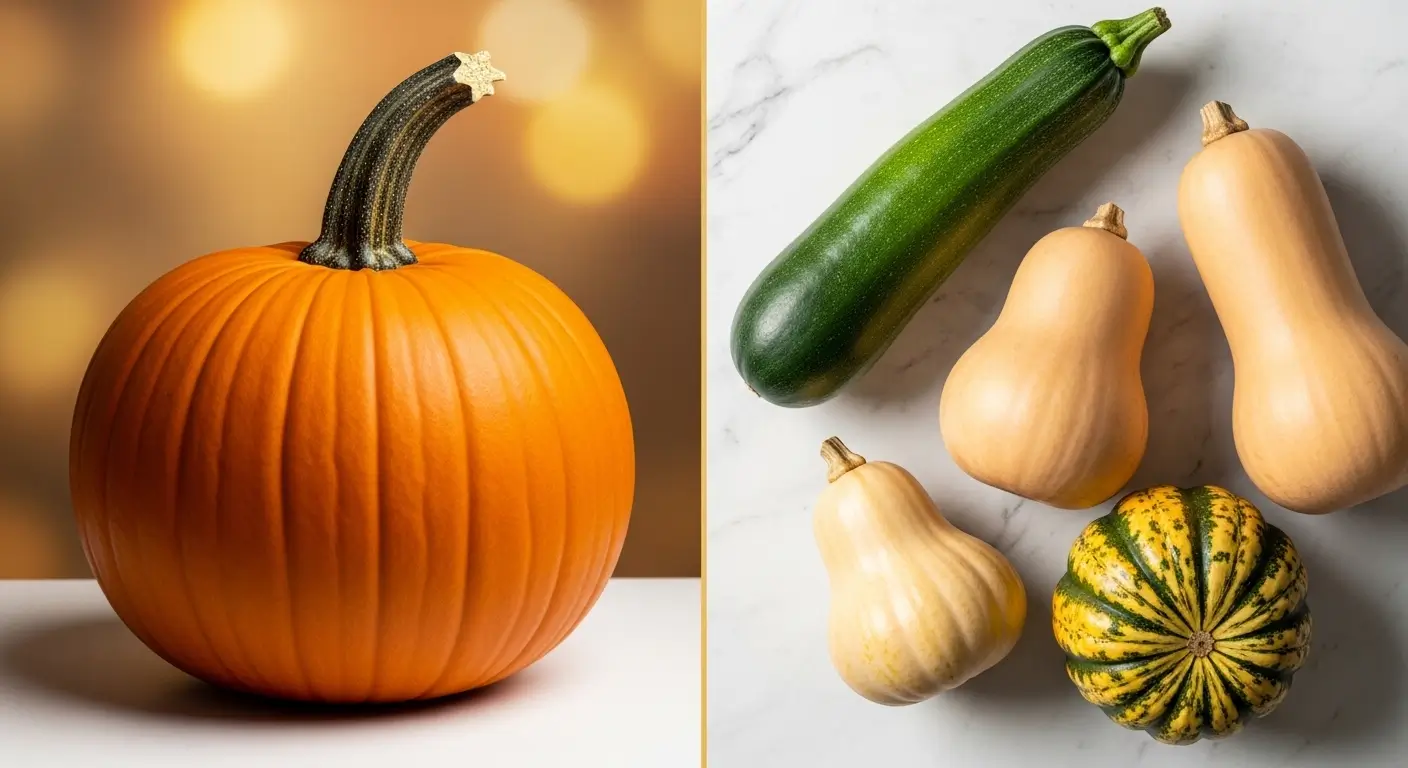
The main difference between pumpkin and squash lies in classification, appearance, taste, and usage. Pumpkin is a specific type of winter squash, while squash is a broader category that includes many varieties such as zucchini, butternut, and acorn squash.
Why Is Their Difference Necessary to Know for Learners and Experts?
Understanding this difference is useful in education, agriculture, nutrition, and culinary arts. Students studying biology learn about plant families and classification through such examples. Farmers and gardeners must know the difference to grow the right crop in the right season. Chefs and nutritionists also need this knowledge to select ingredients correctly and create the desired flavor and texture in dishes. Thus, recognizing the difference between pumpkin and squash improves both practical skills and scientific understanding in society.
Pronunciation of Both
| Word | US Pronunciation | UK Pronunciation |
| Pumpkin | /ˈpʌmp.kɪn/ | /ˈpʌmp.kɪn/ |
| Squash | /skwɑːʃ/ | /skwɒʃ/ |
Understanding their meanings and sounds helps us move smoothly into the detailed comparison that follows.
Difference Between Pumpkin and Squash
1. Botanical Classification
Pumpkin is a type of winter squash belonging to the Cucurbita genus. Squash is a general term that includes both summer and winter varieties.
Examples:
- Pumpkin: Sugar pumpkin, field pumpkin
- Squash: Zucchini, butternut squash
2. Shape and Size
Pumpkins are usually round and large. Squash can be long, curved, or small.
Examples:
- Pumpkin: Round Halloween pumpkin
- Squash: Long zucchini, bell-shaped acorn squash
3. Color
Pumpkins are commonly bright orange. Squash appears in green, yellow, white, and orange.
Examples:
- Pumpkin: Orange pie pumpkin
- Squash: Yellow summer squash, green zucchini
4. Taste
Pumpkins have a mild, slightly sweet taste. Squash varieties may be sweeter or more nutty.
Examples:
- Pumpkin: Used in pumpkin pie
- Squash: Butternut squash soup, zucchini stir-fry
5. Seasonal Category
Pumpkin is considered a winter squash. Squash includes both summer and winter types.
Examples:
- Pumpkin: Harvested in autumn
- Squash: Zucchini harvested in summer
6. Skin Texture
Pumpkin skin is thick and hard. Summer squash has thin, edible skin.
Examples:
- Pumpkin: Thick rind needs peeling
- Squash: Zucchini skin is eaten directly
7. Culinary Uses
Pumpkins are mainly used in desserts and soups. Squash is used in a wider range of dishes.
Examples:
- Pumpkin: Pumpkin pie, pumpkin latte
- Squash: Stuffed squash, grilled zucchini
8. Cultural Significance
Pumpkins are strongly linked with Halloween and harvest festivals. Squash does not hold such symbolic value.
Examples:
- Pumpkin: Jack-o’-lanterns
- Squash: Commonly used only as food
9. Nutritional Variation
Both are nutritious, but squash varieties may differ more widely in calories and vitamins.
Examples:
- Pumpkin: Rich in vitamin A
- Squash: Butternut squash high in fiber
10. Storage Life
Pumpkins can be stored for months due to their thick skin. Some squash, especially summer types, spoil quickly.
Examples:
- Pumpkin: Stored through winter
- Squash: Zucchini lasts only a few days in fridge
Nature and Behaviour of Both
Pumpkin plants grow on long creeping vines and produce large, heavy fruits. They require plenty of space and warm weather. Squash plants vary widely—some grow as bushes while others spread like vines. Summer squash grows quickly and is harvested young, while winter squash matures slowly and develops hard skin for storage.
Why People Are Confused About Their Use
People are confused because pumpkins are scientifically part of the squash family. In everyday language, however, pumpkin is treated as a separate vegetable. The overlapping categories and similar appearance make it difficult for non-experts to distinguish between them.
Table Showing Difference and Similarity
| Feature | Pumpkin | Squash | Similarity |
| Category | Type of winter squash | General plant group | Same genus |
| Shape | Mostly round | Various shapes | Both large fruits |
| Taste | Mild and sweet | Sweet to nutty | Both edible |
| Skin | Thick and hard | Thin or thick depending on type | Protective rind |
| Use | Desserts, carving | Wide culinary use | Used in cooking |
Which Is Better in What Situation?
Pumpkin is better when you need a vegetable for festive decoration, carving, or making sweet dishes like pies and desserts. Its thick skin and large size also make it suitable for long-term storage.
Squash is better when you want variety in cooking. From light summer dishes to hearty winter soups, squash offers many textures and flavors. It is more versatile in daily meals compared to pumpkin.
Use in Metaphors and Similes
Pumpkin is often used to symbolize something large, round, or festive. Squash is used metaphorically to describe crushing or defeating something.
- “Her face lit up like a pumpkin lantern.”
- “The team was completely squashed by their rivals.”
Connotative Meaning
Pumpkin:
- Positive: Warmth, harvest, celebration
- Example: “She looked as cheerful as a pumpkin at Halloween.”
Squash:
- Neutral or Negative: Pressure or defeat
- Example: “His dreams were squashed by criticism.”
Idioms and Proverbs
- “As round as a pumpkin” – describing a very round object
Example: The baby’s cheeks were as round as a pumpkin. - “To squash an idea” – to stop something from happening
Example: The manager squashed the plan before it began.
Works in Literature
- “The Pumpkin Eater” – Novel, Penelope Mortimer, 1962
- “Squash: A Native American Tale” – Children’s folklore collection, 1990
Movies Featuring These Words
- “It’s the Great Pumpkin, Charlie Brown” – 1966, USA
- “Pumpkin” – 2002, USA
Frequently Asked Questions
1. Is a pumpkin a squash?
Yes, a pumpkin is a type of winter squash belonging to the same plant family.
2. Can squash replace pumpkin in recipes?
In many recipes, especially soups and pies, butternut squash can replace pumpkin.
3. Why are pumpkins mostly orange?
They contain high levels of beta-carotene, which gives them their bright orange color.
4. Is squash healthier than pumpkin?
Both are healthy, but nutritional value varies depending on the squash variety.
5. Are pumpkins only used for decoration?
No, pumpkins are widely used in cooking, especially in desserts and soups.
How Both Are Useful for Surroundings
Both pumpkin and squash plants improve soil health and support biodiversity. Their large leaves provide shade to the ground, reducing weed growth. They also attract pollinators like bees, which help other crops grow better.
Final Words for Both
Pumpkin stands out for its cultural and festive value, while squash offers greater variety and flexibility in cooking. Together, they form an important part of global agriculture and cuisine.
Conclusion
Understanding the difference between pumpkin and squash helps avoid confusion in both daily conversation and professional settings. While pumpkins are just one type of squash, their unique appearance, cultural symbolism, and culinary uses set them apart. Squash, on the other hand, represents a wide group of vegetables that provide diverse flavors, textures, and nutritional benefits.
By learning how they differ in classification, taste, and use, we gain a deeper appreciation of these common yet fascinating plants. Whether in the kitchen, garden, or classroom, knowing the difference between pumpkin and squash enhances both knowledge and practical decision-making.

Alexandra “Alex” Monroe is a senior linguistics contributor at WordCompares.com, where she specializes in comparative word analysis, semantics, and language clarity. With over 15 years of academic and editorial experience, Alex helps readers understand subtle differences between commonly confused words and phrases. Her research-driven yet practical writing style strengthens the educational authority of WordCompares.com.