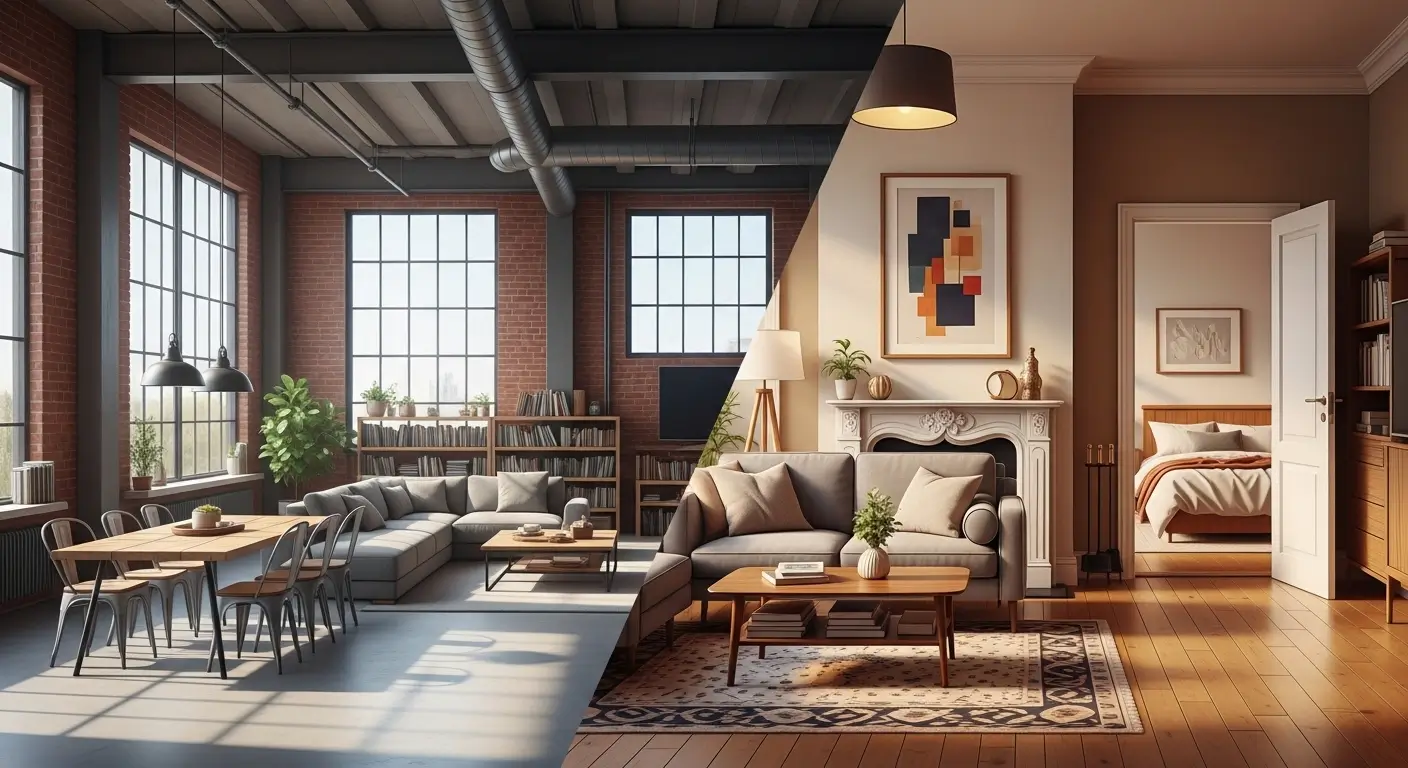
Imagine you’re moving to a new city and browsing property listings. You come across two options: a loft and an apartment. Both seem appealing, but what exactly sets them apart? Understanding the difference between loft and apartment can help you make the right choice for your lifestyle.
A loft often feels like a spacious, open-concept area with high ceilings, while an apartment typically offers a more traditional layout with separate rooms. The difference between loft and apartment is not just about size—it also includes design, purpose, and living experience. As you explore housing options, knowing the difference between loft and apartment becomes essential to avoid confusion and make an informed decision.
Key Difference Between the Both
The main difference between loft and apartment lies in their layout and origin. Lofts are usually converted industrial spaces with open floor plans, while apartments are purpose-built residential units with defined rooms.
Why Is Their Difference Important in Society?
Understanding the difference between loft and apartment is important for both learners and professionals in real estate, architecture, and urban planning. It helps buyers choose suitable living spaces, designers create functional layouts, and investors evaluate property value. In modern society, where space and lifestyle preferences vary greatly, distinguishing between these two housing types ensures better decision-making and efficient use of urban environments.
Pronunciation
- Loft
- US: /lɔːft/
- UK: /lɒft/
- Apartment
- US: /əˈpɑːrtmənt/
- UK: /əˈpɑːtmənt/
Now that you understand the basics, let’s explore the detailed difference between loft and apartment in depth.
Difference Between Loft and Apartment
1. Layout
- Loft: Open floor plan with minimal walls.
- Example 1: Kitchen, bedroom, and living space in one area.
- Example 2: Studio-style living without partitions.
- Apartment: Separate rooms with walls.
- Example 1: Bedroom, kitchen, and living room divided.
- Example 2: Multi-room family apartment.
2. Origin
- Loft: Converted from warehouses or factories.
- Example 1: Old industrial building turned into housing.
- Example 2: Former factory redesigned for living.
- Apartment: Built for residential purposes.
- Example 1: Modern apartment complexes.
- Example 2: High-rise residential buildings.
3. Ceiling Height
- Loft: High ceilings.
- Example 1: Exposed beams above.
- Example 2: Large vertical space.
- Apartment: Standard ceiling height.
- Example 1: 8–10 feet ceilings.
- Example 2: Compact vertical space.
4. Windows
- Loft: Large industrial windows.
- Example 1: Floor-to-ceiling glass panels.
- Example 2: Wide windows for natural light.
- Apartment: Standard-sized windows.
- Example 1: Small bedroom windows.
- Example 2: Regular living room windows.
5. Privacy
- Loft: Less privacy due to open layout.
- Example 1: No separate bedroom walls.
- Example 2: Shared space for all activities.
- Apartment: More privacy.
- Example 1: Separate bedrooms.
- Example 2: Closed kitchen areas.
6. Design Style
- Loft: Industrial and modern.
- Example 1: Exposed brick walls.
- Example 2: Visible pipes and ducts.
- Apartment: Traditional or contemporary.
- Example 1: Painted walls.
- Example 2: Concealed wiring.
7. Cost
- Loft: Often expensive due to uniqueness.
- Example 1: Luxury urban lofts.
- Example 2: Designer loft spaces.
- Apartment: Varies widely.
- Example 1: Affordable units.
- Example 2: Mid-range family apartments.
8. Location
- Loft: Usually in city centers.
- Example 1: Downtown areas.
- Example 2: Artistic neighborhoods.
- Apartment: Found everywhere.
- Example 1: Suburbs.
- Example 2: Residential zones.
9. Flexibility
- Loft: Highly customizable.
- Example 1: Movable furniture layouts.
- Example 2: Multi-purpose spaces.
- Apartment: Fixed structure.
- Example 1: Pre-defined rooms.
- Example 2: Limited remodeling.
10. Target Audience
- Loft: Artists, singles, creatives.
- Example 1: Studio for painting.
- Example 2: Work-live space.
- Apartment: Families, professionals.
- Example 1: Family housing.
- Example 2: Office workers.
Nature and Behaviour
- Loft: Open, flexible, creative, and modern. It encourages freedom and artistic living.
- Apartment: Structured, organized, practical, and comfortable. It supports routine and privacy.
Why Are People Confused?
People often confuse lofts and apartments because both are residential spaces. Real estate listings sometimes use the terms interchangeably, and modern apartments may adopt loft-like designs, making the distinction less obvious.
Comparison Table
| Feature | Loft | Apartment | Similarity |
| Layout | Open | Divided | Both are living spaces |
| Origin | Industrial conversion | Built residential | Used for housing |
| Privacy | Low | High | Provide shelter |
| Design | Industrial | Traditional/modern | Can be stylish |
| Location | Urban centers | Everywhere | Found in cities |
Which Is Better in What Situation?
A loft is better for individuals who value creativity, openness, and modern aesthetics. Artists, freelancers, and young professionals often prefer lofts because they allow flexible use of space. The open design makes it ideal for combining living and working environments, especially in urban settings.
An apartment is better for families or individuals seeking privacy and structure. It provides separate rooms, making it suitable for shared living or long-term stability. Apartments are also more practical for daily routines and offer a sense of comfort and organization.
Metaphors and Similes
- Loft: “A loft is like a blank canvas.”
- Apartment: “An apartment is like a well-organized box.”
Connotative Meanings
- Loft:
- Positive: Creative, modern, stylish
- Negative: Noisy, less private
- Neutral: Open living space
- Apartment:
- Positive: Comfortable, practical, secure
- Negative: Limited space
- Neutral: Standard housing unit
Idioms / Proverbs
- “Make yourself at home” (used for both)
- Example: “Whether in a loft or apartment, make yourself at home.”
- “A roof over your head”
- Example: “Both lofts and apartments provide a roof over your head.”
Works in Literature
- The Apartment (Drama, Billy Wilder, 1960)
- Loft Living (Urban Lifestyle, various authors, modern essays)
Movies
- The Loft (2014, USA/Belgium)
- The Apartment (1960, USA)
FAQs
1. What is the main difference between loft and apartment?
Lofts have open layouts, while apartments have separate rooms.
2. Are lofts more expensive than apartments?
Often yes, due to unique design and location.
3. Which is better for families?
Apartments are better due to privacy.
4. Can a loft be converted into an apartment style?
Partially, by adding partitions.
5. Are lofts only in cities?
Mostly, but some exist in suburban areas.
How Both Are Useful for Surroundings
Lofts contribute to urban redevelopment by transforming old industrial spaces into living areas. Apartments support organized housing and accommodate large populations efficiently, making cities more structured and livable.
Final Words for Both
Lofts represent creativity and modern urban living, while apartments symbolize comfort and practicality. Both serve essential roles in housing systems.
Conclusion
In conclusion, understanding the difference between loft and apartment helps you choose the right living space based on your needs. Lofts offer openness, creativity, and a modern lifestyle, while apartments provide structure, privacy, and practicality. Both have their advantages and cater to different preferences.
Whether you prioritize flexibility or comfort, knowing these differences ensures better decisions in real estate and daily living. Ultimately, the right choice depends on your lifestyle, budget, and personal taste.

Alexandra “Alex” Monroe is a senior linguistics contributor at WordCompares.com, where she specializes in comparative word analysis, semantics, and language clarity. With over 15 years of academic and editorial experience, Alex helps readers understand subtle differences between commonly confused words and phrases. Her research-driven yet practical writing style strengthens the educational authority of WordCompares.com.