A few years ago, a friend of mine wanted to work as a nurse in a hospital. She had completed her training and proudly showed me a certificate from a professional organization. However, when she applied for a job, the hospital asked for something different: a government license. That moment clearly showed the difference between licensure and certification.
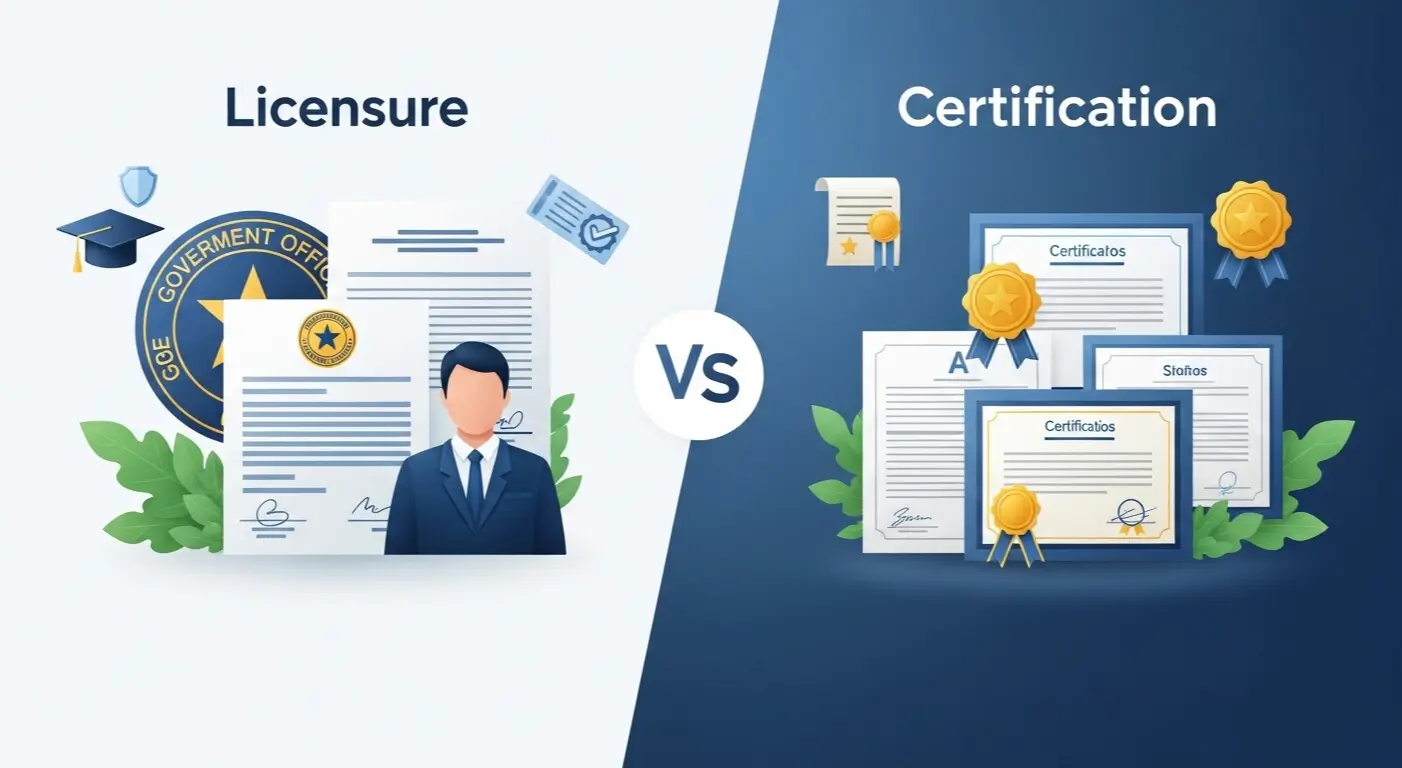
Many people assume these two terms mean the same thing, but the difference between licensure and certification is important in professional life. Licensure is usually a legal requirement given by a government authority, while certification often proves that a professional has specialized skills.
Understanding the difference between licensure and certification helps students, job seekers, and experts choose the right path in their careers. When we explore the difference between licensure and certification, we realize how both play different roles in professional credibility and public safety.
Key Difference Between the Both
The main difference between licensure and certification is authority and purpose.
Licensure is granted by a government authority and is legally required to practice certain professions such as medicine, law, or teaching. Without a license, a person cannot legally perform the job.
Certification, on the other hand, is usually provided by professional organizations or institutions to show that someone has achieved a certain level of expertise or specialization in a field. It is often voluntary.
Why Is Their Difference Necessary to Know for Learners and Experts?
Understanding the difference between licensure and certification is very important for both learners and professionals. Students planning their careers must know whether a profession requires legal permission or only additional credentials.
For experts, knowing the difference helps them maintain credibility and meet professional standards. In society, licensure protects the public by ensuring that only qualified individuals perform sensitive work such as medical treatment or engineering. Certification improves quality by encouraging professionals to learn advanced skills and stay updated.
Together, both systems maintain trust, safety, and professional excellence in society.
Pronunciation of Both Terms
Licensure
- US: /ˈlaɪ.sen.ʃɚ/
- UK: /ˈlaɪ.sen.ʃə/
Certification
- US: /ˌsɝː.tɪ.fɪˈkeɪ.ʃən/
- UK: /ˌsɜː.tɪ.fɪˈkeɪ.ʃən/
Linking Hook
Now that we understand their meaning and importance, let us explore the difference between licensure and certification in detail through practical comparisons and examples.
Difference Between Licensure and Certification
1. Authority
Licensure is issued by government agencies, while certification is issued by professional bodies.
Examples:
Licensure:
- A doctor receives a medical license from a government health board.
- A lawyer obtains a license from a state bar authority.
Certification:
- An IT professional earns a cybersecurity certification from a private organization.
- A teacher receives a specialized teaching certification.
2. Legal Requirement
Licensure is usually mandatory; certification is often optional.
Examples:
Licensure:
- A pharmacist must have a license to sell medicine.
- A pilot must have a government license to fly an airplane.
Certification:
- A project manager may earn PMP certification to enhance skills.
- A digital marketer may obtain a certification in SEO.
3. Purpose
Licensure protects public safety; certification shows professional competence.
Examples:
Licensure:
- Medical licenses ensure doctors meet health standards.
- Engineering licenses ensure safe building designs.
Certification:
- Software certifications prove programming expertise.
- Language certifications show proficiency in communication.
4. Issuing Body
Licensure comes from government institutions; certification comes from private or professional organizations.
Examples:
Licensure:
- State medical board licensing doctors.
- Government education department licensing teachers.
Certification:
- Microsoft issuing technology certifications.
- Professional accounting bodies issuing accounting certifications.
5. Mandatory vs Voluntary
Licensure is required to practice; certification is usually voluntary.
Examples:
Licensure:
- Dentists must obtain a dental license.
- Architects must have a professional license.
Certification:
- A nutritionist may take extra certification courses.
- A graphic designer may get design certifications.
6. Renewal Process
Licensure usually requires legal renewal and continuing education; certification may have simpler renewal requirements.
Examples:
Licensure:
- Doctors renew licenses every few years.
- Lawyers complete continuing legal education.
Certification:
- IT certifications require periodic updates.
- Trainers renew coaching certifications.
7. Scope of Practice
Licensure defines what a person is legally allowed to do.
Examples:
Licensure:
- A licensed nurse can administer medication.
- A licensed electrician can perform wiring legally.
Certification:
- A certified yoga instructor demonstrates specialized knowledge.
- A certified financial planner offers financial advice.
8. Regulation
Licensure is strictly regulated by law; certification is regulated by organizations.
Examples:
Licensure:
- Government sets rules for medical licensing.
- Transportation authorities license drivers.
Certification:
- Professional associations set exam standards.
- Training institutes regulate certification programs.
9. Career Impact
Licensure allows entry into a profession; certification enhances career growth.
Examples:
Licensure:
- Without a license, a surgeon cannot practice.
- Without a license, a lawyer cannot represent clients.
Certification:
- A certified data analyst may get higher salary opportunities.
- Certified trainers gain credibility.
10. Public Protection vs Professional Development
Licensure focuses on safety; certification focuses on professional development.
Examples:
Licensure:
- Licensing prevents unqualified doctors from treating patients.
- Licensing ensures safe construction practices.
Certification:
- Certification helps professionals upgrade skills.
- Certification builds specialization.
Nature and Behaviour of Both
Licensure
Licensure is legal, regulatory, and mandatory. It protects society and ensures minimum standards for practicing professionals.
Certification
Certification is professional, voluntary, and skill-based. It highlights expertise and helps individuals advance in their careers.
Why People Are Confused About Their Use
People often confuse these terms because both involve exams, training, and official documents. They also appear similar on resumes or professional profiles. Additionally, many professions require both licensure and certification, which makes the distinction less obvious.
Table: Difference and Similarity
| Aspect | Licensure | Certification | Similarity |
| Authority | Government | Professional organizations | Both verify qualifications |
| Requirement | Mandatory | Usually optional | Both require exams |
| Purpose | Legal permission | Skill recognition | Both improve credibility |
| Regulation | Legal system | Professional bodies | Both follow standards |
| Impact | Allows practice | Enhances expertise | Both help careers |
Which Is Better in What Situation?
Licensure
Licensure is better when legal permission is required to practice a profession. For example, doctors, nurses, pilots, and lawyers must obtain licenses before working. Without licensure, practicing such professions would be illegal and unsafe for society. Therefore, licensure is essential in fields that involve public safety, legal responsibilities, and government regulation.
Certification
Certification is better when professionals want to improve their skills, credibility, and specialization. It is especially useful in fields like IT, marketing, project management, and education. Certification helps professionals stand out in competitive job markets and demonstrates advanced knowledge.
Metaphors and Similes
Licensure metaphor:
- Licensure is like a key that opens the door to a profession.
Certification metaphor:
- Certification is like a badge of honor showing advanced skills.
Similes:
- Licensure works like a legal passport for professional practice.
- Certification shines like a medal of expertise.
Connotative Meaning
Licensure
- Positive: authority, trust, professionalism
- Neutral: legal permission
Example: - The doctor’s licensure increased patients’ confidence.
Certification
- Positive: expertise, achievement
- Neutral: qualification
Example: - Her certification proved her technical ability.
Idioms or Proverbs Related to the Words
Although direct idioms are rare, related expressions include:
“A license to do something”
Example:
- The company’s approval gave him a license to innovate.
“Certified expert” (common phrase)
Example:
- She became a certified expert in digital marketing.
Works in Literature Mentioning the Concepts
- The Doctor Stories — William Carlos Williams (Short Stories, 1930s)
- The Citadel — A.J. Cronin (Novel, 1937)
- Arrowsmith — Sinclair Lewis (Novel, 1925)
Movies Related to Professional Licensing or Certification
- The Doctor (1991, USA)
- Patch Adams (1998, USA)
- Sully (2016, USA)
Frequently Asked Questions
1. What is the main difference between licensure and certification?
Licensure is legal permission from the government, while certification proves professional expertise.
2. Is certification always optional?
Yes, in most professions certification is voluntary but beneficial.
3. Can someone have both licensure and certification?
Yes, many professionals have both to meet legal requirements and show expertise.
4. Which professions require licensure?
Medicine, law, teaching, engineering, and aviation often require licensure.
5. Why do employers value certification?
Because it proves advanced knowledge and commitment to professional development.
How Both Are Useful for Surroundings
Licensure protects society by ensuring professionals meet legal and safety standards. Certification improves the quality of services by encouraging continuous learning and specialization. Together they create a reliable and trustworthy professional environment.
Final Words for Both
Licensure represents legal authority and responsibility, while certification represents professional excellence and specialization.
Conclusion
Understanding the difference between licensure and certification is essential for students, professionals, and employers. Licensure gives legal permission to practice certain professions, ensuring public safety and regulatory compliance. Certification, however, highlights advanced knowledge and professional achievement.
Although they serve different purposes, both contribute to credibility and professional growth. In modern careers, many professionals benefit from holding both a license and certifications. By recognizing the difference between licensure and certification, individuals can make informed career decisions and improve their professional development while maintaining trust and quality in society.

Dr. Marcus Reed is a lead editorial author at WordCompares.com and a specialist in communication studies and written clarity. With more than 12 years of university-level teaching experience, he focuses on explaining word distinctions in a clear and structured manner. His work ensures that WordCompares.com maintains accuracy, depth, and reader trust.