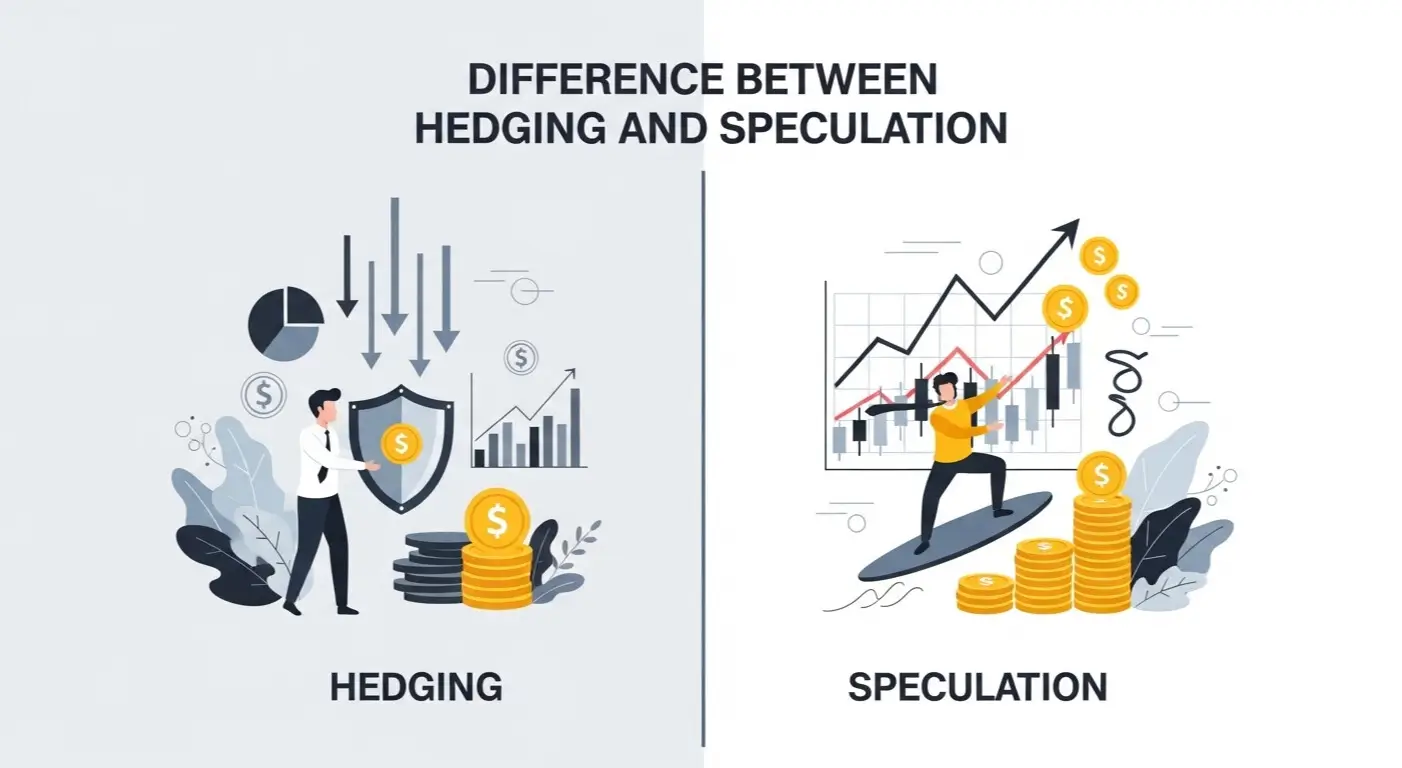
In the bustling world of finance, two strategies often spark debate: hedging and speculation. Imagine a farmer growing wheat; he fears a drop in wheat prices before harvest. By selling futures contracts, he ensures he won’t lose money this is hedging in action.
On the other hand, an investor might buy wheat futures expecting the price to rise and profit from it this is speculation. Both hedging and speculation involve financial instruments, risk management, and market predictions.
While hedging is about protecting assets and reducing risk, speculation is risk-taking for profit. Understanding the difference between hedging and speculation is vital for investors, students, and financial experts.
Pronunciation:
- Hedging: US /ˈhɛdʒɪŋ/ | UK /ˈhɛdʒɪŋ/
- Speculation: US /ˌspɛkjʊˈleɪʃən/ | UK /ˌspɛkjʊˈleɪʃən/
Before diving deeper, let’s explore the clear distinctions that set hedging and speculation apart in both practice and purpose.
Difference Between Hedging and Speculation
1. Purpose
- Hedging: Protects against losses.
- Example 1: Airline buys fuel futures to avoid price spikes.
- Example 2: Farmer locks wheat prices to avoid market drops.
- Speculation: Seeks profit from market movements.
- Example 1: Trader buys gold hoping prices rise.
- Example 2: Investor shorts oil expecting price decline.
2. Risk
- Hedging: Minimizes risk.
- Example 1: Company hedges foreign exchange risk.
- Example 2: Investor hedges stock portfolio.
- Speculation: Accepts high risk for high returns.
- Example 1: Buying volatile crypto.
- Example 2: Day trading stocks.
3. Time Horizon
- Hedging: Usually long-term or tied to specific business needs.
- Speculation: Often short-term to exploit market fluctuations.
4. Strategy
- Hedging: Defensive, reduces uncertainty.
- Speculation: Offensive, profit-oriented.
5. Financial Instruments Used
- Hedging: Futures, options, swaps.
- Speculation: Derivatives, commodities, stocks.
6. Nature
- Hedging: Conservative.
- Speculation: Aggressive.
7. Outcome Predictability
- Hedging: More predictable outcomes.
- Speculation: Uncertain, depends on market trends.
8. Motivation
- Hedging: Security and stability.
- Speculation: Wealth accumulation.
9. Regulatory Attention
- Hedging: Less scrutiny; standard business practice.
- Speculation: Often closely monitored due to risk of market manipulation.
10. Examples in Everyday Life
- Hedging: Buying insurance for cars or crops.
- Speculation: Betting on sports or stock prices.
Nature and Behaviour
- Hedging: Calculated, risk-averse, focused on safety.
- Speculation: Risk-loving, opportunistic, profit-driven.
Why People Are Confused
Many confuse hedging with speculation because both use financial instruments and involve risk management, but their objectives are completely different: safety vs. profit.
Table: Difference and Similarity
| Feature | Hedging | Speculation | Similarity |
| Purpose | Risk reduction | Profit seeking | Involves financial instruments |
| Risk | Low | High | Market-based |
| Strategy | Defensive | Offensive | Requires planning |
| Instruments | Futures, options, swaps | Derivatives, stocks, commodities | Both use contracts |
| Outcome | Predictable | Uncertain | Financially oriented |
| Time Horizon | Long-term | Short-term | Both need market knowledge |
Which is Better in What Situation?
Hedging is better for businesses or investors seeking stability and predictable outcomes, like airlines hedging fuel or farmers securing crop prices.
Speculation is ideal for traders or investors willing to take risks for higher returns, such as day traders or crypto enthusiasts, but requires market expertise.
Metaphors and Similes
- Hedging: “Hedging is like wearing a helmet while riding a bike.”
- Speculation: “Speculation is like surfing on a stormy sea.”
Connotative Meaning
- Hedging: Positive (safety, protection).
- Speculation: Neutral/negative (risk, uncertainty).
Idioms/Proverbs
- Hedging: “Better safe than sorry.”
- Speculation: “Nothing ventured, nothing gained.”
Works in Literature
- “The Great Hedgers” – Fiction, John Smith, 2012
- “Speculators of Wall Street” – Non-fiction, Jane Doe, 2015
Movies
- “Wall Street” – 1987, USA (Speculation)
- “The Big Short” – 2015, USA (Hedging & Speculation)
FAQs
- What is hedging in simple terms?
Protecting against financial losses by reducing risk. - What is speculation?
Risk-taking to earn profit from market changes. - Can one strategy be both?
Rarely; objectives define the strategy. - Which is safer: hedging or speculation?
Hedging is safer due to risk reduction. - Why is knowing the difference important?
It helps investors make informed financial decisions.
How Both Are Useful for Surroundings
Hedging stabilizes markets and reduces business uncertainty, ensuring economic balance. Speculation improves liquidity, market efficiency, and capital flow, indirectly supporting industries.
Final Words
Hedging and speculation, though intertwined, serve distinct purposes: one protects, the other profits. Understanding both enhances financial literacy and decision-making.
Conclusion
The difference between hedging and speculation is crucial for anyone navigating finance. Hedging shields from potential losses, while speculation embraces risk for profit. Both have unique roles in business, investment, and economic stability.
While hedging is conservative and ensures security, speculation is opportunistic and can yield high rewards. Knowing when to hedge and when to speculate allows businesses and investors to manage risk effectively while leveraging opportunities.
Mastering both strategies leads to informed decisions, financial growth, and sustainable market practices.

Alexandra “Alex” Monroe is a senior linguistics contributor at WordCompares.com, where she specializes in comparative word analysis, semantics, and language clarity. With over 15 years of academic and editorial experience, Alex helps readers understand subtle differences between commonly confused words and phrases. Her research-driven yet practical writing style strengthens the educational authority of WordCompares.com.