Imagine walking alone at night and suddenly hearing someone call your name but no one is there. Or consider believing with full certainty that someone is secretly watching you, even when there is no proof. These real-life experiences reflect the difference between hallucination and delusion, two important psychological terms often misunderstood.
While both relate to altered perceptions of reality, the difference between hallucination and delusion lies in how a person experiences or interprets the world. Understanding the difference between hallucination and delusion is essential not only for students but also for professionals and society. Many people confuse these terms, yet the difference between hallucination and delusion can significantly impact diagnosis and treatment in mental health.
Key Difference Between the Both
The key difference between hallucination and delusion is simple:
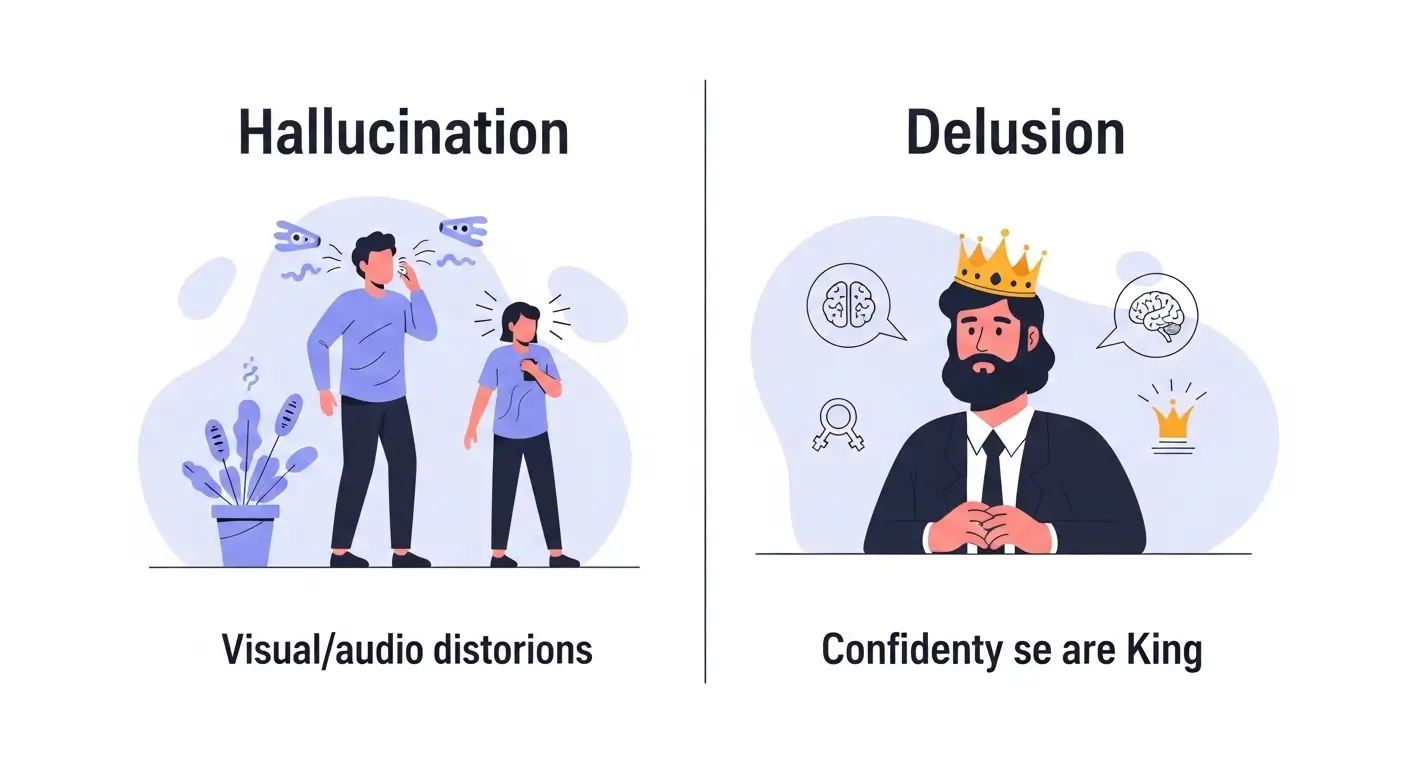
- Hallucination = false sensory experience (seeing, hearing, feeling something that is not real)
- Delusion = false belief (strong belief in something untrue despite evidence)
Why Is Their Difference Necessary to Know?
Understanding the difference between hallucination and delusion is crucial for both learners and experts. In fields like psychology, psychiatry, and healthcare, confusing these terms can lead to incorrect diagnoses or treatments. For example, conditions like Schizophrenia often involve both hallucinations and delusions, but they require different approaches for management. In society, awareness helps reduce stigma around mental health and promotes empathy. Knowing the distinction also helps caregivers, teachers, and families respond appropriately to individuals experiencing such symptoms.
Pronunciation (US & UK)
- Hallucination
- US: /həˌluː.səˈneɪ.ʃən/
- UK: /həˌluː.sɪˈneɪ.ʃən/
- Delusion
- US: /dɪˈluː.ʒən/
- UK: /dɪˈluː.ʒən/
Linking Hook
Now that you understand the basics, let’s explore the difference between hallucination and delusion in depth with clear comparisons and examples.
Difference Between Hallucination and Delusion
1. Nature
- Hallucination: Sensory experience
- Example 1: Hearing voices with no source
- Example 2: Seeing objects that are not present
- Delusion: False belief
- Example 1: Believing you are a king without evidence
- Example 2: Thinking others are plotting against you
2. Basis
- Hallucination: Based on perception
- Example 1: Feeling insects crawling on skin
- Example 2: Smelling odors that do not exist
- Delusion: Based on thought
- Example 1: Believing you are immortal
- Example 2: Thinking TV messages are directed at you
3. Sensory Involvement
- Hallucination: Involves senses
- Example 1: Visual hallucination
- Example 2: Auditory hallucination
- Delusion: No sensory involvement
- Example 1: False belief about identity
- Example 2: False belief about relationships
4. Awareness
- Hallucination: Person may question it
- Example 1: “Did I really hear that?”
- Example 2: Doubting what they saw
- Delusion: Strong conviction
- Example 1: Refuses to accept truth
- Example 2: Defends belief strongly
5. Origin
- Hallucination: Brain misinterprets signals
- Example 1: Sleep deprivation causing visions
- Example 2: Drug effects
- Delusion: Cognitive distortion
- Example 1: Overly suspicious thinking
- Example 2: Misinterpreting events
6. Flexibility
- Hallucination: May fade or change
- Example 1: Temporary voices
- Example 2: Short visual illusions
- Delusion: Fixed belief
- Example 1: Long-term paranoia
- Example 2: Persistent grandiosity
7. Emotional Impact
- Hallucination: Often confusing or frightening
- Example 1: Hearing threatening voices
- Example 2: Seeing disturbing images
- Delusion: Often shapes behavior
- Example 1: Avoiding people
- Example 2: Acting on false belief
8. Trigger
- Hallucination: Sensory or neurological
- Example 1: Fever hallucinations
- Example 2: Substance use
- Delusion: Psychological reasoning
- Example 1: Trauma-related beliefs
- Example 2: Anxiety-driven thoughts
9. Duration
- Hallucination: Short or episodic
- Example 1: During illness
- Example 2: During stress
- Delusion: Long-lasting
- Example 1: Chronic belief
- Example 2: Lifelong conviction
10. Treatment Approach
- Hallucination: Focus on perception control
- Example 1: Medication
- Example 2: Therapy
- Delusion: Focus on belief correction
- Example 1: Cognitive therapy
- Example 2: Behavioral strategies
Nature and Behaviour
Hallucination
Hallucinations involve distorted sensory experiences. A person may act confused, startled, or fearful. Their behavior often depends on what they “perceive.”
Delusion
Delusions involve rigid beliefs. A person may behave confidently or defensively, even when their belief is unrealistic or disproven.
Why People Are Confused About Their Use
People confuse these terms because both relate to a break from reality. In everyday language, they are often used interchangeably. Media and casual conversation also blur their meanings, making the difference between hallucination and delusion less clear.
Comparison Table
| Feature | Hallucination | Delusion | Similarity |
| Type | Sensory | Belief | Both affect reality perception |
| Awareness | Sometimes aware | Strong belief | Both may feel real |
| Duration | Temporary | Long-lasting | Both can persist |
| Cause | Neurological | Psychological | Linked to mental health |
| Example | Hearing voices | False identity belief | Both distort reality |
Which Is Better in What Situation?
Hallucination
Hallucinations are not “better,” but they can sometimes be easier to identify and treat because they involve sensory distortion. Medical professionals can often trace them to neurological or chemical imbalances. Early detection helps manage symptoms effectively.
Delusion
Delusions are harder to treat because they involve deeply rooted beliefs. However, therapy can gradually help individuals question and modify these beliefs. Long-term support is usually required.
Metaphors and Similes
- Hallucination: “Like a movie playing in your mind”
- Delusion: “Like building a castle on false ground”
Connotative Meaning
- Hallucination: Neutral to negative
- Example: “He experienced hallucinations during illness.”
- Delusion: Negative
- Example: “She lived under a dangerous delusion.”
Idioms or Proverbs
- “Lost in illusions” (similar to hallucination)
- Example: He was lost in illusions after the fever.
- “Living in a fool’s paradise” (similar to delusion)
- Example: She was living in a fool’s paradise, ignoring reality.
Works in Literature
- Delusion and Dream – Sigmund Freud (Psychology, 1907)
- The Tell-Tale Heart – Edgar Allan Poe (Horror, 1843)
Movies Based on Themes
- A Beautiful Mind (2001, USA)
- Shutter Island (2010, USA)
FAQs
1. What is the main difference?
Hallucination is sensory; delusion is belief-based.
2. Can a person have both?
Yes, especially in conditions like Schizophrenia.
3. Are hallucinations always visual?
No, they can be auditory, tactile, or olfactory.
4. Are delusions curable?
They can be managed with therapy and treatment.
5. Which is more dangerous?
Both can be harmful depending on severity.
How Both Are Useful for Surroundings
Understanding these concepts helps society respond with empathy and awareness. It improves mental health care and reduces stigma.
Final Words
Hallucinations and delusions are complex but distinct experiences. Knowing their difference helps in better understanding human psychology.
Conclusion
The difference between hallucination and delusion is essential for clear communication, proper diagnosis, and effective treatment. While hallucinations involve false sensory perceptions, delusions are deeply held false beliefs. Both affect how individuals interact with reality, but they require different approaches for understanding and care.
By learning the difference between hallucination and delusion, we not only improve our knowledge but also contribute to a more compassionate and informed society. Awareness is the first step toward support and healing.

Jordan L. Carter is a contributing language analyst at WordCompares.com, focusing on modern English usage, evolving vocabulary trends, and digital communication language. With over a decade of writing experience, Jordan provides insightful word comparisons that make complex language differences simple for everyday readers.