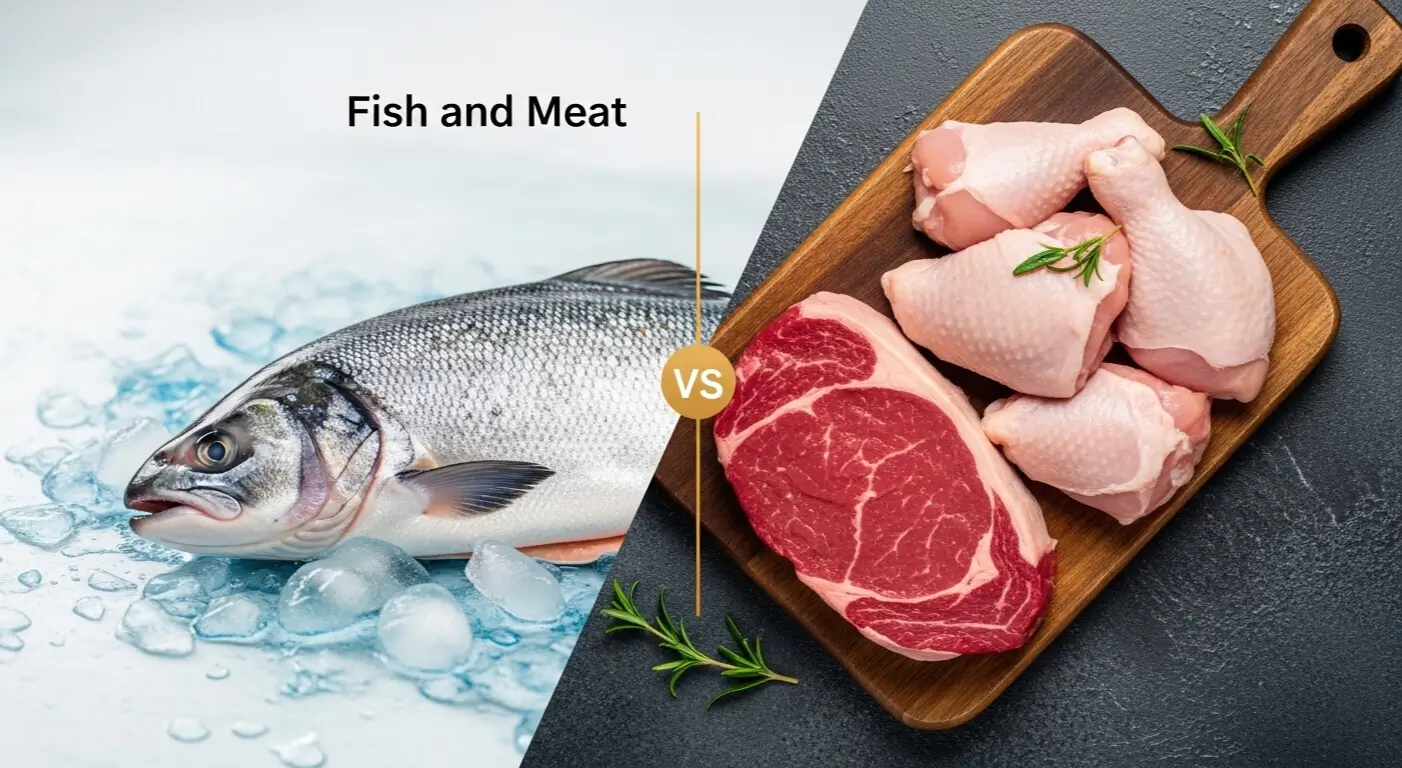
Imagine you are planning dinner, and someone asks a simple question: “Should we cook fish or meat tonight?” At first, the choice may seem like a matter of taste. However, once you consider nutrition, religious beliefs, or specific diet plans, the debate becomes more complex. Many people even find themselves wondering: Is fish considered meat, or does it belong to a completely different food category?
Understanding the difference between fish and meat is essential for making informed decisions about your health and cooking style. This distinction isn’t just about biological origins; it involves comparing nutritional profiles, textures, cooking methods, and deep-rooted cultural traditions. From religious fasting rules to restaurant menu classifications and global dietary guidelines, knowing how these two protein sources compare is key.
In this guide, we will break down the fish vs meat debate, exploring their origins, health benefits, and everyday uses to help you decide which is the better choice for your lifestyle.
Pronunciation
Fish
- US: /fɪʃ/
- UK: /fɪʃ/
Meat
- US: /miːt/
- UK: /miːt/
Before exploring deeper details, let’s examine the difference between fish and meat step by step.
Key Difference Between Fish and Meat
The main difference between fish and meat lies in their source and biological classification. Fish comes from aquatic animals that live in water, while meat generally refers to the flesh of land animals such as cows, sheep, pigs, and chickens. Fish also differs in texture, fat composition, cooking methods, and cultural significance.
Why It Is Important to Know the Difference
Understanding the difference between fish and meat is valuable for both learners and experts.
For students and nutritionists, knowing the difference helps in studying food science, diet planning, and health benefits. Fish often contains omega-3 fatty acids that are important for heart and brain health, while many types of meat provide iron and protein essential for body growth.
For society, the difference between fish and meat is also connected to religion, culture, and environment. Some religious traditions allow fish during fasting but restrict other meats. Chefs, dietitians, and health professionals must understand these distinctions to respect cultural values and promote balanced diets.
Difference Between Fish and Meat
1. Source of the Food
Fish comes from aquatic animals that live in water such as oceans, rivers, and lakes. Meat usually comes from land animals raised on farms.
Examples:
- Fish: salmon, tuna
- Meat: beef, chicken
2. Habitat
Fish live in water and breathe through gills. Meat animals live on land and breathe air through lungs.
Examples:
- Fish: cod, mackerel
- Meat animals: lamb, pork
3. Texture
Fish meat is usually softer and flakes easily when cooked. Meat from animals tends to be firmer and more fibrous.
Examples:
- Fish: tilapia flakes when cooked
- Meat: beef steak remains firm
4. Fat Composition
Fish contains healthy fats like omega-3 fatty acids. Meat usually contains saturated fats.
Examples:
- Fish: sardines rich in omega-3
- Meat: pork with higher saturated fat
5. Cooking Time
Fish cooks faster because of its soft texture. Meat usually requires longer cooking to become tender.
Examples:
- Fish: grilled fish cooks in minutes
- Meat: roast beef requires longer cooking
6. Nutritional Profile
Fish is known for heart-healthy fats. Meat is known for high iron and protein content.
Examples:
- Fish: tuna rich in protein
- Meat: lamb rich in iron
7. Cultural Classification
In some cultures and religions, fish is not classified as meat. In others, it is considered a type of meat.
Examples:
- Fish eaten during fasting days
- Meat is restricted in certain traditions
8. Smell and Flavor
Fish often has a distinct sea-like smell. Meat usually has a stronger earthy flavor.
Examples:
- Fish: shrimp smell of the sea
- Meat: grilled beef aroma
9. Storage and Freshness
Fish spoils faster if not refrigerated. Meat generally lasts slightly longer when stored properly.
Examples:
- Fish: Fresh cod must be chilled quickly
- Meat: frozen chicken lasts longer
10. Environmental Impact
Fishing affects oceans and aquatic ecosystems. Meat production affects land use and farming resources.
Examples:
- Fish: ocean fishing industries
- Meat: cattle farming
Nature and Behaviour
Fish:
Fish are cold-blooded aquatic animals. They swim using fins and breathe through gills. Many species travel in schools and adapt to water environments.
Meat Animals:
Animals such as cows, sheep, and chickens live on land. They are warm-blooded and rely on lungs for breathing. Their behavior includes grazing, walking, and social interaction.
Why People Are Confused About Their Use
People are confused because fish is technically animal flesh like meat. However, cultural traditions, dietary rules, and language often separate fish from meat. Restaurants, religious practices, and health discussions sometimes treat fish as a special category, which creates confusion.
Difference and Similarity Table
| Aspect | Fish | Meat | Similarity |
| Source | Aquatic animals | Land animals | Both are animal protein |
| Texture | Soft and flaky | Firm and fibrous | Both edible flesh |
| Fat | Omega-3 fats | Saturated fats | Provide energy |
| Cooking | Quick cooking | Longer cooking | Both grilled or fried |
| Nutrition | Heart-healthy oils | Iron and protein | Both nutritious |
Which Is Better in What Situation?
Fish:
Fish is often better for heart health and lighter meals. It is recommended for people who want lower fat intake and higher omega-3 nutrients. Doctors frequently suggest fish as part of a healthy diet. Fish is also suitable for quick cooking and lighter dishes.
Meat:
Meat is better when people need higher iron and protein levels. Athletes, growing children, and people with iron deficiency may benefit from moderate meat consumption. Meat is also ideal for hearty meals and dishes that require strong flavor.
Metaphors and Similes
Fish
- “Like a fish out of water” (feeling uncomfortable in a new situation)
- “Busy as a fish in a stream”
Meat
- “The meat of the matter” (the main point)
- “One man’s meat is another man’s poison”
Connotative Meaning
Fish
- Positive: “He moves through problems like a fish in water.”
- Negative: “Something smells fishy about this deal.”
- Neutral: “Fish is a common food worldwide.”
Meat
- Positive: “The meat of the project shows real progress.”
- Negative: “Thrown to the lions like raw meat.”
- Neutral: “Meat is served at dinner.”
Idioms and Proverbs
Fish Idioms
- “Like a fish out of water” – He felt like a fish out of water at the new school.
- “Fish for compliments” – She was fishing for compliments about her dress.
Meat Idioms
- “The meat of the matter” – Let’s focus on the meat of the matter.
- “One man’s meat is another man’s poison” – Some enjoy spicy food while others dislike it.
Works in Literature
Fish
- The Old Man and the Sea — Novel, Ernest Hemingway, 1952
- Fish in a Tree — Children’s novel, Lynda Mullaly Hunt, 2015
Meat
- Meat — Horror novel, Joseph D’Lacey, 2008
- Tender Is the Flesh — Dystopian novel, Agustina Bazterrica, 2017
Movies Related to Fish or Meat
Fish
- Finding Nemo (2003, USA)
- The Perfect Catch (2005, USA)
Meat
- Fresh (2022, USA)
- Okja (2017, South Korea/USA)
Frequently Asked Questions
Scientifically, fish is animal flesh, so it can be considered meat, but culturally, it is often treated as separate.
Many traditions consider fish lighter and different from land animal meat.
Fish is healthier for heart health due to omega-3 fats, but meat provides iron and protein.
Yes, many people replace meat with fish for a balanced diet.
Fish have softer muscle fibers and less connective tissue.
How Both Are Useful for the Surroundings
The fish and meat industries support millions of jobs worldwide. Fishing communities depend on oceans and rivers for their livelihood, while livestock farming supports rural economies. Both also contribute to the global food supply and nutrition.
Final Words for Both
Fish represent the richness of aquatic life and healthy nutrition. Meat represents the strength of land-based food sources and traditional cooking. Both play important roles in human diet and culture.
Conclusion
The difference between fish and meat goes beyond simple food categories. Fish comes from aquatic animals and is known for its light texture and heart-healthy fats, while meat comes from land animals and is valued for its protein and iron content.
Cultural traditions, nutrition science, and cooking methods all highlight their differences. Understanding the difference between fish and meat helps people make informed dietary choices and respect cultural practices. If in the kitchen, classroom, or marketplace, recognizing these distinctions allows us to appreciate the diversity of foods that nourish human society.

Dr. Marcus Reed is a lead editorial author at WordCompares.com and a specialist in communication studies and written clarity. With more than 12 years of university-level teaching experience, he focuses on explaining word distinctions in a clear and structured manner. His work ensures that WordCompares.com maintains accuracy, depth, and reader trust.