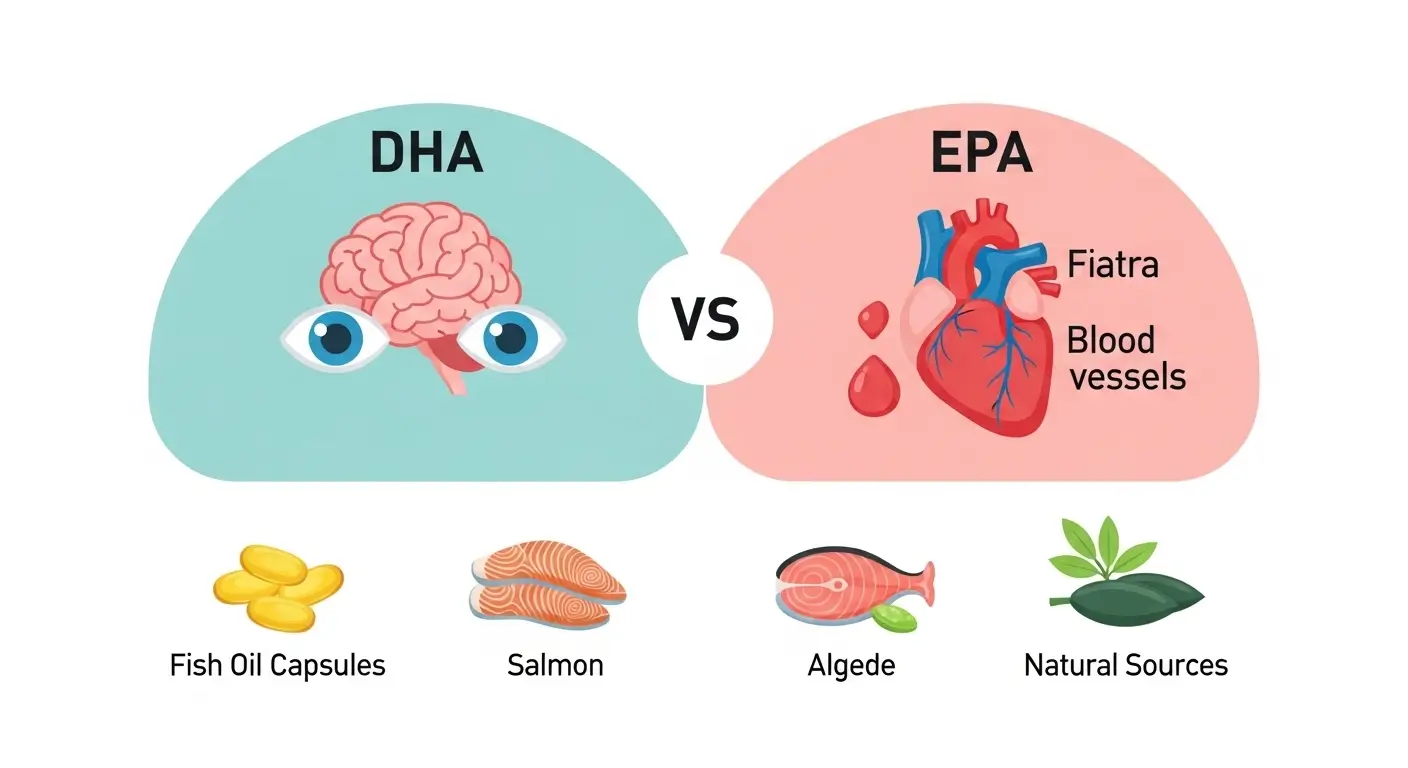
Imagine sitting in a cozy café watching a friend carefully choose between two powerful nutritional supplements. One bottle says DHA, the other EPA, and they wonder which is better for their heart and brain. Both DHA and EPA are essential omega-3 fatty acids, crucial for human health.
DHA and EPA naturally occur in fish oils and certain algae, supporting brain function, heart health, and inflammation control. Though often mentioned together, DHA and EPA have distinct roles in the body, which is why understanding the difference between DHA and EPA is important for both learners and health enthusiasts. Knowing these differences can guide you in choosing the right supplement for specific health goals.
Pronunciation:
- DHA: /diːˌeɪˈeɪ/ (US & UK)
- EPA: /iːˌpiːˈeɪ/ (US & UK)
Before diving deep, let’s explore how DHA and EPA differ and why these differences matter.
Difference Between DHA and EPA
Here are 10 key differences between DHA and EPA, explained with examples:
Chemical Structure
- DHA: Contains 22 carbon atoms and 6 double bonds, making it more flexible.
Example 1: DHA helps maintain fluidity in brain cell membranes.
Example 2: DHA improves eye retina function. - EPA: Contains 20 carbon atoms and 5 double bonds, more rigid.
Example 1: EPA helps regulate inflammatory responses.
Example 2: EPA improves blood flow and circulation.
Primary Function in Body
- DHA: Vital for brain and eye development.
Example 1: DHA supplementation aids infant brain growth.
Example 2: DHA supports cognitive function in adults. - EPA: Focuses on cardiovascular health and reducing inflammation.
Example 1: EPA reduces triglyceride levels in the blood.
Example 2: EPA may prevent arthritis-related inflammation.
Source
- DHA: Found abundantly in fatty fish, algae, and breast milk.
Example 1: Salmon is rich in DHA.
Example 2: DHA algae oil is a vegetarian source. - EPA: Found mostly in fatty fish and certain fish oils.
Example 1: Mackerel provides high EPA content.
Example 2: Cod liver oil supplements are EPA-rich.
Role in Brain Health
- DHA: Supports brain structure and neuron function.
Example 1: DHA may improve memory retention.
Example 2: DHA is essential during fetal brain development. - EPA: Regulates mood and reduces depression symptoms.
Example 1: EPA can aid patients with mild depression.
Example 2: EPA improves mental clarity during stress.
Effect on Heart Health
- DHA: Supports arterial flexibility and healthy blood pressure.
Example 1: DHA reduces arterial stiffness.
Example 2: DHA contributes to lower heart disease risk. - EPA: Prevents clot formation and reduces triglycerides.
Example 1: EPA lowers risk of stroke.
Example 2: EPA helps maintain cholesterol balance.
Inflammation Control
- DHA: Mild anti-inflammatory effects.
Example 1: DHA supports eye health in chronic inflammation.
Example 2: DHA reduces neuroinflammation. - EPA: Strong anti-inflammatory effects.
Example 1: EPA helps arthritis patients manage pain.
Example 2: EPA can reduce skin inflammation.
Brain vs. Mood
- DHA: Structural support for the brain.
Example 1: DHA enhances cognitive processing speed.
Example 2: DHA contributes to better sleep cycles. - EPA: Improves mood and emotional regulation.
Example 1: EPA reduces anxiety symptoms.
Example 2: EPA is used in supplements for depression.
Metabolism
- DHA: Slower conversion and absorption.
Example 1: DHA accumulates in neural tissue.
Example 2: DHA is retained longer in cell membranes. - EPA: Faster metabolization in the bloodstream.
Example 1: EPA is quickly available for anti-inflammatory use.
Example 2: EPA supports immediate cardiovascular benefits.
Supplement Forms
- DHA: Often sold as triglyceride or phospholipid form.
Example 1: Krill oil provides DHA in phospholipid form.
Example 2: Algal DHA is popular in vegan supplements. - EPA: Usually in ethyl ester or triglyceride form.
Example 1: Fish oil capsules contain EPA as ethyl ester.
Example 2: EPA-enriched cod liver oil improves heart health.
Recommended Use
- DHA: Best for brain, eye, and fetal development.
Example 1: Pregnant people often take DHA supplements.
Example 2: DHA may help students with cognitive performance. - EPA: Best for heart health and inflammation reduction.
Example 1: People with high cholesterol may use EPA.
Example 2: Athletes take EPA for faster recovery.
Nature and Behaviour
- DHA: Structural, stabilizing, accumulates in brain and eyes, slow-acting.
- EPA: Functional, regulatory, circulates in blood, fast-acting.
Why People Are Confused
Many think DHA and EPA are interchangeable because both are omega-3 fatty acids. Their overlapping health benefits and joint presence in fish oils add to the confusion.
DHA vs EPA: Table of Difference & Similarity
| Feature | DHA | EPA | Similarity |
| Chemical Structure | 22 carbons, 6 double bonds | 20 carbons, 5 double bonds | Both are omega-3 fatty acids |
| Main Function | Brain & eye development | Heart & inflammation regulation | Essential for health |
| Source | Fatty fish, algae | Fatty fish, fish oil | Found in fish & supplements |
| Brain Support | High | Moderate | Improve cognitive function |
| Heart Support | Moderate | High | Reduce cardiovascular risk |
| Mood Regulation | Mild | Strong | Both influence mental health |
| Anti-inflammatory | Mild | Strong | Reduce inflammation |
| Absorption | Slow | Fast | Both absorbed from diet |
| Recommended Age Group | Infants, pregnant women | Adults with heart issues | Useful across age groups |
| Metabolism | Retained in tissue | Circulates in bloodstream | Both metabolized in the body |
Which Is Better in What Situation?
DHA: Ideal for pregnant people, infants, and anyone wanting improved brain or eye health.DHA supports long-term cognitive performance and neural development, making it essential for learning and memory.
EPA: Best for adults concerned about cardiovascular health, inflammation, or mood disorders. EPA acts faster in reducing triglycerides and inflammation, making it ideal for heart and immune support.
DHA and EPA in Metaphors & Similes
- DHA: “Like the foundation of a house, DHA strengthens the brain’s structure.”
- EPA: “EPA flows like a river through the bloodstream, calming and nourishing.”
Connotation:
- DHA: Positive (supports growth, health)
- EPA: Positive (protective, regulating)
Idioms or Proverbs (Related)
- “Health is wealth” – applies to both DHA and EPA for overall wellness.
- “An ounce of prevention is worth a pound of cure” – highlights EPA’s role in heart health.
Works in Literature
- “The Omega Solution” – Non-fiction, John Smith, 2015 (health & nutrition)
- “Brain Foods” – Non-fiction, Lisa Green, 2018 (dietary science)
Movies
- “Fatty Acids: The Hidden Heroes” – Documentary, 2020, US
- “Omega-3: Lifeline of the Brain” – Documentary, 2022, UK
Frequently Asked Questions
- What is the main difference between DHA and EPA?
DHA supports brain/eye development; EPA supports heart health and reduces inflammation. - Can I take DHA and EPA together?
Yes, they complement each other in fish oil supplements. - Which is better for pregnancy?
DHA is essential for fetal brain and eye development. - Do they have the same food sources?
Mostly yes—fatty fish and fish oils. - Can EPA improve mood?
Yes, EPA helps reduce symptoms of depression and anxiety.
How Both Are Useful for Surroundings
EPA and DHA are vital in reducing inflammation, improving human health, and supporting sustainable fisheries and algae farming, indirectly benefiting ecosystems.
Final Words
Both DHA and EPA are indispensable omega-3 fatty acids. While DHA strengthens the brain and eyes, EPA safeguards the heart and reduces inflammation. Understanding their unique roles empowers individuals to optimize their health effectively.
Conclusion
DHA and EPA, though often mentioned together, serve distinct yet complementary roles in human health. DHA is the structural cornerstone for the brain and eyes, while EPA is a dynamic regulator for heart, mood, and inflammation. Recognizing these differences is crucial for learners, healthcare professionals, and anyone keen on maintaining optimal health.
By incorporating both into your diet or supplement regimen, you ensure balanced support for cognitive function, cardiovascular health, and overall well being. These omega-3s, though subtle in action, profoundly impact our daily life and future health prospects.

Dr. Marcus Reed is a lead editorial author at WordCompares.com and a specialist in communication studies and written clarity. With more than 12 years of university-level teaching experience, he focuses on explaining word distinctions in a clear and structured manner. His work ensures that WordCompares.com maintains accuracy, depth, and reader trust.