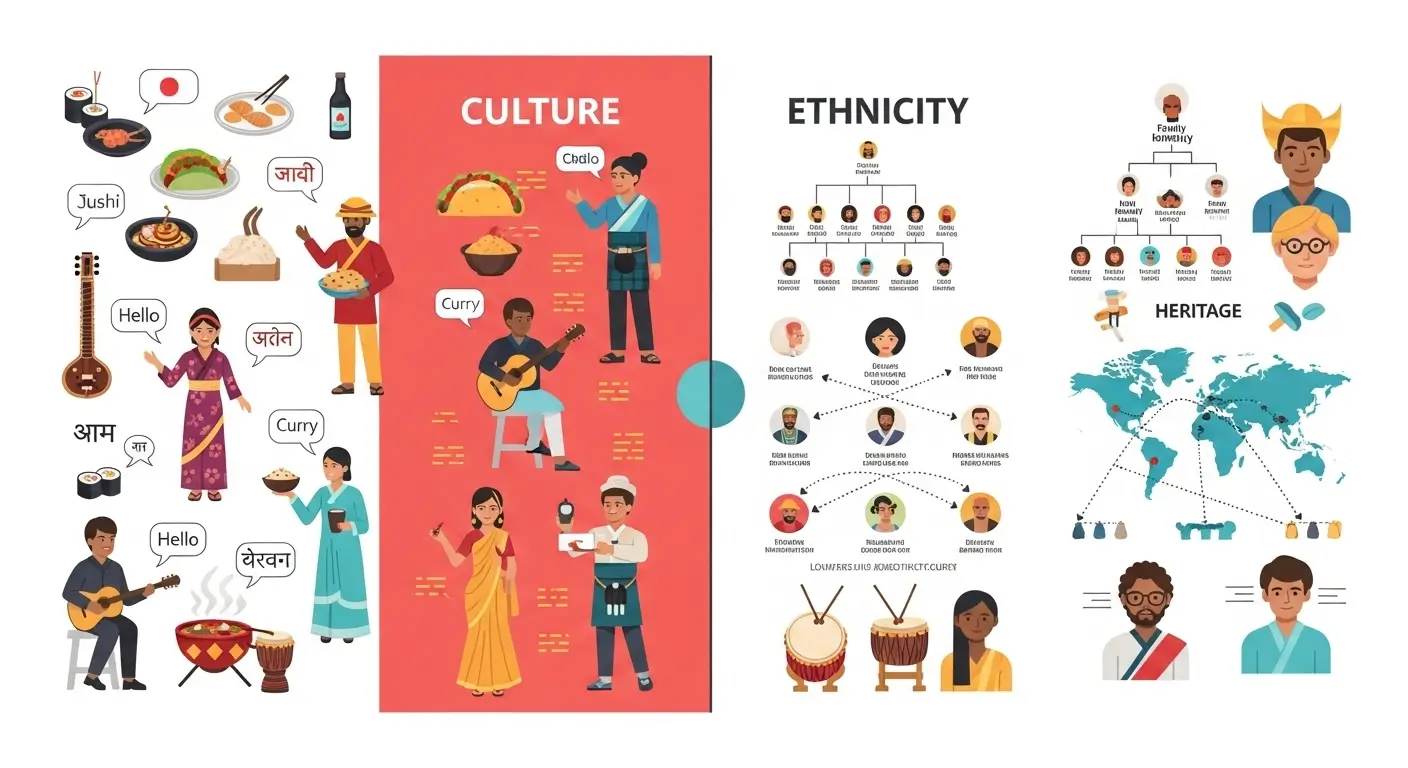
Imagine attending an international food festival where people from many backgrounds gather. One stall serves spicy Mexican tacos, another offers traditional Japanese sushi, while nearby you hear Arabic music and see African dance performances. In this lively setting, you notice how traditions, language, clothing, and food vary from group to group. This situation helps explain the difference between culture and ethnicity in everyday life.
Culture refers to the shared traditions, values, customs, and behaviors that shape how people live and interact in society. Ethnicity, on the other hand, relates to a group of people who share common ancestry, heritage, language, or historical origin.
Understanding the difference between culture and ethnicity becomes important because these concepts often overlap but are not identical. Many people assume they mean the same thing, but their meanings and uses differ in sociology, anthropology, and daily conversation. Learning the difference between culture and ethnicity helps individuals better understand identity, diversity, and social interaction. In fact, recognizing the difference between culture and ethnicity allows people to respect different traditions while acknowledging shared human connections.
Key Difference Between Culture and Ethnicity
The main difference lies in their foundation. Culture focuses on learned behaviors, traditions, and lifestyles, while ethnicity relates to inherited background or ancestry. Culture can change over time or be adopted by others, whereas ethnicity is usually linked to birth and heritage.
Why It Is Important to Know Their Difference
Understanding the difference between culture and ethnicity is essential for both learners and experts because these concepts shape identity and social relationships.
In society, culture influences how people celebrate festivals, communicate, and express creativity. Ethnicity, however, connects individuals to their historical roots, family lineage, and shared origin.
Recognizing the distinction helps educators, researchers, and policymakers understand social diversity. It also promotes respect and reduces misunderstandings among communities. For example, two people may belong to the same ethnicity but practice different cultures if they live in different countries. Therefore, knowing the difference encourages tolerance and appreciation for diversity.
Pronunciation
| Word | US Pronunciation | UK Pronunciation |
| Culture | /ˈkʌl.tʃər/ | /ˈkʌl.tʃə/ |
| Ethnicity | /eθˈnɪs.ə.ti/ | /eθˈnɪs.ə.ti/ |
Linking Hook
Now that we understand their meanings and importance, let us explore the difference between culture and ethnicity in detail through clear comparisons and examples.
Difference Between Culture and Ethnicity
1. Basis of Identity
Culture is based on shared customs and traditions. Ethnicity is based on ancestry and heritage.
Examples:
- Culture: Celebrating Thanksgiving in the United States.
- Culture: Eating with chopsticks in East Asian societies.
- Ethnicity: Being of Irish descent.
- Ethnicity: Belonging to the Kurdish ethnic group.
2. Origin
Culture develops through social interaction and learning. Ethnicity originates from family lineage and historical roots.
Examples:
- Culture: Learning French cuisine traditions.
- Culture: Practicing yoga as part of lifestyle culture.
- Ethnicity: Being ethnically Greek.
- Ethnicity: Identifying as Punjabi by heritage.
3. Changeability
Culture can change or evolve over time. Ethnicity usually remains constant throughout life.
Examples:
- Culture: Adopting Western clothing styles.
- Culture: Learning new social etiquette in another country.
- Ethnicity: Being ethnically Chinese.
- Ethnicity: Being ethnically Arab.
4. Learning vs. Inheritance
Culture is learned through society and environment. Ethnicity is inherited from parents and ancestors.
Examples:
- Culture: Learning local slang or expressions.
- Culture: Following national traditions.
- Ethnicity: Having Scandinavian ancestry.
- Ethnicity: Having Hispanic heritage.
5. Scope
Culture can include people from different backgrounds. Ethnicity refers to a specific ancestral group.
Examples:
- Culture: Global pop culture shared worldwide.
- Culture: Workplace culture in organizations.
- Ethnicity: The Basque ethnic group.
- Ethnicity: The Pashtun ethnic group.
6. Components
Culture includes language, art, music, and traditions. Ethnicity includes lineage, history, and ancestral identity.
Examples:
- Culture: Traditional folk dances.
- Culture: Cultural festivals.
- Ethnicity: Tribal heritage in Africa.
- Ethnicity: Indigenous American ethnic identity.
7. Adoption
People can adopt another culture through lifestyle changes. Ethnicity cannot be adopted easily.
Examples:
- Culture: Someone learning Japanese tea ceremony traditions.
- Culture: Immigrants adopting local customs.
- Ethnicity: Being ethnically Turkish.
- Ethnicity: Being ethnically Thai.
8. Social Expression
Culture is expressed in behavior and daily practices. Ethnicity is expressed through identity and heritage.
Examples:
- Culture: Greeting people with bows in Japan.
- Culture: Cultural clothing styles.
- Ethnicity: Identifying as Ethiopian.
- Ethnicity: Identifying as Armenian.
9. Diversity
Culture can vary even within the same ethnicity. Ethnicity usually groups people with similar ancestry.
Examples:
- Culture: Urban vs rural lifestyle culture.
- Culture: Youth culture vs traditional culture.
- Ethnicity: The Roma ethnic group.
- Ethnicity: The Maori ethnic group.
10. Academic Study
Culture is studied mainly in anthropology and sociology. Ethnicity is studied in anthropology, history, and ethnology.
Examples:
- Culture: Studying cultural rituals.
- Culture: Studying social behavior patterns.
- Ethnicity: Studying ethnic migration history.
- Ethnicity: Studying ethnic identity formation.
Nature and Behaviour of Both
Culture
Culture is dynamic and adaptable. It evolves through interaction, technology, and globalization. People can influence culture by adopting new habits, traditions, and ideas.
Ethnicity
Ethnicity is relatively stable and rooted in ancestry. It shapes identity through shared language, history, and family lineage.
Why People Are Confused About Their Use
People often confuse these terms because they both relate to identity and group belonging. In everyday conversation, culture and ethnicity appear closely connected. For example, an ethnic group often shares similar cultural traditions. However, culture focuses on lifestyle and behavior, while ethnicity focuses on heritage.
Difference and Similarity Table
| Feature | Culture | Ethnicity | Similarity |
| Basis | Traditions and lifestyle | Ancestry and heritage | Both relate to identity |
| Change | Can change easily | Usually fixed | Both influence behavior |
| Origin | Learned socially | Inherited | Both connect people to groups |
| Scope | Broad and flexible | Specific groups | Both shape community life |
Which Is Better in What Situation?
Culture
Culture is more useful when discussing lifestyle, social practices, and shared traditions. For example, when studying food habits, language, or music, culture explains how societies behave and express identity. Researchers and educators often focus on culture to understand social patterns and communication.
Ethnicity
Ethnicity is more useful when discussing heritage, ancestry, and historical identity. In fields like history, anthropology, or genealogy, ethnicity helps explain the origins and migration patterns of groups. It also plays an important role in discussions about heritage preservation and identity.
Use in Metaphors and Similes
- “Culture is the fabric of society.”
- “Ethnicity is the root of a family tree.”
- “Culture flows like a river through generations.”
- “Ethnicity stands like a mountain of heritage.”
Connotative Meanings
Culture
Positive: cultural richness, creativity
Example: “The city’s culture attracts artists from around the world.”
Neutral: social traditions
Example: “Corporate culture influences employee behavior.”
Negative: cultural clash
Example: “Different workplace cultures caused misunderstandings.”
Ethnicity
Positive: heritage pride
Example: “She celebrates her ethnicity through traditional festivals.”
Neutral: identity marker
Example: “Ethnicity is recorded in demographic surveys.”
Negative: ethnic discrimination
Example: “Ethnicity should never be used as a basis for prejudice.”
Idioms or Proverbs
- “A culture of respect.”
Example: The school encourages a culture of respect among students. - “Roots run deep.”
Example: His ethnic roots run deep in the region. - “Old traditions die hard.”
Example: Cultural traditions often remain strong in communities.
Works in Literature
- Culture and Society – Cultural criticism, Raymond Williams, 1958
- Ethnicity and Nationalism – Sociology, Thomas Hylland Eriksen, 1993
- The Location of Culture – Cultural theory, Homi K. Bhabha, 1994
Movies Related to the Themes
- Culture Shock (2019, USA)
- My Big Fat Greek Wedding (2002, USA/Canada)
- Bend It Like Beckham (2002, UK)
Frequently Asked Questions
1. What is the main difference between culture and ethnicity?
Culture refers to shared traditions and behaviors, while ethnicity refers to shared ancestry or heritage.
2. Can culture change over time?
Yes, culture evolves with social interaction, technology, and globalization.
3. Can people share the same ethnicity but different cultures?
Yes, people with the same ancestry may practice different cultures if they live in different societies.
4. Is ethnicity inherited?
Yes, ethnicity is usually inherited from parents and ancestral lineage.
5. Why do people confuse culture and ethnicity?
Because ethnic groups often share similar cultural traditions, making the two concepts appear similar.
How Both Are Useful for Surroundings
Culture helps societies build shared traditions, social norms, and cooperation. Ethnicity preserves heritage and historical identity, helping communities maintain their roots and traditions. Together, they enrich diversity and strengthen social understanding.
Final Words for Both
Culture represents how people live, interact, and express themselves in society. Ethnicity represents where people come from and the heritage they inherit.
Conclusion
The difference between culture and ethnicity lies mainly in their foundation and expression. Culture focuses on learned traditions, behaviors, and social practices, while ethnicity relates to inherited ancestry and historical origin. Although these concepts are closely connected, they serve different roles in understanding identity and society.
Culture can change and evolve as people interact with new environments, but ethnicity remains closely tied to heritage and lineage. Recognizing the difference between culture and ethnicity helps individuals appreciate diversity, respect traditions, and understand the many layers of human identity.
By learning about both, societies can promote tolerance, preserve heritage, and encourage meaningful cultural exchange.

Alexandra “Alex” Monroe is a senior linguistics contributor at WordCompares.com, where she specializes in comparative word analysis, semantics, and language clarity. With over 15 years of academic and editorial experience, Alex helps readers understand subtle differences between commonly confused words and phrases. Her research-driven yet practical writing style strengthens the educational authority of WordCompares.com.