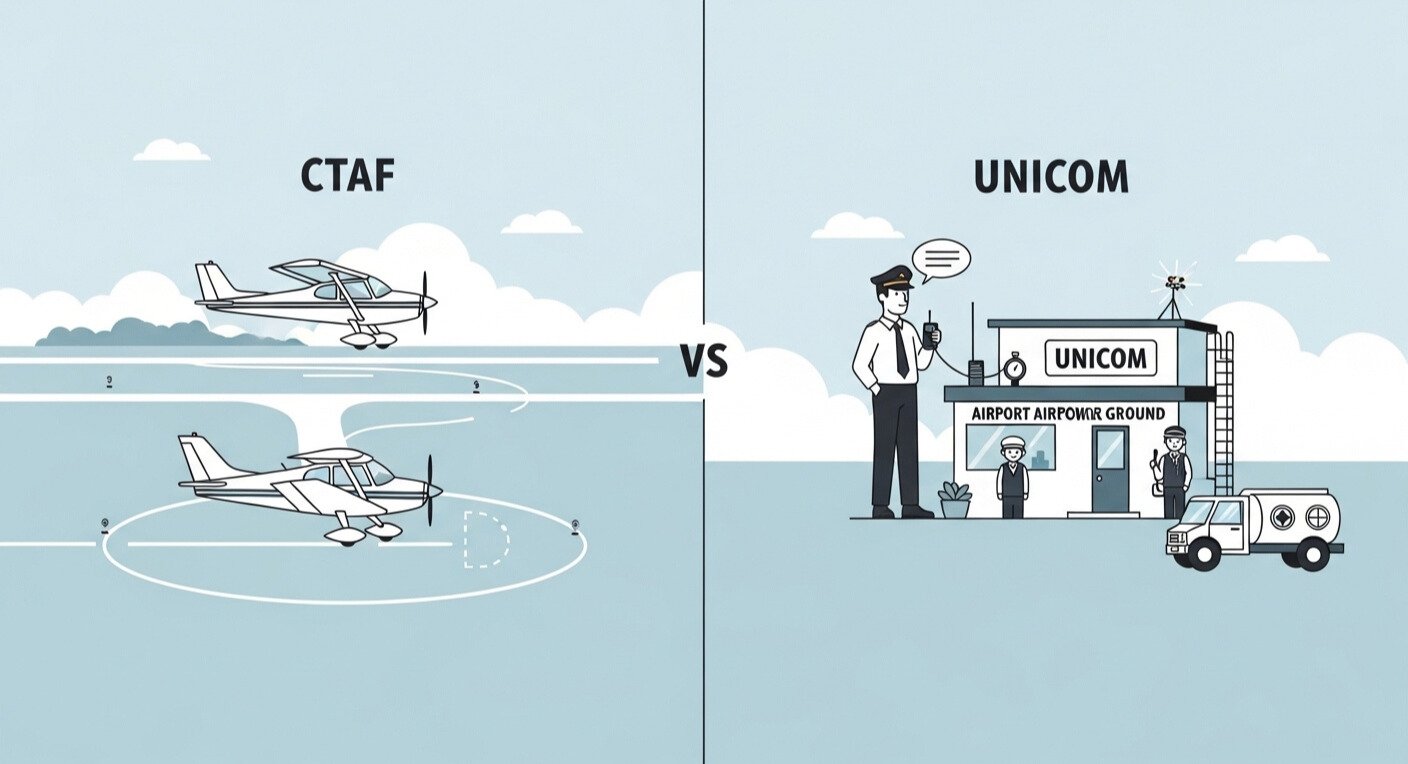
Imagine a small airplane approaching a quiet regional airport. There is no control tower, no air traffic controller giving instructions. Instead, pilots communicate with each other using specific radio frequencies to keep everyone safe. This is where CTAF and UNICOM come into play. Understanding the difference between CTAF and UNICOM is essential for pilots, aviation students, and airport operators.
In aviation communication, the difference between CTAF and UNICOM can determine how pilots coordinate landings, departures, and traffic information. Although both systems are used at non-towered airports, they serve slightly different purposes. Many learners initially struggle to understand the difference between CTAF and UNICOM because both involve radio communication on the same or similar frequencies. However, once you explore their roles and functions, the difference between CTAF and UNICOM becomes clear and practical.
Knowing the difference between CTAF and UNICOM helps maintain safe operations at airports without air traffic control towers. Let’s break it down in a simple and structured way.
Pronunciation
| Term | US Pronunciation | UK Pronunciation |
| CTAF | /ˈsiː-tiː-eɪ-ɛf/ | /ˈsiː-tiː-eɪ-ɛf/ |
| UNICOM | /ˈjuːnɪkɒm/ | /ˈjuːnɪkɒm/ |
Linking Hook:
Now that we understand what these terms sound like and why they matter, let’s explore the real difference between CTAF and UNICOM in aviation communication.
Difference Between CTAF and UNICOM
1. Basic Definition
CTAF (Common Traffic Advisory Frequency)
CTAF is a radio frequency used by pilots to announce their positions and intentions when flying near non-towered airports.
Example 1:
A pilot announces: “Cessna 45 entering left downwind runway 27.”
Example 2:
Another aircraft reports: “Piper 21 departing runway 27.”
UNICOM (Universal Communications)
UNICOM is a private radio service operated by airport staff to provide airport information.
Example 1:
A pilot asks UNICOM about fuel availability.
Example 2:
Airport staff informs a pilot about runway conditions.
2. Purpose
CTAF
Used primarily for pilot-to-pilot communication.
Example 1:
Pilots report their location in the traffic pattern.
Example 2:
Aircraft announce takeoff intentions.
UNICOM
Used for pilot-to-ground communication.
Example 1:
A pilot asks for parking information.
Example 2:
Airport staff provide wind conditions.
3. Who Operates It
CTAF
Used by pilots themselves without ground operators.
Example 1:
Multiple pilots coordinate landing sequences.
Example 2:
Pilots warn others about aircraft entering the pattern.
UNICOM
Operated by airport personnel.
Example 1:
Ground staff respond to pilot inquiries.
Example 2:
Airport operators provide service updates.
4. Communication Type
CTAF: Air-to-air communication
Example: Two aircraft coordinate spacing.
UNICOM: Air-to-ground communication
Example: Pilot communicates with airport office.
5. Main Function
CTAF
Traffic awareness.
Examples:
- Reporting approach to runway.
- Announcing departure.
UNICOM
Airport services information.
Examples:
- Fuel service request.
- Maintenance assistance request.
6. Frequency Use
CTAF
Designated aviation traffic frequency.
Examples:
- Used by all aircraft approaching airport.
- Shared among pilots for safety.
UNICOM
May share the same frequency but for services.
Examples:
- Used for operational inquiries.
- Airport staff communication.
7. Mandatory or Optional
CTAF
Strongly recommended for safety.
Examples:
- Reporting entry to traffic pattern.
- Announcing runway changes.
UNICOM
Optional service communication.
Examples:
- Asking about parking spots.
- Requesting weather updates.
8. Availability
CTAF
Available whenever aircraft operate nearby.
Examples:
- Active during flight operations.
- Used by all pilots.
UNICOM
Available only when staff are present.
Examples:
- Closed during late hours.
- Staff unavailable overnight.
9. Safety Role
CTAF
Directly improves collision avoidance.
Examples:
- Pilots hear each other’s intentions.
- Traffic sequencing becomes easier.
UNICOM
Indirect safety support.
Examples:
- Information about runway conditions.
- Advice about airport hazards.
10. Typical Users
CTAF
Pilots and flight instructors.
Examples:
- Student pilots learning pattern work.
- Private pilots landing at rural airports.
UNICOM
Airport operators and service staff.
Examples:
- Fuel technicians.
- Airport management.
Nature and Behaviour of Both
CTAF Nature
CTAF is cooperative and decentralized. Pilots share responsibility for communication and safety.
UNICOM Nature
UNICOM is service-oriented. It functions like an information desk for pilots at the airport.
Why People Are Confused About Their Use
Many people confuse CTAF and UNICOM because both involve radio communication at uncontrolled airports. Sometimes they even share the same frequency, making the distinction less obvious. Additionally, new aviation students often assume any radio communication near an airport is part of air traffic control. In reality, CTAF is pilot-to-pilot communication, while UNICOM connects pilots with airport personnel. The overlapping functions create confusion, especially for beginners in aviation training.
Table Showing Differences and Similarities
| Feature | CTAF | UNICOM | Similarity |
| Purpose | Traffic coordination | Airport information | Both use radio |
| Users | Pilots | Airport staff | Used near airports |
| Communication | Air-to-air | Air-to-ground | Improve safety |
| Operation | Pilot-controlled | Staff-operated | Used at non-towered airports |
| Role | Safety communication | Service assistance | Support aviation operations |
Which Is Better in What Situation?
CTAF is better for traffic coordination.
When multiple aircraft are arriving or departing from a non-towered airport, CTAF becomes essential. Pilots use it to announce positions, intentions, and runway use. Without CTAF communication, pilots would not know about nearby aircraft. Therefore, CTAF is crucial during busy traffic patterns and training flights.
UNICOM is better for airport service information.
If a pilot needs information about fuel availability, parking areas, weather observations, or maintenance services, UNICOM is the appropriate channel. Airport staff can quickly provide operational details that help pilots make better decisions on the ground.
Metaphors and Similes
CTAF Metaphor:
CTAF is like a group conversation among drivers at a busy intersection.
Example:
Pilots “talk” to each other just like drivers signaling intentions.
UNICOM Metaphor:
UNICOM is like an airport information desk.
Example:
Pilots ask questions just like travelers asking airport staff for directions.
Connotative Meaning
CTAF
Neutral but associated with safety and cooperation.
Example:
“Good CTAF communication kept everyone safe today.”
UNICOM
Neutral with a sense of service and assistance.
Example:
“The UNICOM operator helped the pilot find fuel quickly.”
Idioms or Proverbs (Related Ideas)
Although these specific aviation terms rarely appear in idioms, related expressions apply.
“Communication is the key.”
Example:
In aviation, proper CTAF communication prevents accidents.
“Better safe than sorry.”
Example:
Pilots always announce positions on CTAF to avoid misunderstandings.
Works in Literature Featuring Aviation Communication
- Fate Is the Hunter – Ernest K. Gann (Aviation memoir, 1961)
- Stick and Rudder – Wolfgang Langewiesche (Aviation nonfiction, 1944)
- The Killing Zone – Paul Craig (Aviation safety book, 1996)
Movies About Aviation Communication and Airports
- Top Gun (1986, USA)
- Sully (2016, USA)
- The Aviator (2004, USA)
Frequently Asked Questions
1. What is the main difference between CTAF and UNICOM?
CTAF is used for pilot-to-pilot traffic communication, while UNICOM provides airport information from ground staff.
2. Can CTAF and UNICOM share the same frequency?
Yes, at many small airports they operate on the same frequency.
3. Do all airports have UNICOM?
No, some small airports do not provide UNICOM services.
4. Is CTAF required for safe flying?
Yes, pilots strongly rely on CTAF to avoid conflicts at non-towered airports.
5. Who responds on UNICOM?
Airport personnel such as operators or service staff.
How Both Are Useful for Surroundings
CTAF helps maintain safe flight operations around smaller airports, preventing mid-air conflicts. UNICOM improves airport efficiency by helping pilots find services, parking, and important operational information. Together, they support smooth aviation activity even without a control tower.
Final Words on Both
CTAF focuses on safety communication among pilots, while UNICOM focuses on information and services from the airport.
Conclusion
Understanding the difference between CTAF and UNICOM is important for anyone studying aviation or operating aircraft at non-towered airports. While both systems rely on radio communication, their purposes differ significantly.
CTAF allows pilots to coordinate with each other and maintain situational awareness, reducing the risk of accidents in busy traffic patterns. On the other hand, UNICOM provides practical support from airport personnel, such as fuel availability, runway conditions, or parking information.
Together, these two communication systems create a safer and more organized environment for aviation operations. By clearly understanding their roles, pilots can communicate more effectively and operate with greater confidence at airports without control towers.

Alexandra “Alex” Monroe is a senior linguistics contributor at WordCompares.com, where she specializes in comparative word analysis, semantics, and language clarity. With over 15 years of academic and editorial experience, Alex helps readers understand subtle differences between commonly confused words and phrases. Her research-driven yet practical writing style strengthens the educational authority of WordCompares.com.