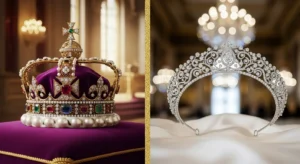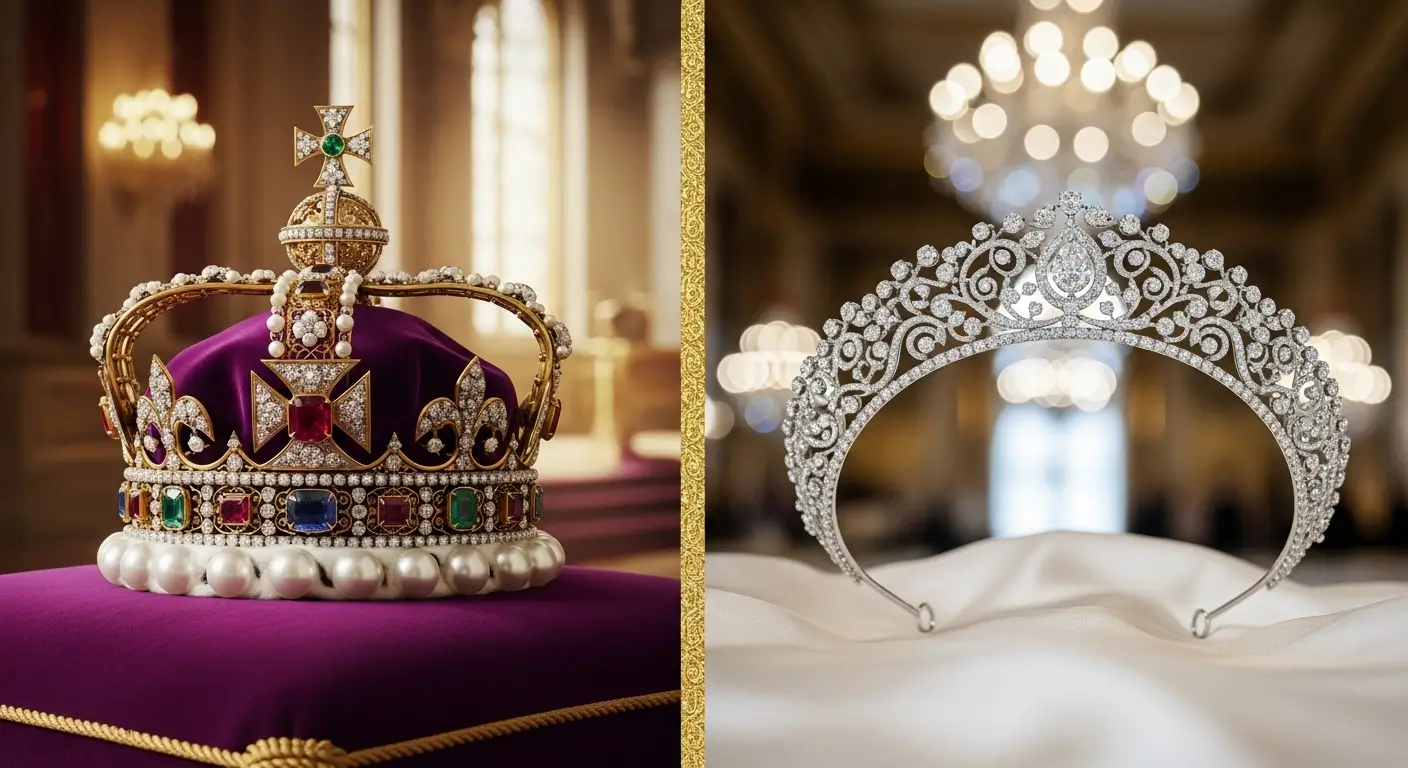
At a royal wedding broadcast watched by millions, many viewers admired the sparkling headpiece worn by the bride and called it a crown. In reality, it was a tiara—a lighter, more delicate ornament traditionally worn by women. Moments like this show how easily people mix up these two symbols of royalty.
The difference between crown and tiara is not just about design; it reflects history, gender roles, and ceremonial traditions. Understanding the difference between crown and tiara helps learners, fashion enthusiasts, and historians appreciate royal customs more deeply. Whether in royal ceremonies or pop culture, the difference between crown and tiara continues to shape how we interpret authority, elegance, and status.
Key Difference Between the Both
The main difference between crown and tiara lies in their purpose and structure. A crown symbolizes authority and sovereignty, while a tiara is primarily decorative and associated with femininity and formal occasions.
Why Their Difference Is Important in Society
Recognizing the difference between these royal ornaments helps people understand social hierarchy, cultural traditions, and ceremonial symbolism. Crowns represent leadership, power, and governance, often worn during coronations and state ceremonies. Tiaras, on the other hand, symbolize elegance, marital status, and aristocratic heritage. For historians, designers, and cultural scholars, knowing this difference ensures accurate representation in media, fashion, and historical interpretation.
Pronunciation of Both Words
| Word | US Pronunciation | UK Pronunciation |
| Crown | /kraʊn/ | /kraʊn/ |
| Tiara | /tiˈɑːrə/ | /tiˈɑːrə/ |
Linking Hook
Now that we understand their meanings and importance, let’s explore the detailed difference between crown and tiara through structure, symbolism, and usage.
Difference Between Crown and Tiara
1. Symbolism
A crown represents authority, sovereignty, and ruling power.
A tiara symbolizes elegance, beauty, and social status.
Examples:
- The crown worn by King Charles III during his coronation represented his authority.
- A tiara worn by Princess Diana symbolized grace and aristocratic lineage.
2. Structure
Crowns form a full circular band around the head.
Tiaras usually cover only the front or top portion.
Examples:
- The full-circle design of the Imperial State Crown.
- The delicate arc shape of the Lover’s Knot Tiara.
3. Gender Association
Kings and queens traditionally wear crowns.
Tiaras are traditionally worn by women, especially princesses and brides.
Examples:
- A king wears a crown during coronation.
- A bride may wear a tiara during her wedding.
4. Usage Occasions
Crowns are used in official and state ceremonies.
Tiaras are worn at formal events, weddings, and balls.
Examples:
- Coronations require crowns.
- State banquets often feature tiaras.
5. Weight and Comfort
Crowns are heavier due to solid metal and jewels.
Tiaras are lighter and designed for comfort.
Examples:
- Historical crowns often weigh over 1 kilogram.
- Modern bridal tiaras are lightweight.
6. Historical Origins
Crowns date back to ancient civilizations as symbols of rulership.
Tiaras evolved later as decorative aristocratic accessories.
Examples:
- Roman emperors wore crowns.
- European noblewomen popularized tiaras in the 18th century.
7. Ownership
Crowns are state property.
Tiaras are often personal or family heirlooms.
Examples:
- The British crown jewels belong to the monarchy.
- Many tiaras are passed down through families.
8. Design Complexity
Crowns often have arches, crosses, and symbolic motifs.
Tiaras focus more on floral or geometric designs.
Examples:
- Crowns may include religious symbols.
- Tiaras often feature diamonds and floral patterns.
9. Frequency of Use
Crowns are rarely worn.
Tiaras are worn more frequently at social events.
Examples:
- A crown may be worn only during coronation.
- Tiaras appear in multiple royal gatherings.
10. Cultural Meaning
Crowns represent power.
Tiaras represent beauty and grace.
Examples:
- The crown symbolizes monarchy.
- The tiara symbolizes feminine elegance.
Nature and Behaviour of Both
Crown
A crown carries an authoritative and commanding presence. It is formal, ceremonial, and associated with leadership.
Tiara
A tiara has a decorative and graceful nature. It reflects refinement, fashion, and social elegance.
Why People Are Confused About Their Use
Both items are jeweled headpieces worn by royalty, making them visually similar. Movies, cartoons, and casual language often label any royal head ornament as a crown, which increases confusion.
Table Showing Difference and Similarity
| Feature | Crown | Tiara | Similarity |
| Symbolism | Power | Elegance | Both symbolize status |
| Shape | Full circle | Partial arc | Both worn on head |
| Usage | Coronations | Weddings, balls | Both ceremonial |
| Gender | Kings & Queens | Women | Both royal ornaments |
Which Is Better in What Situation?
Crown
A crown is more appropriate in official, political, and ceremonial contexts. It represents authority, legitimacy, and national identity. In coronations or state ceremonies, a crown is essential because it visually confirms the ruler’s position.
Tiara
A tiara is better suited for social, cultural, and celebratory events. It enhances beauty and complements formal attire. Brides and aristocratic women prefer tiaras because they provide elegance without conveying political power.
Use in Metaphors and Similes
- “She carried herself like she wore an invisible crown.”
- “Her smile sparkled like a tiara under palace lights.”
Connotative Meaning
Crown
- Positive: authority, success
- Negative: burden of responsibility
- Neutral: royal headgear
Example: “Heavy is the crown that carries responsibility.”
Tiara
- Positive: elegance, beauty
- Negative: vanity or superficiality
- Neutral: decorative ornament
Example: “She wore confidence like a tiara.”
Idioms or Proverbs Related to the Words
- “Heavy lies the head that wears the crown.”
Example: Leaders often face stress and pressure.
Works in Literature Featuring the Keywords
- The Crown – Drama, written by Peter Morgan, 2016
- The Tiara Club – Children’s literature by Vivian French, 2005
Movies Based on the Keywords
- The Crown – Released 2016, United Kingdom
- The Princess Diaries – Released 2001, United States
Frequently Asked Questions
1. Is a tiara the same as a crown?
No, a tiara is decorative, while a crown symbolizes authority.
2. Can queens wear tiaras?
Yes, queens often wear tiaras at formal events.
3. Are crowns always made of gold?
Most traditional crowns are made of precious metals, but modern replicas may use other materials.
4. Why do brides wear tiaras?
Tiaras symbolize elegance and are linked to royal bridal traditions.
5. Which is more expensive?
Crowns are usually more valuable due to historical significance and rare jewels.
How Both Are Useful for Surroundings
Crowns and tiaras play important roles in cultural heritage, tourism, fashion, and entertainment. Museums display crowns to attract visitors, while tiaras influence bridal fashion trends and jewelry design worldwide.
Final Words for Both
The crown represents power, responsibility, and leadership. The tiara reflects elegance, beauty, and tradition. Together, they symbolize two different aspects of royalty—authority and grace.
Conclusion
Understanding the difference between crown and tiara helps us appreciate royal traditions, fashion history, and cultural symbolism. While both are jeweled headpieces associated with nobility, their meanings and uses are distinct. A crown signifies power and governance, whereas a tiara represents beauty and social elegance.
Recognizing this difference prevents misunderstanding in historical discussions, media portrayal, and fashion design. By learning the difference between crown and tiara, readers gain insight into how objects can carry deep cultural and social meaning beyond their physical appearance.

Alexandra “Alex” Monroe is a senior linguistics contributor at WordCompares.com, where she specializes in comparative word analysis, semantics, and language clarity. With over 15 years of academic and editorial experience, Alex helps readers understand subtle differences between commonly confused words and phrases. Her research-driven yet practical writing style strengthens the educational authority of WordCompares.com.