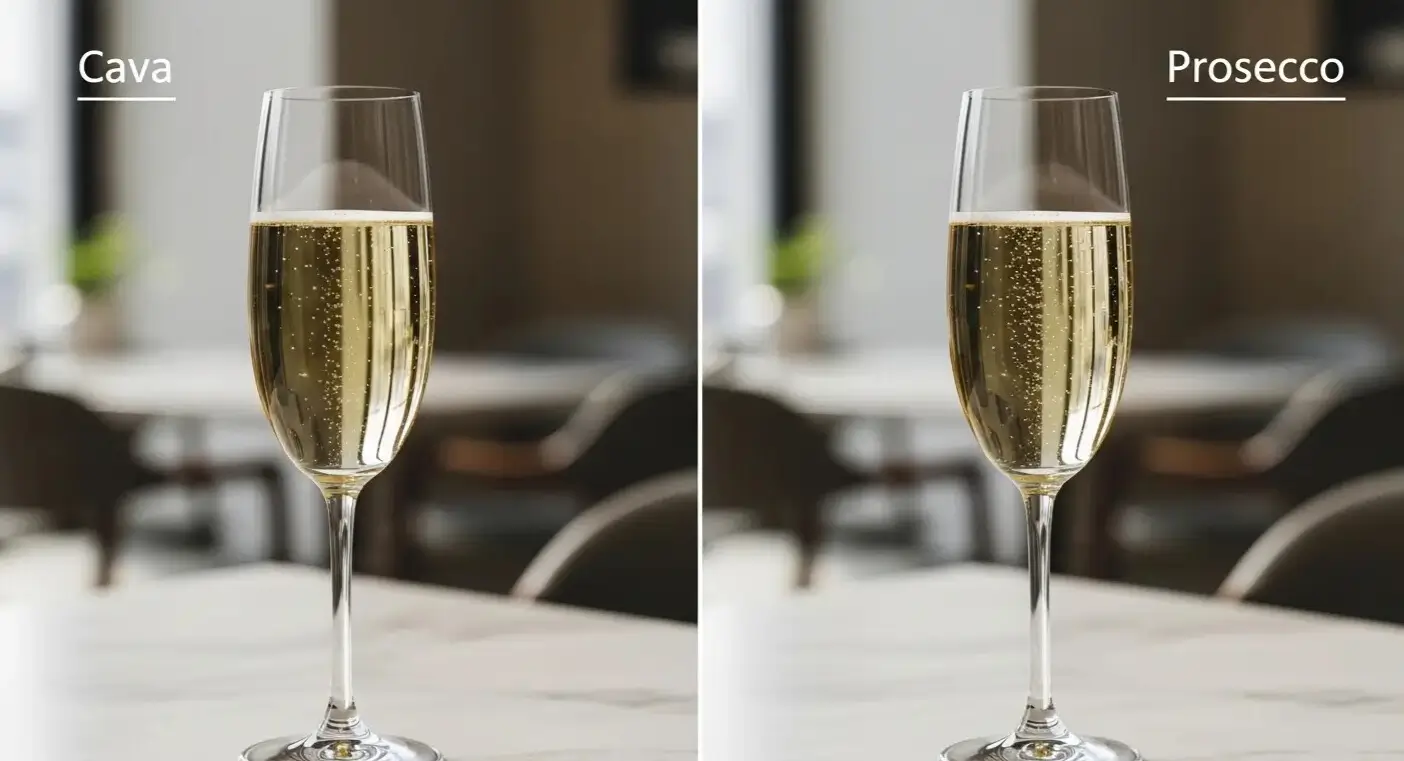
A few years ago, at a wedding reception, I watched two guests debate passionately over a glass of sparkling wine. One proudly held a bottle of Cava, the other insisted on pouring Prosecco. That evening sparked my curiosity about the difference between Cava and Prosecco. While both sparkle beautifully in a flute glass, they carry different stories, flavors, and traditions.
The difference between Cava and Prosecco is not just about taste but about origin, production methods, and cultural identity. Many beginners often mix them up because both are affordable sparkling wines served at celebrations.
However, understanding the difference between Cava and Prosecco helps you appreciate each wine more deeply. If you want to make the right choice for an event or simply expand your wine knowledge, learning the difference between Cava and Prosecco is essential.
Pronunciation
- Cava
- US: /ˈkɑː.və/ (KAH-vuh)
- UK: /ˈkæ.və/ (KAV-uh)
- Prosecco
- US: /proʊˈsɛk.oʊ/ (pro-SEK-oh)
- UK: /prəˈsɛk.əʊ/ (pruh-SEK-oh)
Now that we understand what they are and how to say them correctly, let’s dive deeper into the real differences that separate these two sparkling favorites.
Key Difference Between the Two
The primary difference lies in origin and production method. Cava comes from Spain and is made using the traditional Champagne method. Prosecco comes from Italy and is made using the tank method. This results in different flavor profiles, bubble structures, and aging processes.
Why Is Their Difference Necessary to Know for Learners and Experts?
Understanding the difference between Cava and Prosecco is important for both wine learners and experts. In restaurants, social gatherings, and formal events, selecting the right sparkling wine enhances the experience. Wine professionals must know these differences to guide customers properly. Even socially, serving the appropriate wine shows awareness and cultural appreciation. Knowledge builds confidence and sophistication in social settings.
Difference Between Cava and Prosecco
Here are 10 clear points of difference:
1. Origin
- Cava is mainly produced in Spain.
- Example 1: Most Cava comes from Catalonia.
- Example 2: Spanish celebrations often feature Cava.
- Prosecco is produced in Italy.
- Example 1: It is popular in Venice.
- Example 2: Italian brunches often serve Prosecco.
2. Production Method
- Cava uses the Traditional Method (secondary fermentation in bottle).
- Example 1: Similar to Champagne production.
- Example 2: Requires longer aging time.
- Prosecco uses the Charmat (tank) method.
- Example 1: Fermented in large steel tanks.
- Example 2: Faster and cheaper process.
3. Grapes Used
- Cava uses Macabeo, Xarel·lo, and Parellada grapes.
- Example 1: Macabeo gives fruity notes.
- Example 2: Xarel·lo adds body.
- Prosecco uses Glera grapes.
- Example 1: Glera provides floral aroma.
- Example 2: It creates lighter flavors.
4. Flavor Profile
- Cava tastes dry and nutty.
- Example 1: Almond hints.
- Example 2: Toasty notes.
- Prosecco tastes fruity and sweet.
- Example 1: Apple flavor.
- Example 2: Pear aroma.
5. Bubble Texture
- Cava has fine, long-lasting bubbles.
- Example 1: Smooth mouthfeel.
- Example 2: Creamy texture.
- Prosecco has larger, softer bubbles.
- Example 1: Light fizz.
- Example 2: Fresh sparkle.
6. Aging
- Cava is aged longer.
- Example 1: Reserva aged 15 months.
- Example 2: Gran Reserva aged 30 months.
- Prosecco is rarely aged.
- Example 1: Consumed young.
- Example 2: Best within a year.
7. Price
- Cava offers premium taste at moderate price.
- Example 1: Budget-friendly luxury.
- Example 2: Affordable alternative to Champagne.
- Prosecco is generally cheaper.
- Example 1: Popular at casual parties.
- Example 2: Widely available in supermarkets.
8. Alcohol Content
- Cava: Around 11.5 12.5%.
- Example 1: Slightly stronger feel.
- Example 2: Suitable for formal dinners.
- Prosecco: Around 10.5 11.5%.
- Example 1: Lighter drinking.
- Example 2: Ideal for daytime events.
9. Sweetness Levels
- Cava ranges from Brut Nature to Sweet.
- Example 1: Extra Brut for dry lovers.
- Example 2: Semi-seco for mild sweetness.
- Prosecco commonly found in Extra Dry.
- Example 1: Slight sweetness.
- Example 2: Balanced flavor.
10. Cultural Identity
- Cava represents Spanish tradition.
- Example 1: Used in Spanish New Year.
- Example 2: Symbol of celebration.
- Prosecco represents Italian lifestyle.
- Example 1: Aperitivo culture.
- Example 2: Romantic dinners.
Nature and Behaviour
Cava behaves like a serious, structured wine. It is bold, complex, and elegant.
Prosecco behaves in a playful and fresh way. It is light, easy-going, and friendly.
Why People Are Confused About Their Use?
People are confused because both are sparkling wines served in similar bottles. They look alike and are often used in celebrations. Marketing and similar pricing also create confusion.
Table: Difference and Similarity
| Feature | Cava | Prosecco | Similarity |
| Origin | Spain | Italy | Both European |
| Method | Traditional | Tank | Sparkling |
| Taste | Dry, nutty | Fruity, light | Refreshing |
| Aging | Long | Short | Best chilled |
| Use | Formal events | Casual gatherings | Celebrations |
Which Is Better in What Situation?
Cava is better for formal dinners, weddings, and gourmet meals. Its complexity pairs well with seafood, tapas, and rich dishes. If you want sophistication and structure, choose Cava.
Prosecco is better for brunches, picnics, and cocktails like Bellini. Its light and fruity flavor makes it perfect for relaxed settings and daytime celebrations.
Metaphors and Similes
- Cava is like a wise old storyteller deep and refined.
- Prosecco is like sunshine in a glass bright and cheerful.
Connotative Meaning
Cava
- Positive: Elegant, refined
- Neutral: Traditional sparkling wine
- Negative: Sometimes seen as less famous than Champagne
Prosecco
- Positive: Fun, trendy
- Neutral: Everyday sparkling wine
- Negative: Sometimes considered too sweet
Idioms or Proverbs
There are no direct idioms with these words, but examples can be created:
- “Life isn’t always Champagne; sometimes it’s Cava.” (Meaning: Enjoy simple pleasures.)
- “Keep it light like Prosecco.” (Meaning: Stay cheerful.)
Works in Literature
- The Cava Diaries Memoir, Anonymous, 2015
- Prosecco Nights Romance Novel, Laura Moretti, 2018
Movies
- Prosecco Dreams (2021, Italy)
- Cava Celebration (2019, Spain)
Five Frequently Asked Questions
1. Is Cava stronger than Prosecco?
Yes, slightly higher alcohol content.
2. Which is sweeter?
Prosecco is usually sweeter.
3. Is Cava like Champagne?
Yes, due to similar production method.
4. Can I use Prosecco in cocktails?
Yes, it is ideal for cocktails.
5. Which lasts longer after opening?
Both should be consumed within 1 2 days.
How Both Are Useful for the Surroundings
Both enhance celebrations, support wine industries in Spain and Italy, and promote cultural identity. They also create economic opportunities in the tourism and hospitality sectors.
Final Words for Both
Cava stands for structure and tradition.
Prosecco stands for freshness and fun.
Conclusion:
Understanding the difference between Cava and Prosecco enriches your wine experience. Though both sparkle in celebrations, they differ in origin, production, flavor, and cultural meaning.
Cava offers depth and elegance, while Prosecco provides freshness and approachability. Choosing between them depends on the occasion and personal taste. By knowing their distinctions, you can confidently select the right bottle for any event.

Alexandra “Alex” Monroe is a senior linguistics contributor at WordCompares.com, where she specializes in comparative word analysis, semantics, and language clarity. With over 15 years of academic and editorial experience, Alex helps readers understand subtle differences between commonly confused words and phrases. Her research-driven yet practical writing style strengthens the educational authority of WordCompares.com.