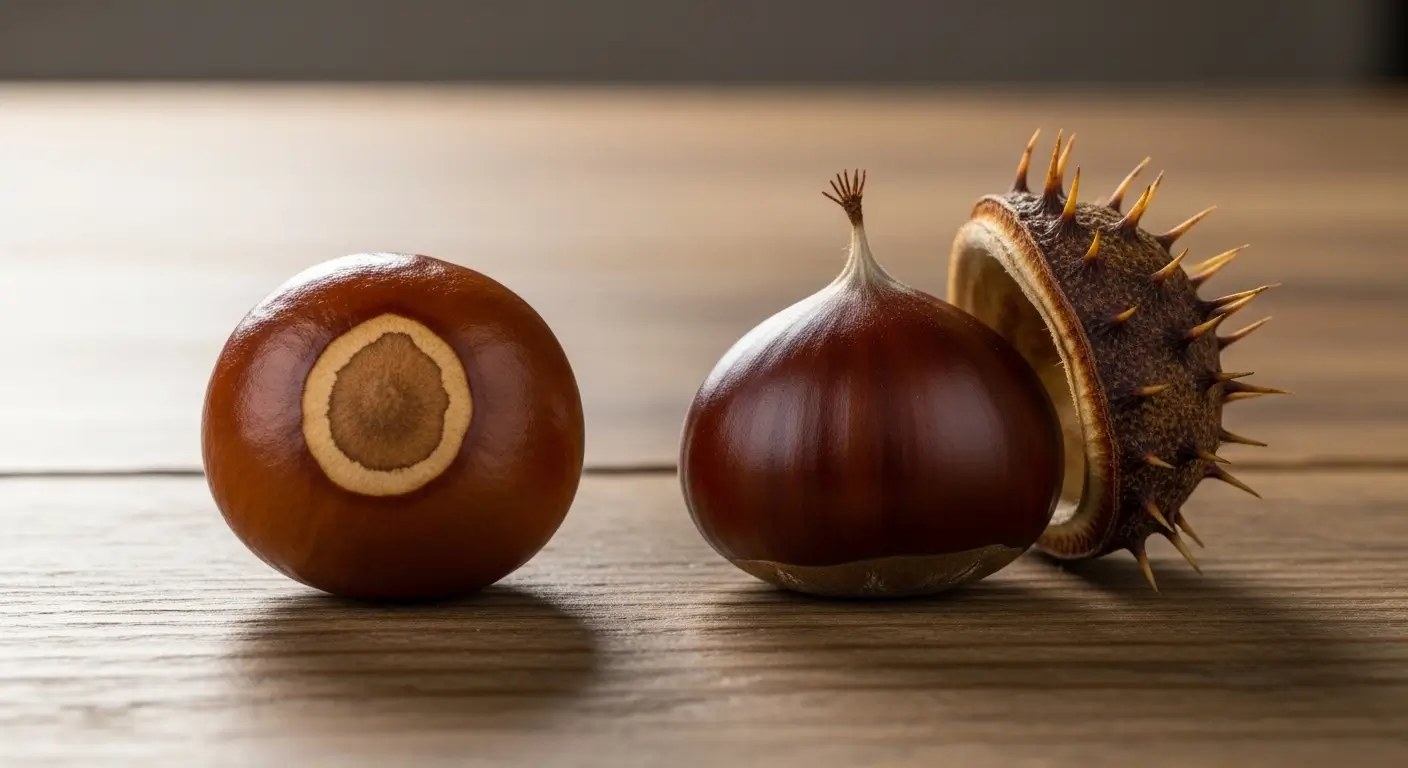
One autumn afternoon, a child walking through a park picked up two shiny brown nuts from the ground. Both looked smooth, round, and glossy. One had a pale patch on its surface, while the other was darker and slightly pointed. The child asked their parent whether they were the same. The parent explained that one might be a buckeye and the other a chestnut. At first glance they seem almost identical, but they belong to different trees and have very different uses.
Understanding the difference between buckeye and chestnut is important because these nuts are often mistaken for each other in forests and gardens. While chestnuts are edible and widely used in cooking, buckeyes are generally poisonous. Learning the difference between buckeye and chestnut helps people stay safe and appreciate the plants around them. Botanists, students, and nature lovers frequently study the difference between buckeye and chestnut to identify trees correctly and understand their ecological roles. Knowing the difference between buckeye and chestnut also prevents accidental misuse of these nuts.
Key Difference Between the Two
The main difference lies in their edibility and botanical family. Chestnuts come from Castanea trees and are edible when cooked, while buckeyes come from Aesculus trees and are usually toxic to humans.
Why Their Difference Is Important for Learners and Experts
Understanding the distinction between buckeyes and chestnuts is important in several fields. Students of botany learn plant identification by studying such similar species. Hikers and foragers need to recognize edible plants, especially when collecting nuts in forests. Farmers and gardeners also benefit from distinguishing between the trees when planning landscapes or orchards.
In society, chestnuts are used as food and have cultural value in many countries, especially during winter festivals. Buckeye seeds, on the other hand, are valued more for ornamental or symbolic purposes. Therefore, knowing their differences contributes to education, safety, agriculture, and cultural traditions.
Pronunciation
Buckeye
- US: /ˈbʌk.aɪ/
- UK: /ˈbʌk.aɪ/
Chestnut
- US: /ˈtʃes.nʌt/
- UK: /ˈtʃes.nʌt/
Linking Hook
Although buckeyes and chestnuts may appear similar in shape and color, a closer examination reveals clear distinctions in their origin, structure, and uses. Let us explore the difference between buckeye and chestnut in detail.
Difference Between Buckeye and Chestnut
1. Botanical Family
Buckeye trees belong to the Aesculus genus, while chestnut trees belong to the Castanea genus.
Examples:
- Ohio buckeye tree growing in North America.
- California buckeye found in western regions.
Chestnut examples:
- American chestnut tree.
- European sweet chestnut tree.
2. Edibility
Buckeye seeds are generally poisonous to humans. Chestnuts are edible when roasted or cooked.
Examples:
- Eating a raw buckeye may cause nausea or illness.
- Buckeye seeds are sometimes used as decorations.
Chestnut examples:
- Roasted chestnuts sold in winter markets.
- Chestnut flour used in baking.
3. Appearance of the Nut
Buckeyes are smooth and shiny with a light-colored patch. Chestnuts are slightly pointed and darker.
Examples:
- Buckeye nut with a tan spot.
- Round buckeye seed found under the tree.
Chestnut examples:
- Pointed tip on chestnut shell.
- Dark brown edible chestnut.
4. Tree Leaves
Buckeye trees have palmate leaves, meaning several leaflets spread like fingers from one point. Chestnut trees have long, simple leaves with serrated edges.
Examples:
- Buckeye leaf with five leaflets.
- Buckeye tree leaves spreading outward.
Chestnut examples:
- Long chestnut leaf with sharp edges.
- Single large chestnut leaf.
5. Outer Shell
Buckeye seeds grow inside a smooth or slightly spiny capsule. Chestnuts grow inside a very spiny burr.
Examples:
- Green buckeye husk splitting open.
- Buckeye capsule dropping seeds.
Chestnut examples:
- Spiny chestnut burr opening.
- Chestnuts falling from burrs in autumn.
6. Geographic Distribution
Buckeye trees are mainly native to North America. Chestnuts are found in Asia, Europe, and North America.
Examples:
- Ohio buckeye in the United States.
- California buckeye in western regions.
Chestnut examples:
- Chinese chestnut in Asia.
- European chestnut in Mediterranean regions.
7. Cultural Use
Buckeyes are often used as symbols or charms. Chestnuts are widely used as food and seasonal treats.
Examples:
- Buckeye carried as a good luck charm.
- Buckeye used as a school or sports symbol.
Chestnut examples:
- Chestnuts roasted during winter holidays.
- Chestnut desserts in European cuisine.
8. Size and Shape
Buckeye nuts are usually round and smooth. Chestnuts may be flatter and slightly pointed.
Examples:
- Round buckeye seed found on the ground.
- Smooth buckeye nut used in crafts.
Chestnut examples:
- Flattened chestnut shape.
- Chestnut with a pointed tip.
9. Toxicity
Buckeyes contain compounds that are toxic if consumed. Chestnuts are safe to eat after cooking.
Examples:
- Buckeye poisoning in livestock.
- Warning labels about buckeye consumption.
Chestnut examples:
- Chestnut soup.
- Chestnut stuffing in holiday meals.
10. Tree Height and Growth
Buckeye trees are medium-sized ornamental trees. Chestnut trees can grow very large and produce large harvests.
Examples:
- Buckeye planted in parks.
- Buckeye tree used for landscaping.
Chestnut examples:
- Large chestnut orchard trees.
- Tall chestnut trees in forests.
Nature and Behaviour
Buckeye
Buckeye trees are hardy ornamental trees that grow well in temperate climates. They produce seeds mainly for reproduction and wildlife interaction.
Chestnut
Chestnut trees are productive nut-bearing trees. They grow in forests and farms and provide food for both animals and humans.
Why People Are Confused About Their Use
People often confuse buckeyes and chestnuts because they look similar in color and shape. Both are glossy brown seeds found in autumn. Without knowledge of tree leaves or shells, they can easily be mistaken for each other. This similarity makes plant identification challenging for beginners.
Table Showing Differences and Similarities
| Feature | Buckeye | Chestnut | Similarity |
| Genus | Aesculus | Castanea | Both are tree seeds |
| Edibility | Poisonous | Edible | Both look similar |
| Shell | Smooth capsule | Spiny burr | Both fall in autumn |
| Leaves | Palmate | Long serrated | Both grow on trees |
| Use | Symbolic or ornamental | Food | Both used culturally |
Which Is Better in What Situation?
Buckeye
Buckeyes are better suited for decorative or symbolic purposes. Many people keep buckeye seeds as lucky charms or use them in crafts. They are also valuable as ornamental trees in parks and gardens because they produce attractive flowers and unique seeds.
Chestnut
Chestnuts are better for food production and culinary use. They provide nutritious nuts that can be roasted, boiled, or ground into flour. Chestnut trees are also beneficial in agriculture and forestry because they produce large harvests.
Use in Metaphors and Similes
Buckeye and chestnut sometimes appear in figurative language.
Examples:
- “His eyes were shiny like a buckeye.”
- “Her hair had the warm color of a chestnut.”
Connotative Meanings
Buckeye
- Mostly neutral or positive when used symbolically.
Example: Carrying a buckeye for good luck.
Chestnut
- Positive in culinary contexts.
Example: A chestnut-colored horse or hair.
Idioms or Proverbs
Chestnut
- “An old chestnut” – a story or joke that has been repeated many times.
Example: “The teacher told the same old chestnut again.”
Buckeye has fewer idioms but may appear in regional sayings.
Works in Literature
Buckeye
- The Buckeye Tree – Regional poetry collection (American literature, 19th century).
Chestnut
- Under the Greenwood Tree – Thomas Hardy, 1872 (novel, pastoral genre).
Movies Related to the Words
Buckeye
- Buckeye Nation (2017, USA)
Chestnut
- Chestnut: Hero of Central Park (2004, USA)
Frequently Asked Questions
1. Are buckeyes safe to eat?
No, buckeyes are generally poisonous and should not be eaten.
2. Can chestnuts be eaten raw?
They are usually cooked or roasted before eating.
3. Why do buckeyes and chestnuts look similar?
Both are glossy brown seeds that fall in autumn.
4. Where do buckeye trees grow?
Mostly in North America.
5. Why are chestnuts popular in winter?
They are commonly roasted and eaten during cold seasons.
How Both Are Useful for the Surroundings
Buckeye and chestnut trees support wildlife by providing shelter and seeds. They help maintain biodiversity in forests. Chestnut trees also provide food for animals and humans, while buckeyes contribute to ornamental landscaping and ecological balance.
Final Words for Both
Buckeye represents symbolic value and natural beauty, while chestnut offers nutritional and culinary importance. Both trees contribute to ecological diversity and cultural traditions.
Conclusion
Although buckeyes and chestnuts appear similar at first glance, they differ significantly in their botanical origin, edibility, and cultural uses. Buckeyes are mostly ornamental seeds associated with symbolism and regional identity, whereas chestnuts are widely consumed and valued for their nutritional benefits.
Understanding the difference between buckeye and chestnut helps people identify trees correctly, avoid poisonous seeds, and appreciate the diversity of plant life. Whether studied by botanists, enjoyed by cooks, or admired by nature lovers, both buckeye and chestnut hold unique roles in the natural world and human culture.

Alexandra “Alex” Monroe is a senior linguistics contributor at WordCompares.com, where she specializes in comparative word analysis, semantics, and language clarity. With over 15 years of academic and editorial experience, Alex helps readers understand subtle differences between commonly confused words and phrases. Her research-driven yet practical writing style strengthens the educational authority of WordCompares.com.